


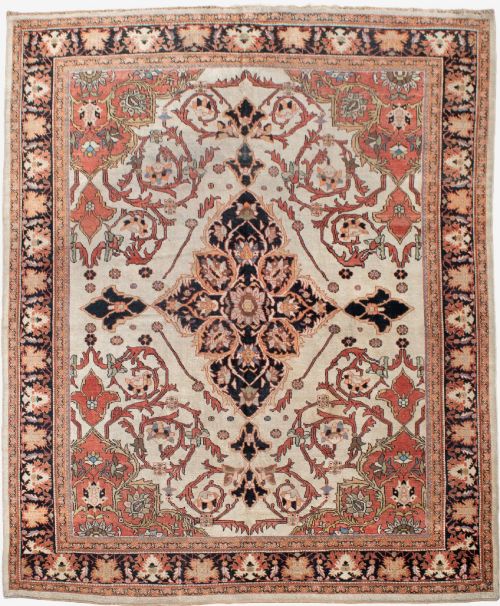
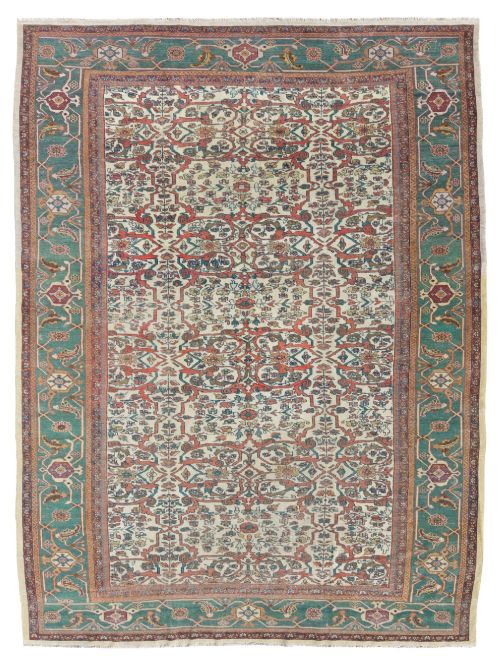


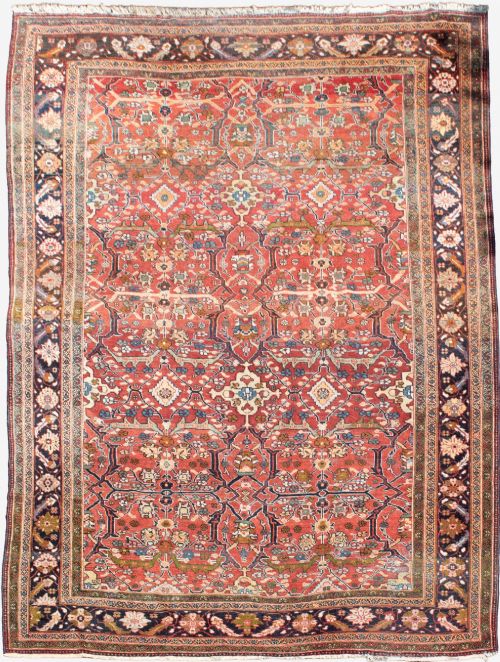


Vintage Persian Mahal Rug
A vintage persian mahal rug brings generous proportions and rich natural dyes into a room, offering durability and character woven by Western Persian weavers.
Vintage Persian Mahal Rug
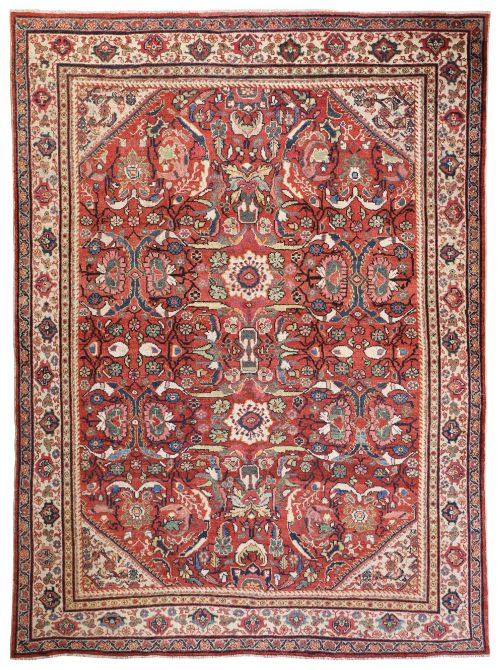
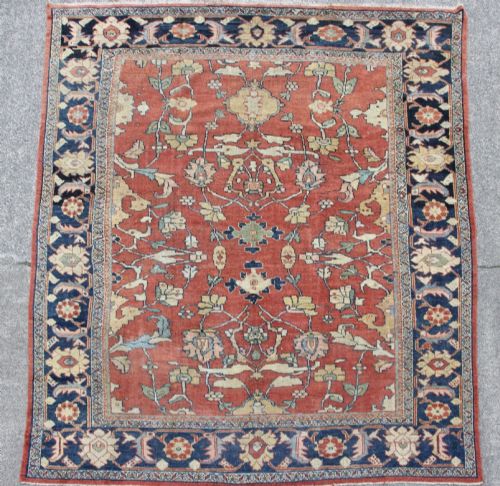
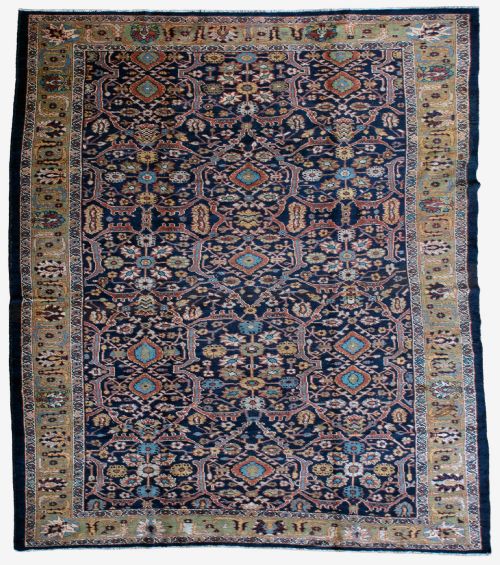
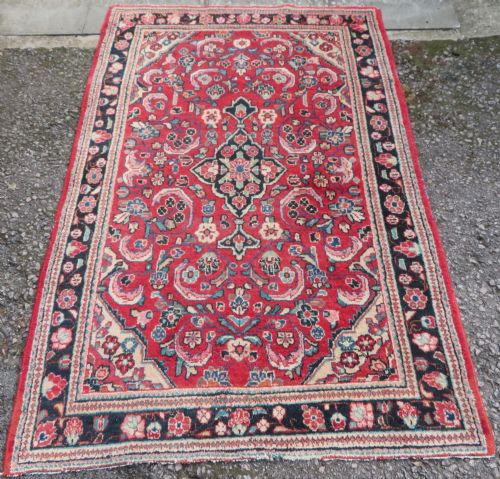
A vintage persian mahal rug represents traditional woven floor coverings originating from Western Persia, specifically associated with the Chahar Mahal region and surrounding village workshops. Buyers seeking this phrase typically encounter large carpets, area rugs, and runners dating from the late nineteenth century through the early twentieth century.
The selections span various formats including village rugs, room-size carpets, and utilitarian forms such as wheat-sacks and corridor carpets. Pieces often feature traditional Persian designs, including all-over shrub motifs, ivory grounds, and terracotta fields.
Makers and weavers from regional tribes such as the Luri-Bakhtiari produced these textiles using durable foundations. The resulting pieces provide functional floor coverings suited for country house interiors and traditional spaces.
How these rugs were constructed
Construction relies primarily on wool and hand-spun wool pile knotted onto cotton foundations, with occasional use of goat hair for structural durability. These natural materials provide the heavy weight and resilience seen in the carpets.
Weavers utilised natural dyes to achieve deep colour palettes across the fields and borders. The combination of hand-spun wool and traditional dyeing methods creates subtle tonal variations within the pile over time.
Vintage Persian Mahal Rug Retail Price Guide 2026
Typical asking prices for vintage persian mahal rug among the pieces listed under this phrase on Sellingantiques today, from the lower quarter to the upper quarter. They describe what is for sale here now, not the wider market.
Listings span production dates from the 1870s through the 1930s, utilising hand-spun wool, cotton, and natural dyes across various village formats.
What separates examples
Quality depends upon the fineness of the knotting and the integrity of the foundation materials. Tighter construction and well-preserved wool pile distinguish superior village and tribal production.
The complexity and execution of the design influence the standing of a piece, alongside the clarity and depth of the natural dyes used in the field. Uniformity in weave and balanced proportions across large-scale formats also mark finer examples.
The Vintage Persian Mahal Rug Glossary
- Mahal
- A style of carpet originating from the village and workshop production centres of the Chahar Mahal region in Western Persia. These pieces are known for robust construction and traditional village designs.
- Tacheh
- A traditional woven wheat-sack or storage bag produced by Luri-Bakhtiari tribes in Western Persia. These textiles feature distinctive tribal patterns and dense weave structures.
- Ziegler
- A trade designation for nineteenth-century Persian carpets produced under European enterprise and design direction. They typically feature softened palettes and large-scale floral motifs suited to Western interiors.
- Sultanabad
- A nineteenth-century Persian carpet type associated with commercial production in the Arak region. These carpets share stylistic links with Mahal weaves and often display bold, room-size floral patterns.
- Natural Dyes
- Colourants derived from plant, insect, and mineral sources utilised by traditional weavers before the widespread adoption of synthetic alternatives. They age gracefully and develop subtle patination.
Vintage Persian Mahal Rug: Frequently Asked Questions
Where were vintage mahal rugs made?
These rugs were woven in the Chahar Mahal valley and surrounding districts of Western Persia. Village workshops and tribal groups produced them for both local use and export.
Production centres such as Sultanabad also contributed to the regional output, blending commercial enterprise with traditional weaving methods.
How do I identify a mahal rug?
Look for robust wool pile, traditional Persian floral or all-over patterns, and sturdy cotton foundations. Many examples feature generous room-size dimensions or runner formats.
Regional characteristics often include terracotta fields, ivory grounds, and distinctive village or tribal motifs indicative of Western Persian origin.
What is a tacheh rug?
A tacheh is a traditional woven grain or wheat-sack made by Luri-Bakhtiari nomads in the Chahar Mahal region. These functional textiles were utilised for storage and transport within tribal camps.
They feature dense weave structures and tribal designs that reflect the domestic utility of nomadic life in Western Persia.
How should I care for an old carpet?
Vacuum gently without using a rotating brush bar to protect the hand-spun wool pile and cotton foundation. Professional cleaning tailored to antique textiles helps maintain the integrity of the natural dyes.
Positioning the rug away from direct, harsh sunlight prevents uneven fading of the natural colours across the field and borders.