


Vintage Peridot Gold Pendant
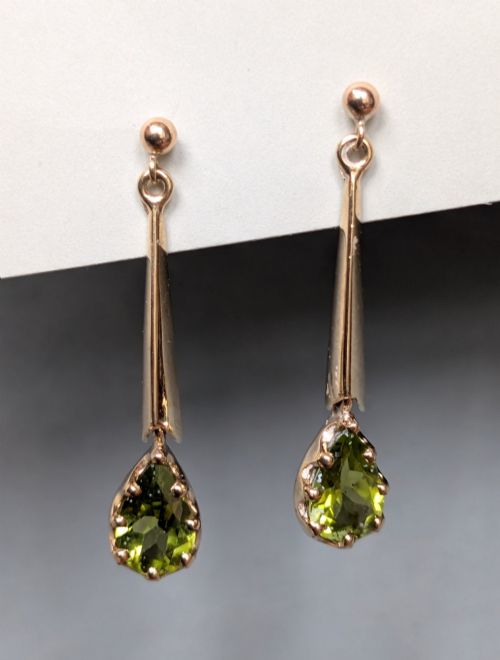
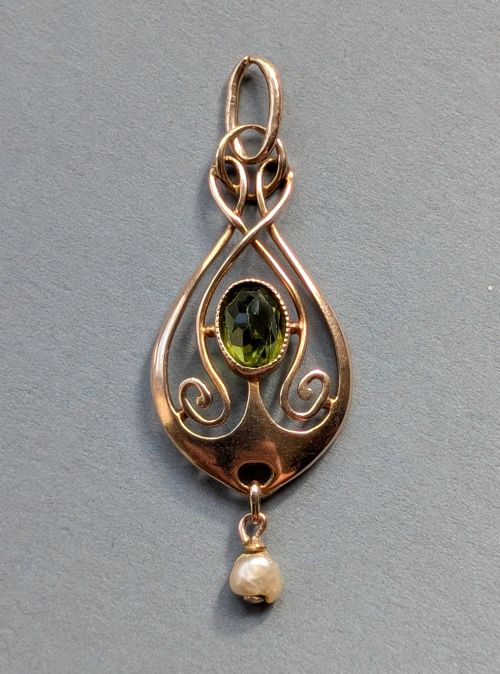
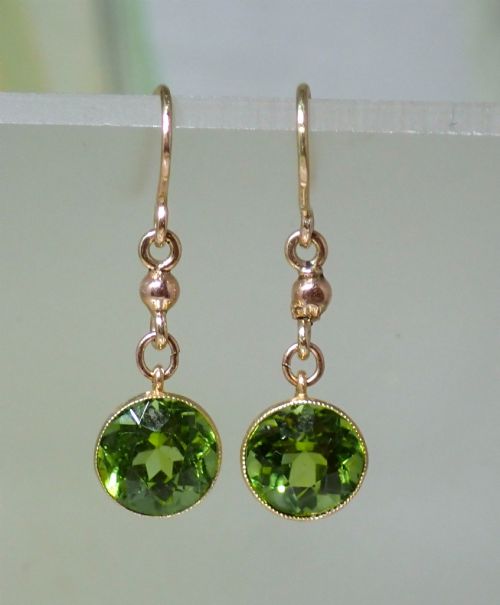
A vintage peridot gold pendant brings together bright green peridot and warm gold, most often in delicate Edwardian or Victorian drops.
Vintage Peridot Gold Pendant
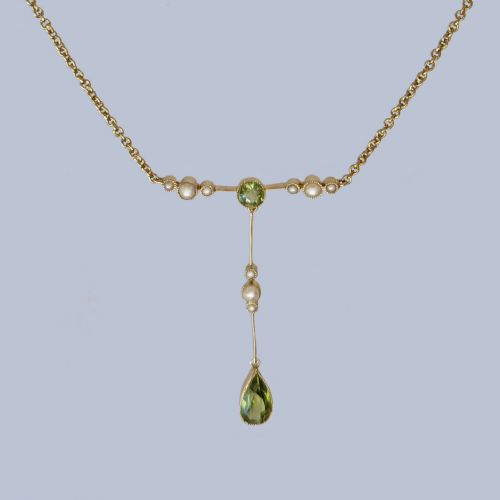
When you search for a vintage peridot gold pendant, you encounter pieces dominated by Edwardian and Victorian examples, alongside items from the nineteenth century and mid twentieth century. These jewels primarily take the form of pendants and necklaces, frequently paired with seed pearls in garland or lavalier designs.
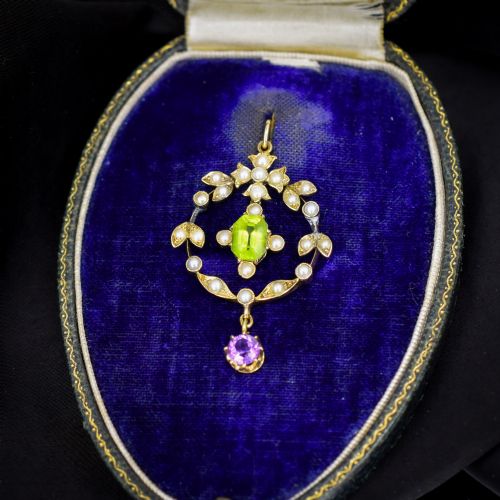
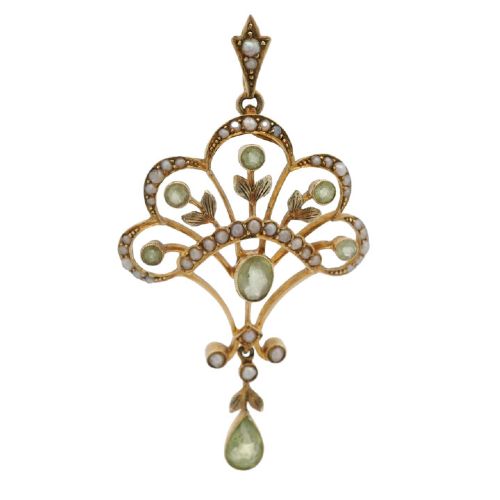
The version you are most likely to meet on this page is an Edwardian drop pendant in nine carat or fifteen carat gold. These pieces often combine peridot with seed pearls, arranged in symmetrical floral or openwork motifs characteristic of the period.
How they were made
Jewellers of the nineteenth and early twentieth centuries constructed these pendants using nine carat or fifteen carat gold, occasionally incorporating platinum or white gold in later pieces. Gemstones such as peridot and diamond were hand set alongside seed pearls, which were typically threaded and secured within delicate metal frameworks.
Techniques relied on fine wirework, collet settings and pierced mounts to create lightweight yet intricate drop silhouettes. The integration of seed pearls required precise drilling and mounting by hand, a hallmark of traditional jewellery production from the Edwardian and Victorian eras.
Listings feature items from the Edwardian, Victorian, nineteenth century and nineteen fifty periods, employing nine carat and fifteen carat gold.
What varies in quality
The distinction between standard examples and finer pieces rests on the weight and purity of the gold, alongside the clarity and cut of the peridot. Fifteen carat gold settings and larger central stones indicate a higher tier of production compared to lighter nine carat alternatives.
Execution of the metalwork also separates the ranges, with hand pierced openwork and secure pearl setting showing superior craftsmanship. Pieces retaining their original configuration and matching stones command greater regard among collectors.
The Vintage Peridot Gold Pendant Glossary
- Peridot
- A transparent yellowish-green gemstone that forms the visual centrepiece of these jewels. It has been favoured in jewellery since the Victorian and Edwardian periods for its distinct lime hue.
- Seed pearl
- A very small natural or cultured pearl used in clusters or borders around larger stones. These tiny pearls define the delicate garland styles seen in Edwardian necklaces.
- Lavalier
- A pendant featuring a main gemstone from which one or more smaller drops are suspended. This style gained popularity during the Edwardian era.
- Garland style
- A design motif mimicking floral wreaths, ribbons and swags using gold and gemstones. It is heavily associated with Edwardian jewellers influenced by eighteenth-century French aesthetics.
- Collet setting
- A band of metal that encircles the gemstone to hold it in place. This technique was widely used in antique gold jewellery before modern prong settings became standard.
Vintage Peridot Gold Pendant: Frequently Asked Questions
What periods do these pendants come from?
The pieces span the Victorian and Edwardian eras, with examples dating from the late nineteenth century through to the mid twentieth century. Edwardian designs from around nineteen hundred to nineteen ten appear most frequently.
Earlier Victorian specimens from eighteen eighty also feature in the selection, alongside occasional mid-century items from nineteen fifty.
Are these pieces made of solid gold?
The items are constructed from solid gold, predominantly in nine carat and fifteen carat standards. The evidence does not record plated or filled alternatives.
Fifteen carat gold appears often in Edwardian pieces, while nine carat gold spans both Victorian and later twentieth-century examples.
What stones are usually paired with peridot?
Seed pearls are the most common companion, frequently clustered around the peridot in floral or garland arrangements. Diamonds also appear as accent stones in higher tier pendants.
Less common combinations include amethyst, garnet, ruby, goldstone and mother of pearl, reflecting the diverse styles of traditional jewellery.
How should I wear an antique pendant?
These pendants work well suspended from fine gold chains, much as they were worn in the Edwardian and Victorian periods. Their drop design and lighter weight suit everyday wear.
Care should be taken with seed pearls, as organic materials require gentle treatment and protection from moisture and cosmetics.