
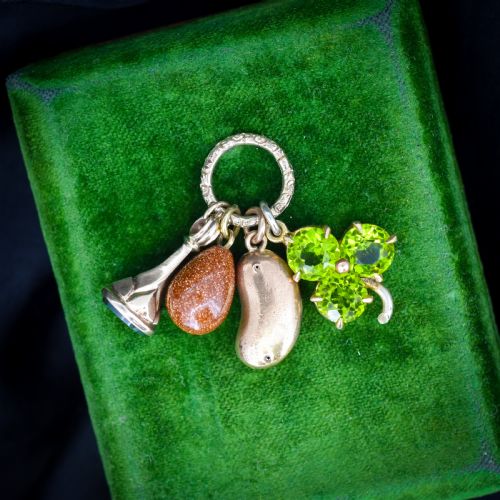


Vintage Peridot Drop Pendant
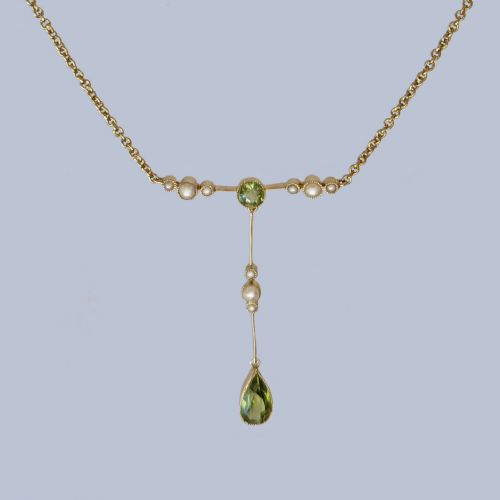
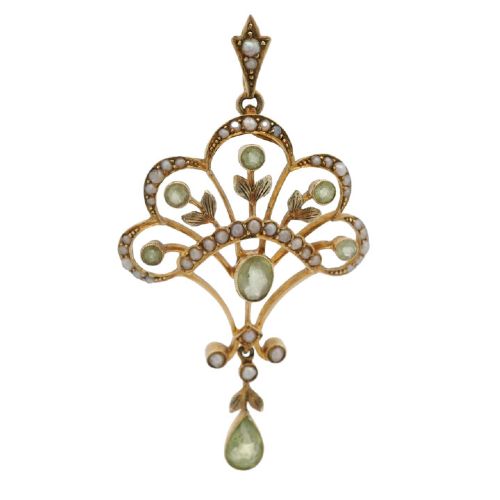
These vintage peridot drop pendants combine pale green stones with delicate seed pearls, offering buyers a distinct piece of Edwardian and Victorian craftsmanship.
Vintage Peridot Drop Pendant
A vintage peridot drop pendant represents a specific style of antique jewellery that homeowners and collectors seek for its delicate green colour and historical charm. When searching for a vintage peridot drop pendant, buyers encounter pieces primarily originating from the Edwardian and Victorian eras, alongside a few mid twentieth century examples.
Materials and construction methods
Peridot stones are set in gold frames, with listings showing both nine carat and fifteen carat yellow gold variants, as well as platinum accents. Seed pearls frequently accompany the peridot, creating the intricate floral and linear motifs typical of the Edwardian and Arts and Crafts styles.
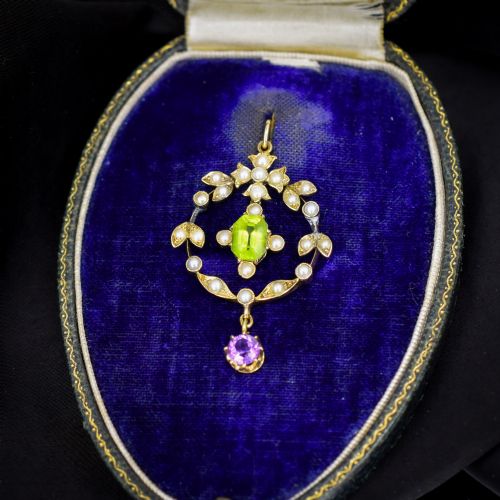
Goldsmiths of the period employed openwork metal techniques to suspend the drop stones below the main chain or brooch mount. Handcrafted metalwork defines the construction, often pairing green peridot with contrasting purple amethyst or colourless paste stones.
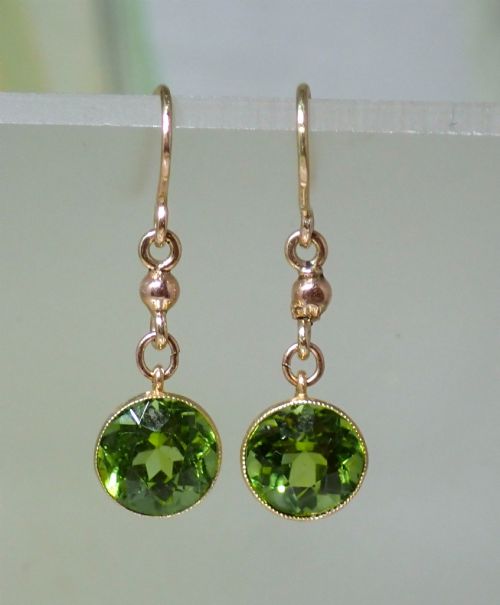
Pendants, necklaces, brooches, and drop earrings represent the primary object types recorded across the site.
Factors of distinction
Quality in these pendants rests upon the carat weight and purity of the gold, with fifteen carat pieces offering a richer metal hue compared to nine carat counterparts. The precision of the seed pearl setting and the clarity of the faceted peridot further divide standard production from finer workshop output.
The integrity of the original drop mechanism and the subtlety of the Edwardian or Arts and Crafts wirework indicate the maker's skill. Pieces retaining their original chain or uncompromised convertible brooch fittings command greater attention from those studying period jewellery.
The Vintage Peridot Drop Pendant Glossary
- Peridot
- A transparent olive-green gemstone utilised in Edwardian and Victorian jewellery. This silicate mineral provides the bright focal colour characteristic of these drop pendants.
- Seed Pearl
- A very small natural or cultured pearl used in clusters around central gemstones. These tiny pearls define the delicate borders seen on Edwardian pendants.
- Lavalier
- A style of pendant featuring a dangling stone or drop suspended from a smaller motif. This form gained popularity during the Edwardian period.
- Arts and Crafts
- A design movement prioritising handcrafting and natural motifs over mass production. Pieces in this style feature organic forms and visible artisan techniques.
- Nine Carat Gold
- An alloy containing thirty seven point five percent pure gold, commonly found in British antique jewellery. It provides a durable metal base for delicate stone settings.
Vintage Peridot Drop Pendant: Frequently Asked Questions
How do I date a peridot pendant?
Dating relies on stylistic clues such as the openwork filigree of the Edwardian era and the characteristic use of fifteen carat gold. Hallmarks, where present, help confirm the precise decade of manufacture.
Items from the nineteen hundreds often feature distinct seed pearl clusters and pendant drops that differ visibly from later mid century cluster designs.
Are these pendants fragile?
These antique pieces require careful handling due to the delicate seed pearls and fine gold wirework typical of Edwardian and Victorian settings. Peridot is also a moderately soft gemstone that benefits from mindful wear.
Store the necklace separately to prevent scratching the gold and avoid exposing seed pearls to harsh cleaning chemicals.
Can I wear a pendant as a brooch?
Certain pieces on this page were made as convertible pendant brooches, featuring a hidden pin mechanism alongside the suspension loop. This dual functionality was common in Edwardian jewellery.
Check the reverse of the piece to identify if a pin and safety catch are integrated into the mounting.
What is suffragette jewellery?
Suffragette jewellery incorporates the colours green, white, and violet, symbolising give women votes through peridot, pearls, and amethysts. Edwardian makers arranged these specific stones together in pendants and lavaliers.
These pieces reflect a distinct political history while sharing the same craftsmanship seen in standard peridot drops of the era.