

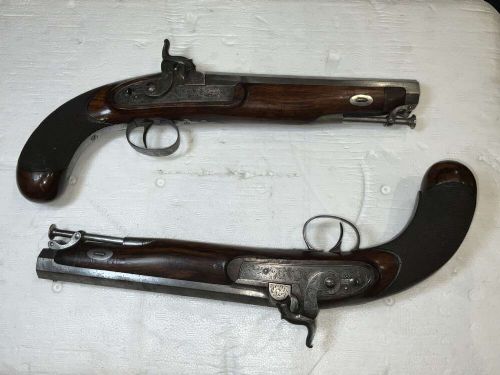
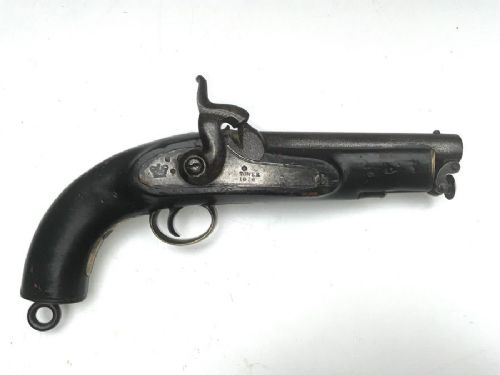
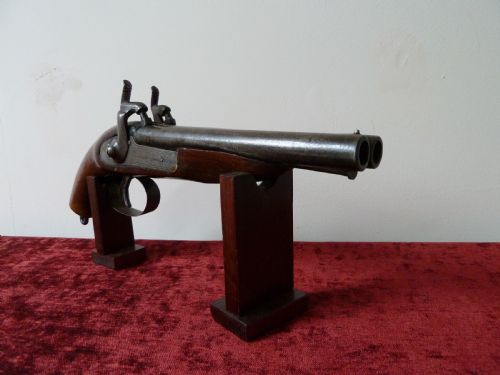


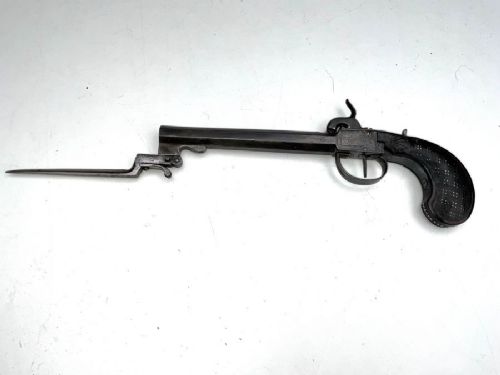

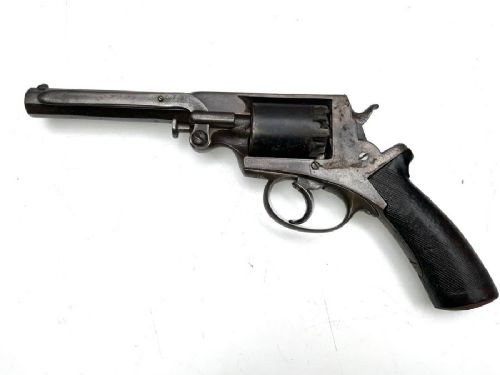


Vintage Percussion Cap Pistol
A vintage percussion cap pistol brings tangible nineteenth-century military history into your hands, offering solid steel construction and authentic period design.
Vintage Percussion Cap Pistol
A vintage percussion cap pistol encompasses nineteenth-century firearms spanning pocket models, belt pistols, and military revolvers. These pieces date primarily from the mid-nineteenth century, including the Victorian era and the American Civil War period.
Buyers encounter distinct forms such as double-barrelled percussion pistols, cavalry pistols, and boxed revolvers complete with accessories. The selection reflects both British military service and mid-nineteenth-century American martial issue.
The category centres on functional firearm designs from the 1850s and 1860s, featuring walnut grips, brass fittings, and steel barrels.
How they were made
Construction relies heavily on forged steel and iron for barrels, frames, and lock mechanisms, paired with timber stocks. Makers shaped grips from dense hardwoods such as walnut, oak, and mahogany.
Metal components often feature engraved details or official military stamps, while fitted presentation boxes incorporate interior linings of velvet.
Vintage Percussion Cap Pistol Retail Price Guide 2026
Typical asking prices for vintage percussion cap pistol among the pieces listed under this phrase on Sellingantiques today, from the lower quarter to the upper quarter. They describe what is for sale here now, not the wider market.
Listings feature steel, brass, iron, and mahogany across nineteenth-century military and civilian forms.
What varies in quality
Quality depends upon the crispness of the mechanical action and the legibility of maker stamps or serial numbers. Matching numbers across components separate standard utility arms from superior collector pieces.
The preservation of original wood finishes on grips and the clarity of metal engraving distinguish finer examples from heavily worn pieces.
Colt·Beaumont-Adams·Tower
The Vintage Percussion Cap Pistol Glossary
- Percussion cap
- A small metal cup containing a priming compound placed on the nipple of a firearm to ignite the powder charge. This invention revolutionized nineteenth-century weaponry by replacing flintlock mechanisms.
- Calibre
- The internal diameter of the barrel bore, determining the size of the ammunition used. Measurements in these pieces include specific fractions such as thirty-six and forty-four.
- Smoothbore
- A barrel lacking internal rifling grooves, typical of certain military and officer pistols intended for shot or ball. This design predates widespread adoption of rifled barrels.
- Martial issue
- Equipment manufactured to official military specifications for armed forces use. These pieces often bear government inspection marks or regimental stamps.
Vintage Percussion Cap Pistol: Frequently Asked Questions
How do I display a percussion pistol safely?
Many collectors house these arms in fitted wooden boxes alongside period accessories to protect the timber and metal surfaces.
Wall mounting in secure, climate-controlled cabinets also allows clear visibility without exposing the steel and walnut to excessive humidity.
Were these pistols used in combat?
Numerous pieces originate from the American Civil War period and British military service, indicating active deployment by officers and cavalry.
Martial issue markings and regimental stamps often provide direct evidence of official military distribution.
What is the difference between a belt pistol and a pocket pistol?
Belt pistols are generally larger, heavier firearms equipped with side hooks for securing to a uniform or sash during transit.
Pocket pistols feature compact dimensions designed for discreet personal carrying and closer-range encounters.
How do I identify the date of a percussion pistol?
Dating relies on recorded serial numbers, proof marks, and specific model introductions associated with mid-nineteenth-century manufacturers.
Stylistic indicators such as barrel length and frame design further narrow the period of production between 1840 and 1865.