

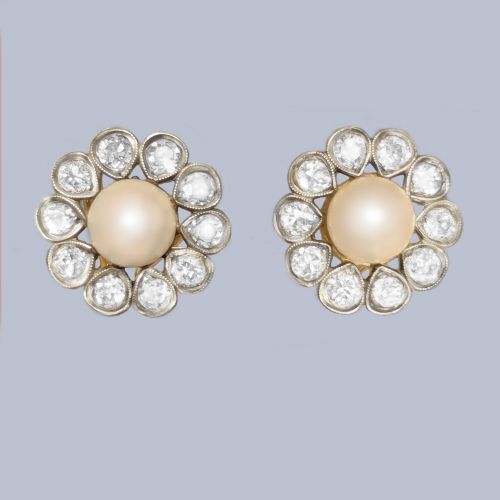
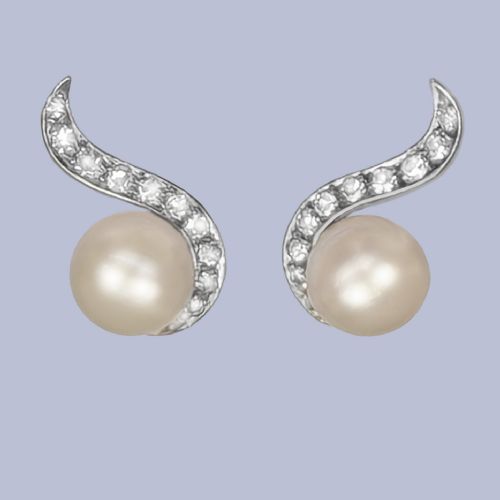


Vintage Pearl Clips
These vintage pearl clips span decades of fine jewellery design, offering secure wear without the need for pierced ears.
Vintage Pearl Clips
Vintage pearl clips encompass a variety of ear ornaments and brooches designed to secure pearls to clothing or unpierced lobes without standard posts. When buyers search for vintage pearl clips, they generally encounter mid-century screw-back designs alongside earlier Victorian cluster formations.
The selection ranges from simple 1930s screw-back earrings to elaborate 1950s diamond and pearl clusters set in white gold. Alongside earrings, the category occasionally includes antique collar brooches utilising pearl and gold work.
Most examples originate from the mid-twentieth century, drawing on styles such as Art Deco, Retro, and Mid-Century Modern. These pieces showcase cultured pearls alongside natural varieties, mounted on gold or platinum backings.
Materials and construction
Construction relies heavily on precious metals including nine-carat and fourteen-carat gold, alongside eighteen-carat white gold and platinum. Stones such as diamonds, turquoise, and bloodstone frequently accompany the central pearls.
Clamping mechanisms vary by era, featuring screw-backs, omega backs, and hinged clip frames designed to hold securely against the earlobe or fabric. Pearls are typically mounted via pegs or bonded into settings surrounded by metal clusters.
Vintage Pearl Clips Retail Price Guide 2026
Typical asking prices for vintage pearl clips among the pieces listed under this phrase on Sellingantiques today, from the lower quarter to the upper quarter. They describe what is for sale here now, not the wider market.
Precious metals utilised across the pieces include nine-carat, fourteen-carat, and eighteen-carat gold alongside platinum.
Quality factors
Quality rests upon the calibre of the gemstones and the precision of the metalwork in the mounting. Pieces featuring larger diamond contents and higher carat gold frames distinguish the top tier of the range.
The lustre of the pearl and the integrity of the mechanical clip mechanism also determine the grade. Well-preserved hinge tension and unblemished pearl surfaces elevate a piece above standard examples.
The Vintage Pearl Clips Glossary
- Screw-back
- An earring mechanism utilising a threaded post and nut to tighten the finding against the lobe. This design allows the wearer to adjust the pressure manually.
- Mabe pearl
- A cultured hemisphere pearl grown against the inside shell of an oyster rather than within the tissue. They often appear in larger, domed cluster settings.
- Cluster
- A gemstone arrangement where smaller stones surround a larger central element, frequently seen in floral or sunburst motifs. This style maximises visual impact on the ear.
- Omega back
- A hinged clip finding shaped like the Greek letter omega, providing a broad, comfortable grip for unpierced ears. It combines a post with a snapping clip arm.
Vintage Pearl Clips: Frequently Asked Questions
How do screw back clips work?
Screw backs utilise a small threaded screw behind the lobe to adjust the pressure manually. This allows the wearer to secure the ornament comfortably without piercing.
They appear frequently on pieces from the 1930s and 1940s. The user simply turns the screw until the finding rests firmly against the skin.
Are these suitable for daily wear?
These items suit regular wear provided the mechanism remains secure and the setting is treated with care. Gold and platinum provide durable foundations for daily use.
Precious pearls require gentle treatment to avoid scratching the surface nacre. Removing them before swimming or bathing preserves the integrity of the adhesive and metal.
How do I identify the period?
Period identification relies on examining the metal hallmarks, setting styles, and mechanical fixings. For instance, geometric lines point towards Art Deco influences.
Mid-century designs often incorporate heavy gold wirework and structured cluster arrangements. Comparing the clasp type with known manufacturing eras clarifies the timeline.