




Vintage Pearl Bar Pin
A vintage pearl bar pin offers slender elegance, fastening cleanly to a lapel while catching the light with soft, organic lustre.
Vintage Pearl Bar Pin
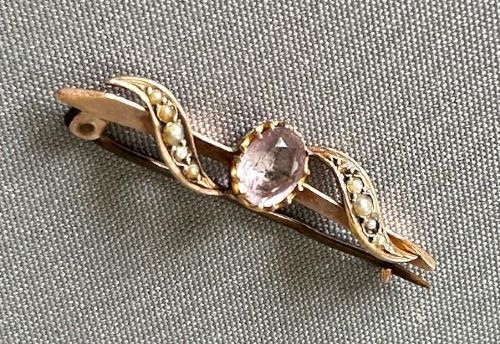
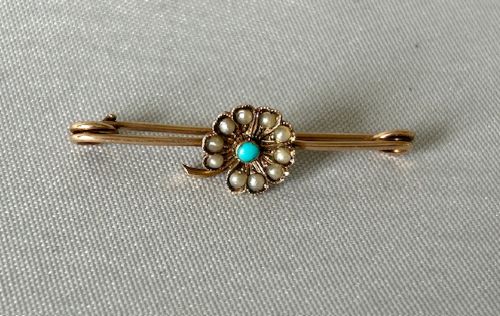
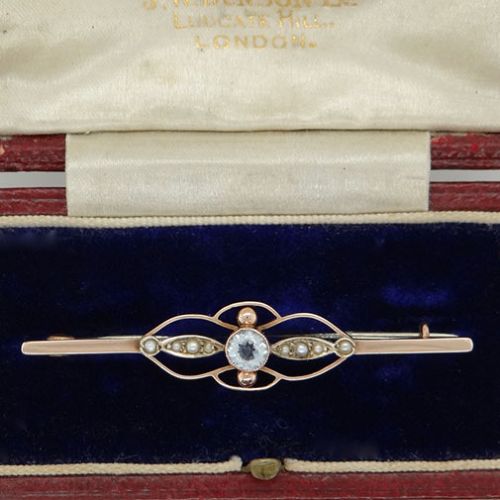
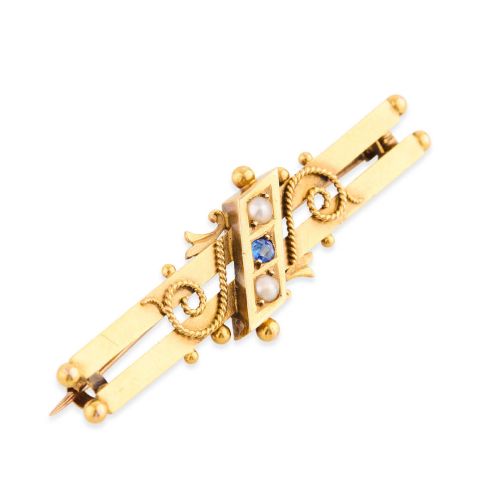
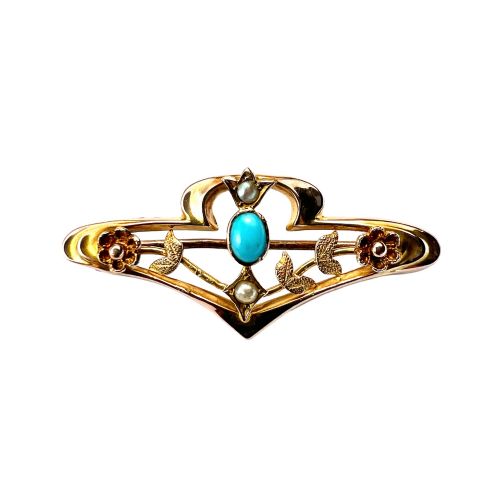
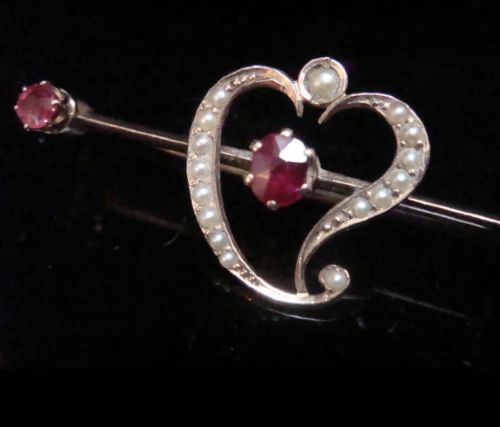
When searching for a vintage pearl bar pin, buyers encounter slender brooch forms spanning Victorian, Edwardian, and Art Deco periods. These pieces take the shape of horizontal bars, crescents, hearts, and floral motifs designed to secure clothing with understated grace.
The versions most likely to appear on this page feature central pearls combined with gold settings, ranging from nine-carat yellow and rose gold to fifteen-carat and eighteen-carat varieties. Makers frequently integrated diamonds, rubies, turquoises, and peridots alongside the pearls to enrich the linear composition.
Materials and technique
Goldsmiths constructed these pins using varied carat gold frames, often backing them with silver or platinum to enhance the brightness of mounted diamonds. Pearls and seed pearls were meticulously set into the metalwork, alongside gemstones such as aquamarines, garnets, and sapphires.
Craftsmen utilised techniques including enamel work and open-backed stone settings to maximise light refraction through the coloured gems. The metal bars themselves were cast or drawn into slender profiles, incorporating functional pin stems and safety catches.
Vintage Pearl Bar Pin Retail Price Guide 2026
Typical asking prices for vintage pearl bar pin among the pieces listed under this phrase on Sellingantiques today, from the lower quarter to the upper quarter. They describe what is for sale here now, not the wider market.
Several pieces feature winged insects and horseshoe shapes, proving that Victorian makers loved adding a touch of whimsy to precious metals.
Quality variations
The standard of a piece depends upon the integration of materials, where fifteen-carat or eighteen-carat gold and platinum settings elevate the work above standard nine-carat or rolled gold alternatives. The presence of natural pearls and substantial diamond accents further distinguishes superior examples.
Design complexity dictates the upper tier of the range, separating simple linear bars from intricate Art Nouveau leaf motifs, gemstone clusters, and complete jewellery sets. Fine hand-finishing in enamel and precise stone symmetry mark the distinction between ordinary production and exceptional craftsmanship.
The Vintage Pearl Bar Pin Glossary
- Bar pin
- A horizontal brooch fashioned as a narrow strip of metal, often set with stones and pearls across its length.
- Seed pearl
- A very small natural or cultured pearl, frequently used in clusters or delicate floral patterns on antique jewellery.
- Rose-cut diamond
- An antique diamond cut featuring a flat base and a faceted dome, popular in Edwardian and Victorian mountings.
- Rolled gold
- A manufacturing method where a thin layer of gold is mechanically bonded to a base metal core.
Vintage Pearl Bar Pin: Frequently Asked Questions
How do I wear a vintage pearl bar pin?
These pins fasten securely to lapels, silk scarves, or heavy winter coats using traditional pin stems and catches.
Positioning the slender bar horizontally across a lapel or vertically on a collar highlights the linear form without pulling delicate fabrics.
How do I date a pearl bar pin?
Dating relies upon stylistic markers such as floral Art Nouveau curves, geometric Art Deco lines, or the heavy mountings typical of the Victorian era.
Assay marks and carat stamps on the reverse of the gold bar provide further clues to the manufacturing period.
Are pearls in these pins natural?
Many Edwardian and Victorian pieces incorporate natural pearls or seed pearls, reflecting the period before cultured pearls became dominant.
Examining the lustre and surface texture under magnification helps identify the organic origin of the pearls.
What metals are used in bar pins?
Makers utilised nine-carat, fifteen-carat, and eighteen-carat gold, alongside rose gold and yellow gold variations.
Platinum and silver were frequently introduced in Edwardian mountings to hold diamonds securely against the white metal surface.