


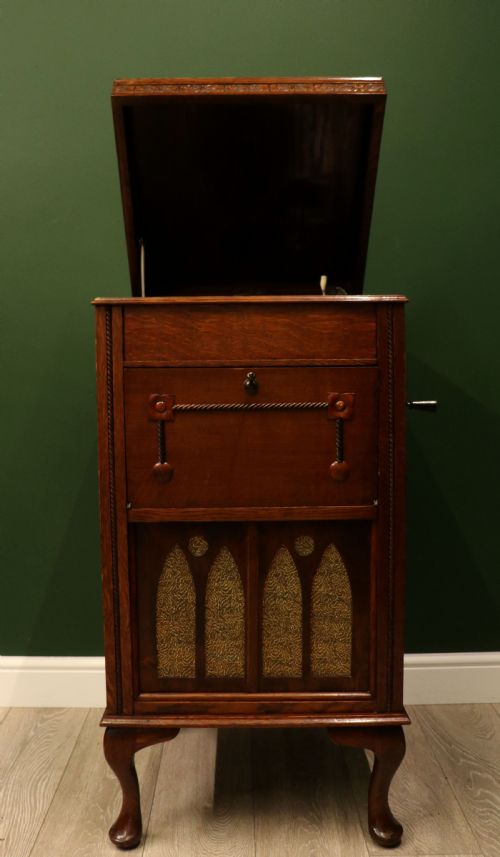


Vintage Parlour Cabinet
These vintage parlour cabinet designs bring refined timber and glass display into the reception room, offering both storage and a stage for treasured possessions.
Vintage Parlour Cabinet
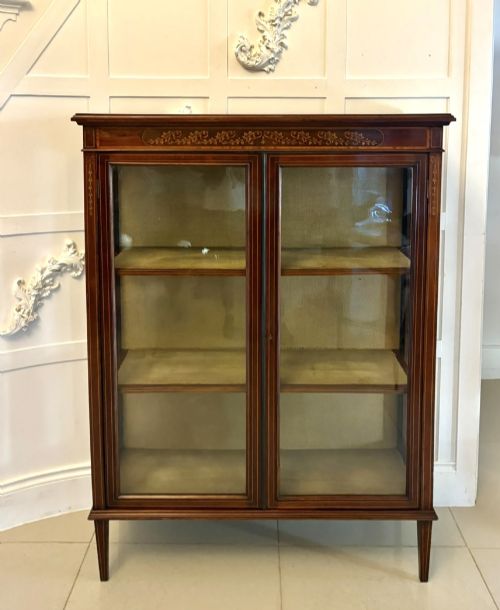
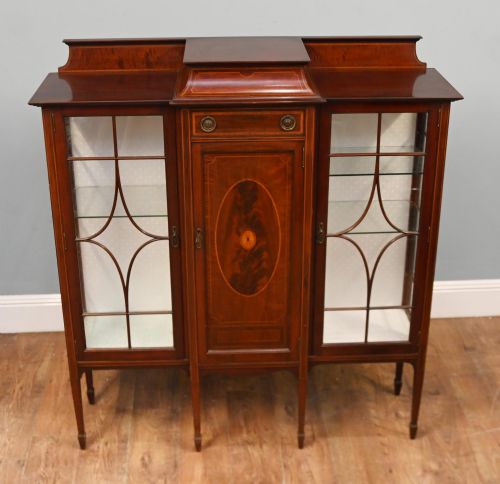
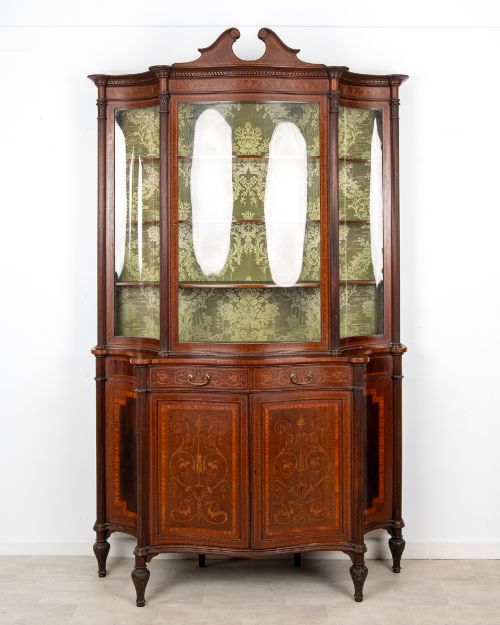
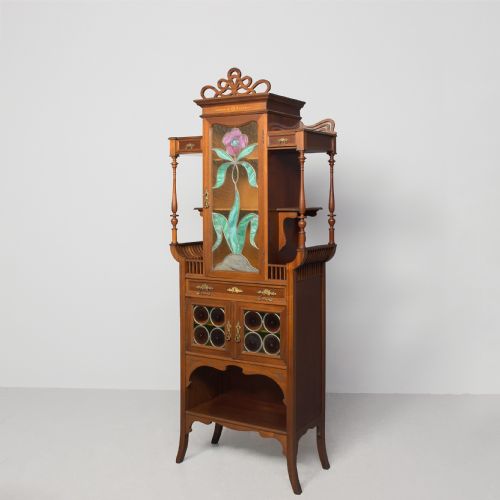
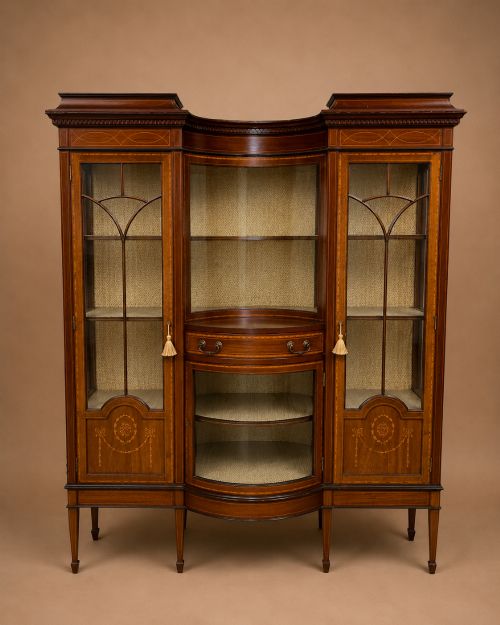
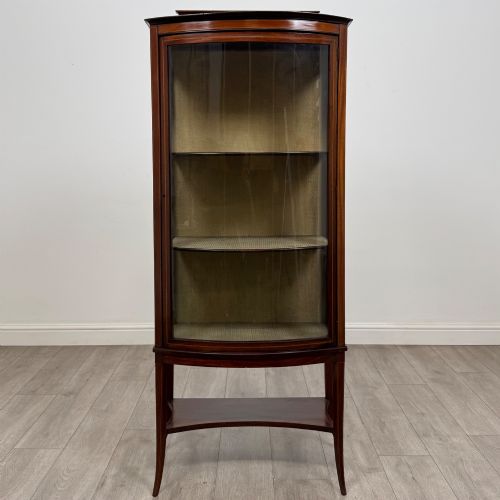
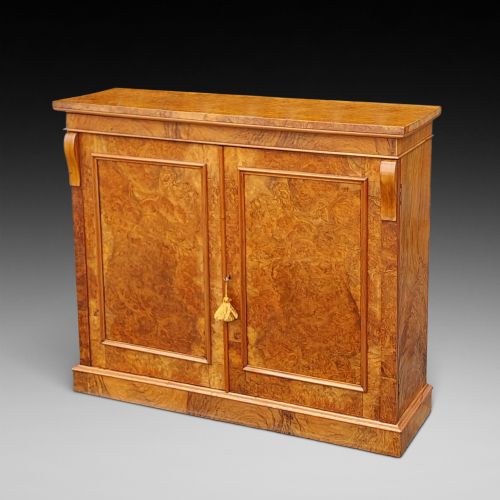
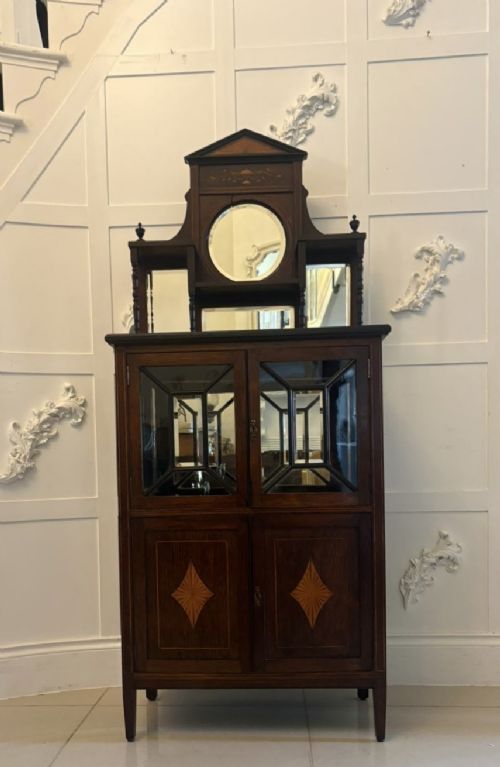
When searching for a vintage parlour cabinet, buyers encounter a selection spanning the Victorian and Edwardian eras, alongside pieces built in revival styles like Sheraton and Louis XV. The pieces listed on this page primarily take the form of display cabinets, credenzas, side cabinets, and chiffoniers designed for the principal reception rooms of past homes.
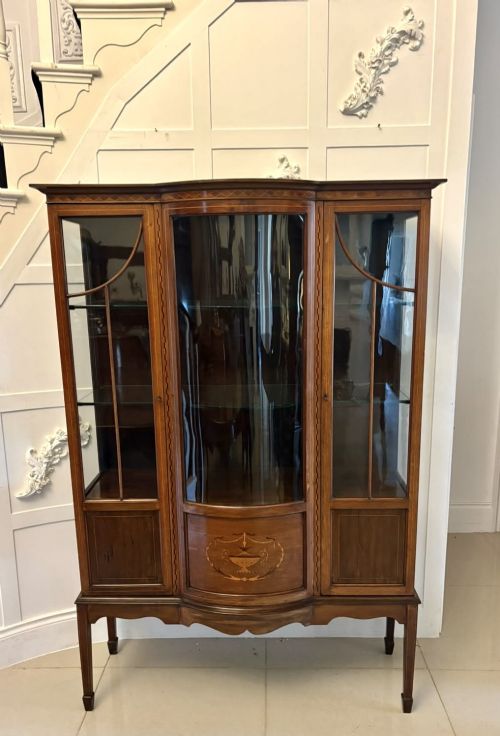
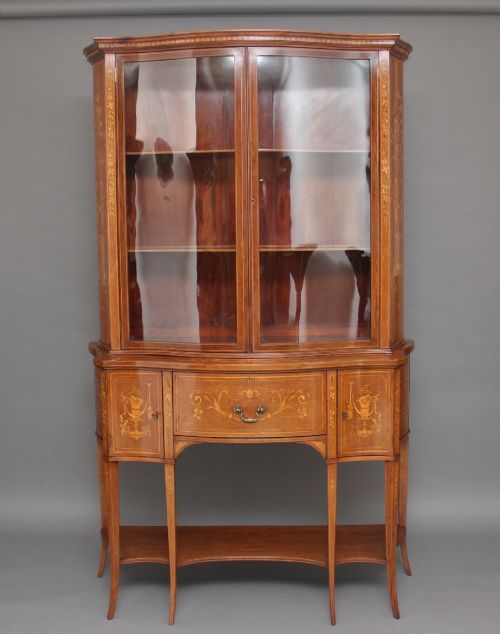
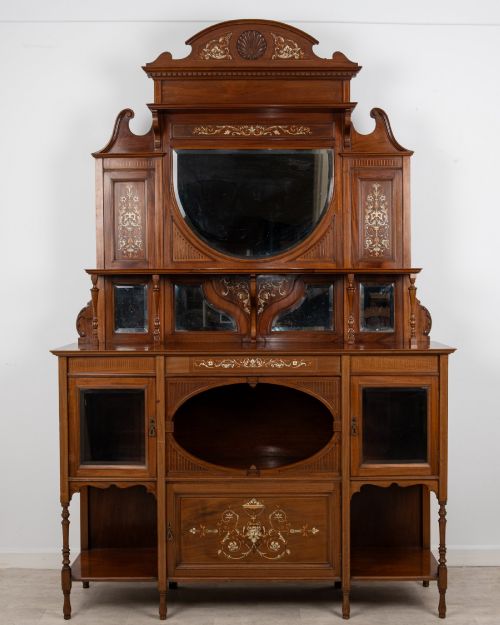
Makers and workshops of the nineteenth and early twentieth centuries produced these items in various configurations, including bow front silhouettes, serpentine shapes, and upright gramophones. Timbers such as mahogany, satinwood, walnut, and rosewood dominate the forms, frequently enriched with marquetry, boxwood inlay, and mirrored backs.
Materials and construction
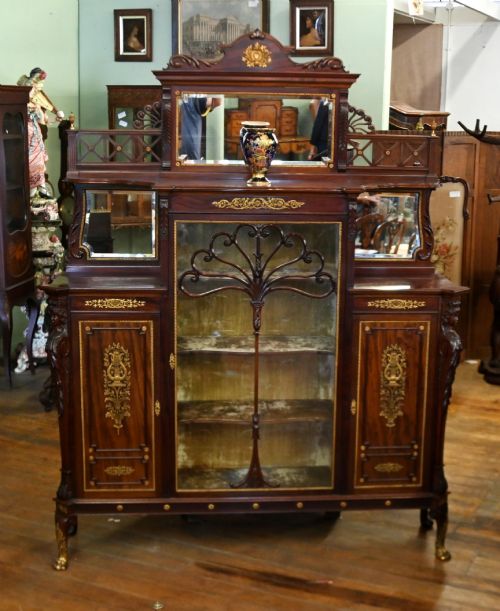
Craftsmen built the carcases using solid hardwoods like mahogany, walnut, and oak, applying veneers of exotic timbers such as satinwood, kingwood, and rosewood to visible surfaces. Detailed marquetry, boxwood stringing, and elaborate brass mounts frequently decorate the exterior panels.
Glass panels are set into doors designed to protect porcelain and curiosities, while internal mirrored backs reflect light through the display space. French polishing techniques seal the timber surfaces to produce a glossy finish that highlights the natural grain.
Vintage Parlour Cabinet Retail Price Guide 2026
Typical asking prices for vintage parlour cabinet among the pieces listed under this phrase on Sellingantiques today, from the lower quarter to the upper quarter. They describe what is for sale here now, not the wider market.
Among the formal timber furnishings sits an upright parlour gramophone by U Phone of Leeds, ready to play music in the drawing room.
Distinctions in quality
The refinement of the timber selection and the complexity of the inlay separate standard production from exhibition pieces. Finer examples display precise boxwood and satinwood stringing alongside meticulously cut marquetry motifs.
Structural integrity and the retention of original glass, brass hardware, and internal fabric linings define the better-preserved items. Pieces bearing recognised workshop signatures demonstrate superior cabinet-making standards in their joinery and carving.
Maple and Co·Shapland and Petter·U Phone of Leeds
The Vintage Parlour Cabinet Glossary
- Marquetry
- Decorative patterns formed by the insertion of pieces of wood, shell, or ivory into a veneered surface. This technique creates pictorial or geometric designs across cabinet doors and panels.
- Credenza
- A low-standing cabinet or sideboard, often featuring glass-fronted side cupboards and central doors. Originating in Italy, it became a staple of Victorian and revival drawing rooms.
- Chiffonier
- A low sideboard or cabinet with drawers and shelves, developed during the nineteenth century. It provides both concealed storage and display space for china and books.
- Vitrine
- A glass-fronted cabinet designed specifically for displaying porcelain, curiosities, or objets d'art. The style places emphasis on maximum glass visibility.
- Serpentine
- A curved furniture front characterised by a convex centre flanked by concave ends. This shaping requires advanced joinery skills to achieve the undulating line.
Vintage Parlour Cabinet: Frequently Asked Questions
Where should I place a parlour cabinet?
These cabinets suit drawing rooms, dining spaces, or entrance halls where their display capabilities can be appreciated. Positioning them away from direct sunlight protects the timber finishes and interior fabrics from fading.
Ensure the floor is level so that glass doors open and close smoothly without catching on the frame. Leave sufficient clearance around bow front and serpentine shapes to maintain clear walkways.
How do I care for the timber?
Dust the surfaces regularly with a soft, dry cloth to prevent the accumulation of grit that might scratch the polish. Apply a quality beeswax sparingly when the timber appears dry, buffing it gently to maintain the sheen.
Avoid using silicone-based sprays, as these can penetrate old finishes and damage the wood over time. Keep the cabinets away from radiators and extreme temperature fluctuations to prevent timber movement.
How do I distinguish Edwardian from Victorian pieces?
Victorian cabinets generally feature heavier proportions, darker burr walnut or mahogany timbers, and more robust carving. Designs from this period often incorporate mirrored backs and elaborate brass mounts.
Edwardian pieces tend to be lighter in scale, frequently employing satinwood inlay, Sheraton revival motifs, and brighter mahogany or rosewood. The overall aesthetic shifts towards a more refined, delicate appearance.
Can I store heavy items inside?
The internal wooden or glass shelves are intended for display items such as china, glassware, and small ornaments. Placing heavy books or dense objects on the shelves can cause sagging or structural strain.
Distribute the weight evenly across the shelves if you are displaying ceramics. For heavier items, utilise the base cupboards where the support is more robust.