


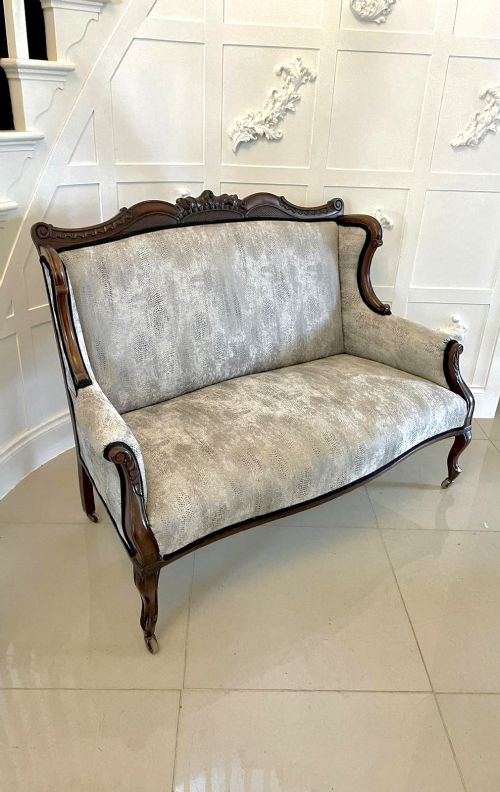
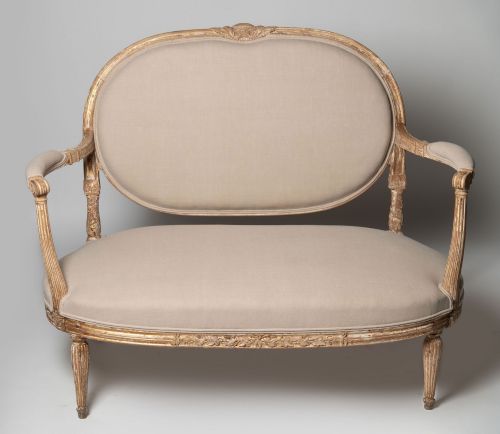
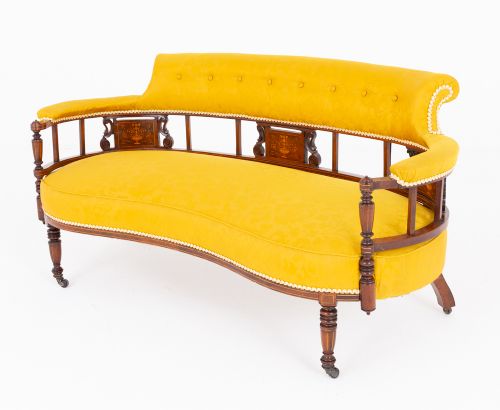


Vintage Parlor Couch
A vintage parlor couch brings period character to a room, offering deep seats and distinctive nineteenth and early twentieth-century frames.
Vintage Parlor Couch
A vintage parlor couch encompasses settees, sofas, chaise longues, and daybeds originating from the nineteenth century through the Edwardian period. Buyers encounter forms ranging from French Rococo Revival and Louis XVI styles to substantial English country house Chesterfields and inlaid salon settees.
The materials span mahogany, rosewood, walnut, and giltwood frames paired with diverse upholstery fabrics including velvet and general textiles. Many examples reflect specific eras such as Victorian, William IV, and Edwardian Art Nouveau design movements.
Construction and materials
Frames rely on dense hardwoods like mahogany, rosewood, and walnut, often shaped with carved details or enhanced by giltwood finishes. Joinery traditions of the nineteenth and early twentieth centuries ensure structural integrity across larger settees and smaller salon chairs.
Upholstery techniques involve traditional stuffing and springs covered in fabrics such as velvet or patterned textiles. Certain pieces retain original upholstery structures while others require complete re-upholstery to suit modern interiors.
Vintage Parlor Couch Retail Price Guide 2026
Typical asking prices for vintage parlor couch among the pieces listed under this phrase on Sellingantiques today, from the lower quarter to the upper quarter. They describe what is for sale here now, not the wider market.
Several settees require complete re-upholstery, offering a blank canvas for unexpected fabric choices.
Evaluating craftsmanship and condition
Quality rests in the crispness of the timber carving and the architectural balance of the frame, distinguishing standard production from finer cabinetmaker work. Wood selection and grain figuration across mahogany and rosewood surfaces dictate visual depth.
Intact original elements, such as specific inlay work or gilded finishes, elevate a piece above altered or heavily restored alternatives. The integrity of the underlying woodwork remains paramount regardless of whether the fabric is fresh or scheduled for replacement.
Robert Strahan and Co·Maple and Co
The Vintage Parlor Couch Glossary
- Settee
- A long upholstered seat for more than one person, typically featuring a back and arms. These forms serve as central seating fixtures in period parlors.
- Chaise Longue
- An upholstered chair elongated to support the legs, combining seating and reclining functions. This form appears frequently within French and English nineteenth-century seating groups.
- Giltwood
- Wood carved and treated with a thin layer of gold leaf or gilt paint. This finish defines decorative frames on ornate nineteenth-century seating.
- Inlay
- Contrasting timber or material fitted into depressions within the wood surface to form decorative patterns. Edwardian examples often display delicate stringing or floral motifs.
- Chesterfield
- A deep-buttoned sofa with arms and back of the same height. These substantial seating pieces appear in nineteenth-century country house contexts.
Vintage Parlor Couch: Frequently Asked Questions
How do I choose the right size?
Measure the floor space and circulation routes carefully before selecting a settee, keeping in mind that nineteenth-century proportions can be surprisingly deep or wide.
Account for the visual weight of carved mahogany or giltwood frames so the piece complements rather than overpowers your room.
Can I use these daily?
These seating options are built on robust hardwood frames designed for regular household use.
Ensure the internal webbing and upholstery support meet your comfort needs, particularly if the piece retains older padding.
How do I date a settee?
Examine the timber species, carving style, and structural joinery to place the piece within periods like Victorian, William IV, or Edwardian.
Stylistic markers such as French Rococo Revival curves or Edwardian inlay provide clear chronological indicators.
What is re-upholstery?
Re-upholstery involves stripping a couch down to its wooden frame and rebuilding the springs, stuffing, and outer fabric layer.
Many salon settees are offered specifically for this treatment so you can select a fabric that matches your interior.