

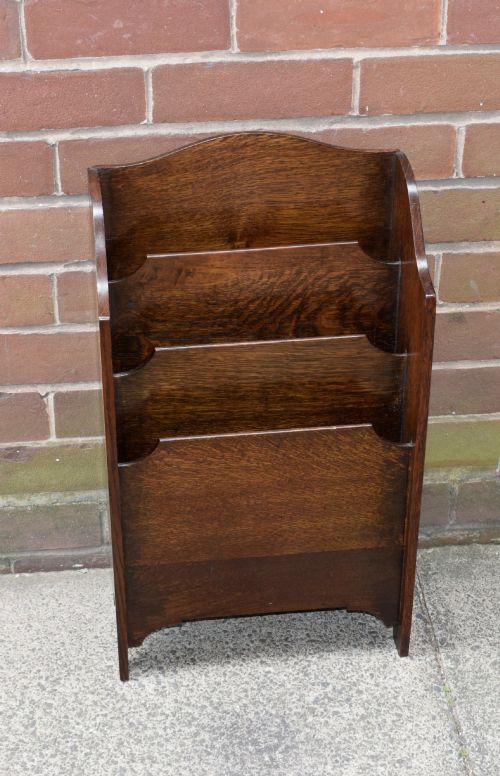


Vintage Paper Tidy
These vintage paper tidy examples span desk boxes, letter racks and magazine stands, offering clever ways to sort correspondence and stationery.
Vintage Paper Tidy
A vintage paper tidy encompasses desk accessories, letter racks and magazine stands designed to keep correspondence and sheets sorted. The items appearing here range from compact desktop organisers to floor-standing newspaper racks.
The selections span several eras, including Victorian, Georgian, Regency, Edwardian, and the 1920s and 1930s. Buyers frequently encounter oak and mahogany desk boxes alongside brass letter racks and rosewood canterbury stands.
Forms vary from lidded stationery boxes with secret drawers to carved waterfall organisers and Chinoiserie stationary holders. Each piece serves to corral loose papers while adding distinct period character to a desk or tabletop.
Materials and construction methods
Woods such as oak, mahogany and rosewood form the primary structure for these items, often shaped through traditional joinery and detailed carving. Cabinetmakers utilised sturdy timbers to ensure desktop boxes and stationery organisers withstood daily use.
Cast brass and gilded elements frequently appear as decorative mounts, hinges or distinct letter rack dividers. Artisans combined metalwork with polished timber surfaces to create functional storage with visual contrast.
Selected pieces incorporate paint finishes, Chinoiserie decoration or pink guilloche enamel over sterling silver for surface enrichment. These decorative techniques reflect the specific aesthetic preferences of periods like the Georgian era and the 1930s.
Vintage Paper Tidy Retail Price Guide 2026
Typical asking prices for vintage paper tidy among the pieces listed under this phrase on Sellingantiques today, from the lower quarter to the upper quarter. They describe what is for sale here now, not the wider market.
Distinctions in quality and execution
The refinement of the timber selection and the crispness of carved details set finer examples apart from simpler utility items. Superior pieces display carefully matched grain patterns and well-executed mouldings that enhance the overall form.
Internal complexity also marks the upper tier, seen in stationery boxes featuring fitted compartments and secret drawers. The precision of the joinery inside these hidden spaces demonstrates the maker's skill.
The Vintage Paper Tidy Glossary
- Canterbury
- A low stand featuring sloped partitions, originally designed to hold sheet music, newspapers or magazines. These pieces often sit on small turned legs with castors.
- Guilloche enamel
- A decorative technique involving precise engine-turned patterns beneath a translucent enamel coating. It frequently graces metal letter racks from the 1930s.
- Chinoiserie
- European decorative style reflecting Chinese artistic motifs, often rendered in painted or lacquered finishes on desk accessories. This style adds intricate pictorial scenes to stationery holders.
- Waterfall desk tidy
- An organiser featuring tiered, cascading compartments designed to hold letters or papers in an overlapping sequence. This arrangement grants clear visibility to stored correspondence.
Vintage Paper Tidy: Frequently Asked Questions
What is a paper tidy used for?
These pieces function as desktop organisers, letter racks or small cabinets designed to keep correspondence, envelopes and documents neatly sorted.
Historically, they sat on writing tables and insurance desks to maintain order among incoming daily post and writing paper.
How do I style a letter rack at home?
A letter rack works effectively on a study desk, hall console or mantelpiece to hold incoming post, notebooks or recipes.
They bring both practical storage and period character to modern workspaces without occupying excessive surface area.
How do I identify a Regency paper tidy?
Regency pieces often utilise exotic timbers like rosewood and feature classical proportions with restrained brass mounts. They frequently take the form of canterbury stands or partitioned racks suited for sheet music and papers.
Construction details and timber choices distinguish these earlier pieces from mid-century or later reproductions.
What materials are typical for these items?
Solid hardwoods such as oak, mahogany and rosewood form the basis of most wooden desk boxes and magazine racks. Brass and sterling silver appear frequently in letter racks and decorative mounts.
Surface treatments range from natural polished grain to paint, gilding and enamel work.