





Vintage Paper Storage
These vintage paper storage pieces keep correspondence, folios and sheets in order with the straightforward utility of past centuries.
Vintage Paper Storage
Vintage paper storage encompasses a diverse range of functional furniture designed to organise documents, magazines, music sheets and newspapers. These pieces originate from periods spanning the Georgian and Regency eras through to the Edwardian period and the early twentieth century.
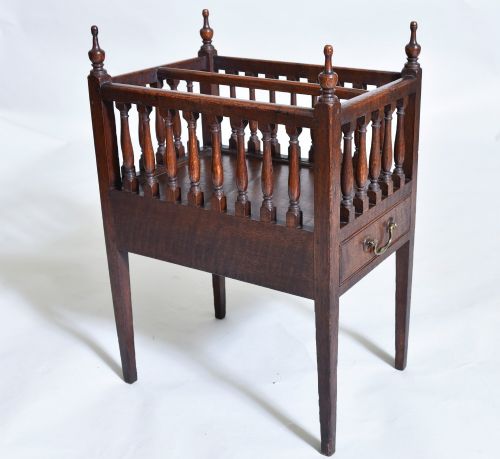
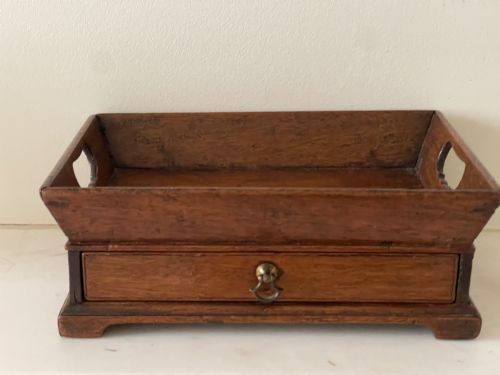
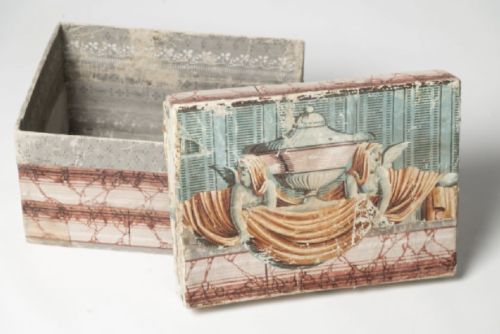
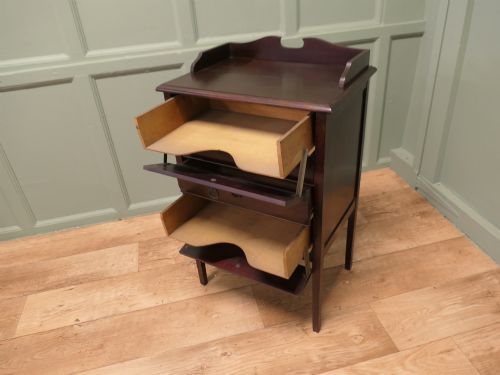
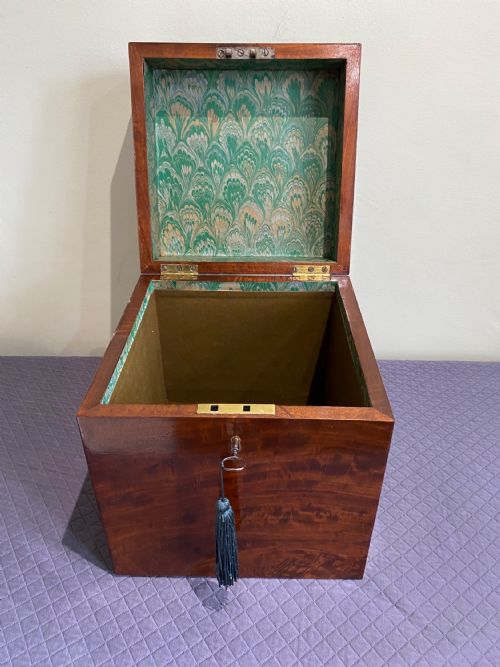
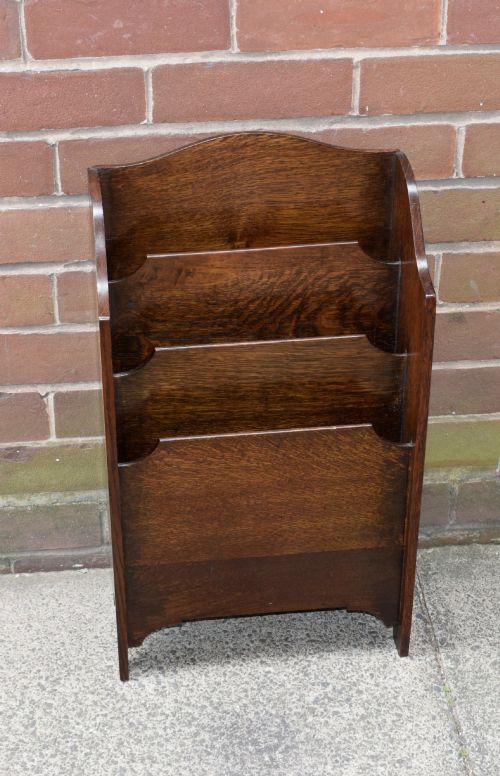
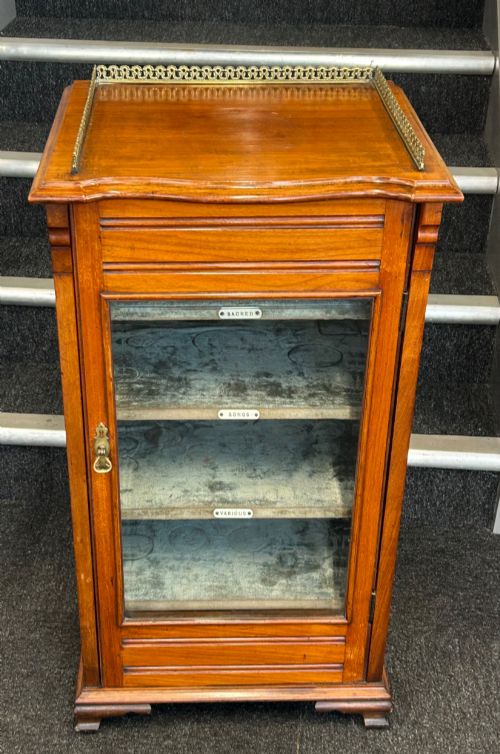
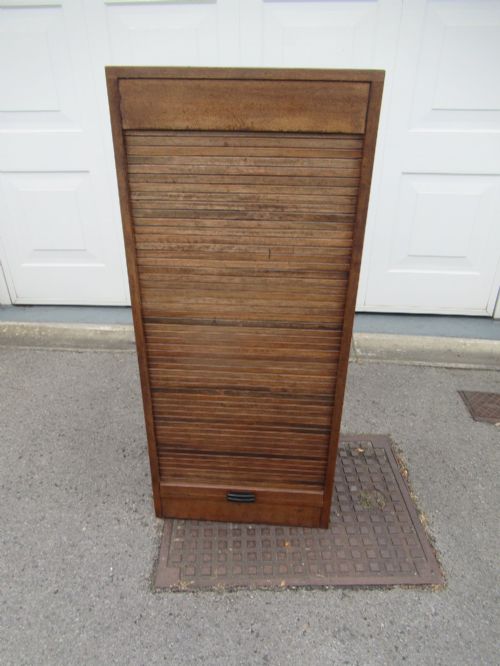
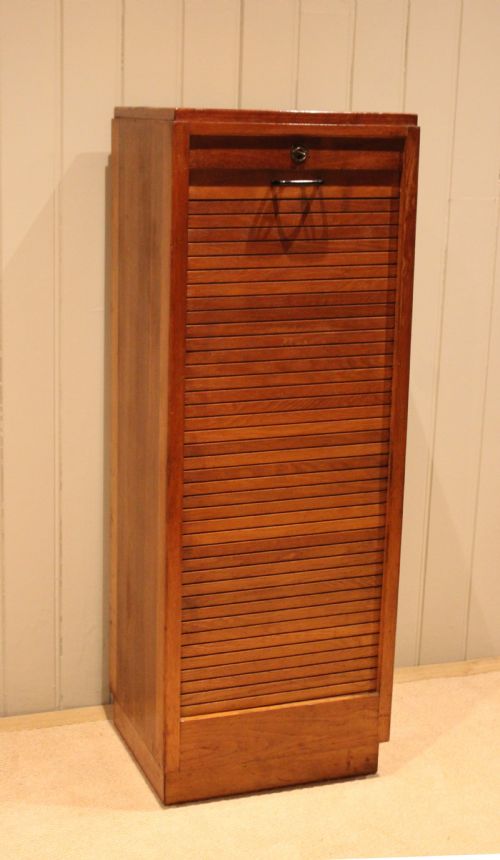
Buyers will encounter several distinct forms on this page, most notably oak and mahogany vertical filing cabinets, tambour front office cabinets, and compartmentalised canterburys. Music cabinets and folio boxes also appear frequently, offering dedicated compartments for paper sheets and correspondence.
Materials range from substantial timbers like walnut, fruitwood and beech to metal, brass, canvas and leather detailing. Each piece reflects the specific organisational needs of its era, whether for a Victorian office or an Edwardian music room.
Materials and construction
Cabinet makers relied heavily on robust hardwoods such as mahogany, oak and walnut to build durable filing cabinets and canterburys. Tambour fronts utilised flexible wooden slats running in tracks, allowing smooth access to internal shelving.
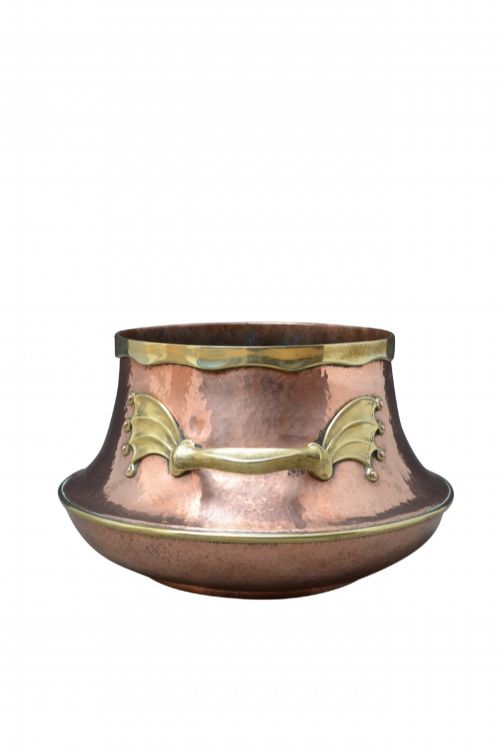
Decorative elements incorporated hammered copper, brass fittings and leather inserts, particularly on french cartonnieres and desktop tidies. Joinery techniques ensured that drawers, sliding music trays and hinged compartments withstood daily clerical use.
Vintage Paper Storage Retail Price Guide 2026
Typical asking prices for vintage paper storage among the pieces listed under this phrase on Sellingantiques today, from the lower quarter to the upper quarter. They describe what is for sale here now, not the wider market.
Listings feature oak, mahogany, walnut, brass and leather across pieces originating from the Georgian era to the 1940s.
Assessing quality and craftsmanship
Quality reveals itself in the integrity of the timber selection and the precision of mechanical elements like tambour shutters and sliding drawers. Fine examples display seamless operation in their roll-front mechanisms and careful dovetail joinery.
The refinement of period hardware, such as brass handles and hinges, distinguishes standard utility furniture from more ambitious architectural pieces. Original finishes and intact leather or paper linings elevate the character of a piece considerably.
The Vintage Paper Storage Glossary
- Canterbury
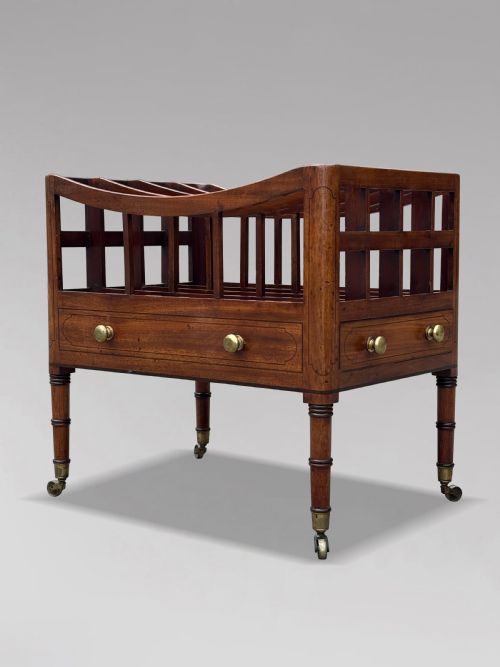
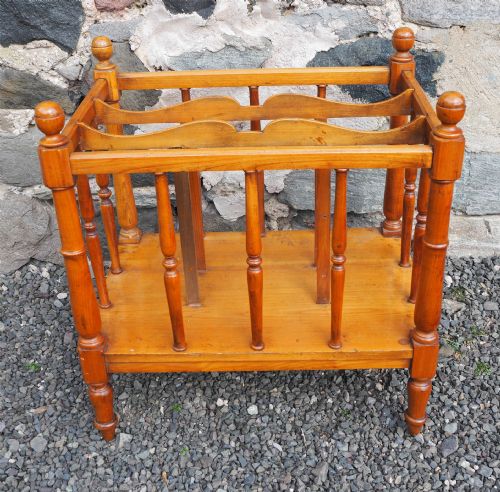
- A low stand with vertical divisions, originally designed for holding sheet music, newspapers and magazines. These pieces often feature a small drawer at the base.
- Tambour
- A sliding door constructed from narrow vertical strips of wood glued to a fabric backing. This mechanism allows the shutter to curve around the sides of a cabinet.
- Cartonnier
- A decorative cabinet fitted with multiple cardboard or leather-covered boxes for holding papers and documents. This French form frequently incorporates leather and mahogany.
- Folio cabinet
- A specialised piece of furniture intended for storing large sheets of paper, prints or drawings flat. They often include shallow sliding shelves or vertical slots.
Vintage Paper Storage: Frequently Asked Questions
What is a tambour front cabinet?
A tambour cabinet uses flexible wooden slats on a fabric backing to slide smoothly around a track and conceal the interior shelves. This clever mechanism saved space in tight Victorian and Edwardian offices.
Buyers often find these on oak and mahogany filing cabinets designed for correspondence and ledger storage.
How were canterburys used originally?
Canterburys served as dedicated stands for keeping sheet music, newspapers and unbound periodicals tidy beside a desk or piano. The divided upper section kept different publications upright and separate.
Many examples also include a single low drawer beneath the main rack for smaller accessories.
Can I use these for modern documents?
Many vintage filing cabinets and drawer units accommodate standard paper sizes quite naturally for daily desktop organisation. Oak vertical files and index drawers suit modern office spaces effectively.
Measurements vary across periods, so checking internal compartment dimensions ensures a proper fit for modern folders.