





Vintage Panelled Coffer
A vintage panelled coffer offers solid timber construction and compartmentalised storage, anchoring an interior with honest craftsmanship and utility.
Vintage Panelled Coffer
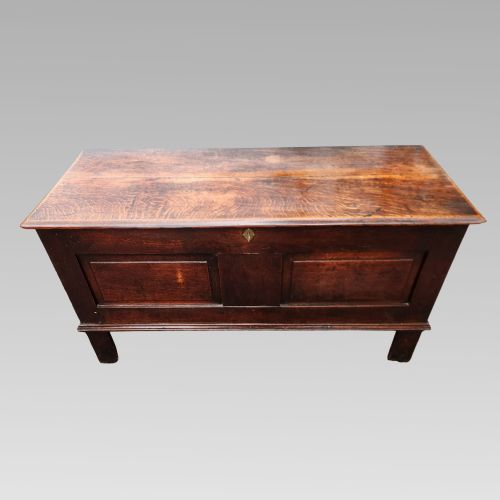
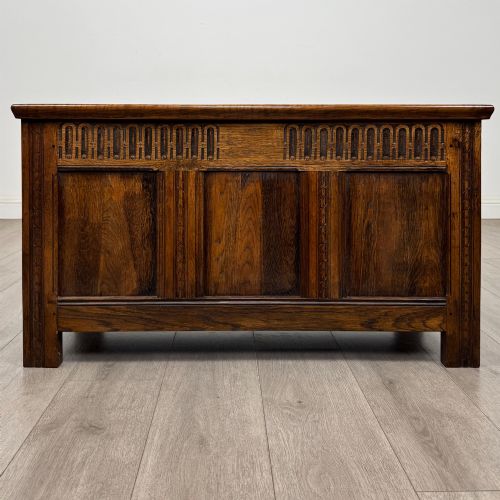
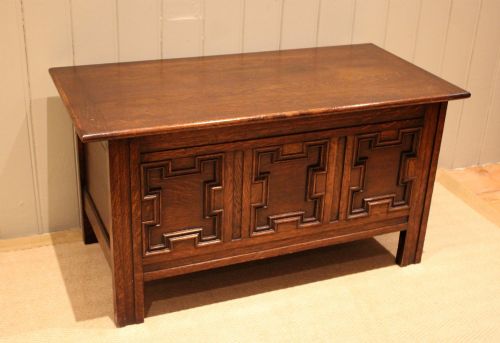
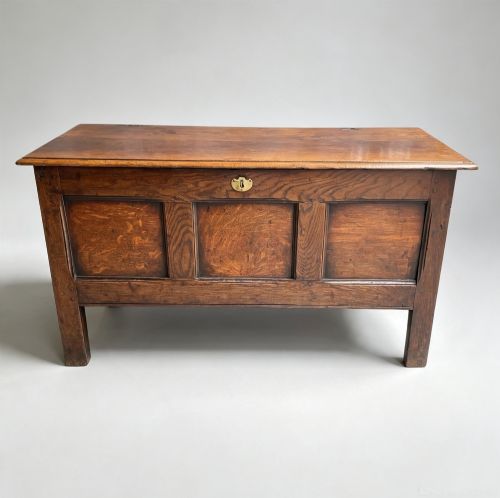
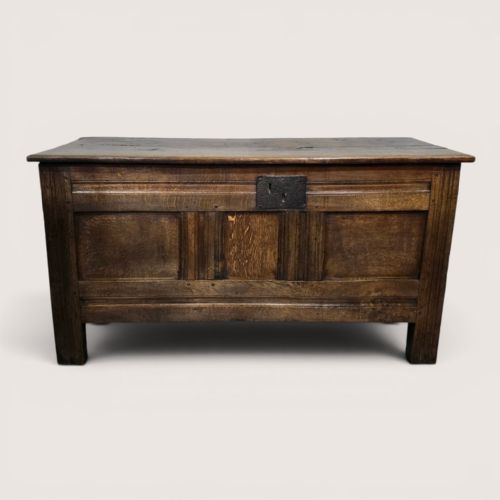
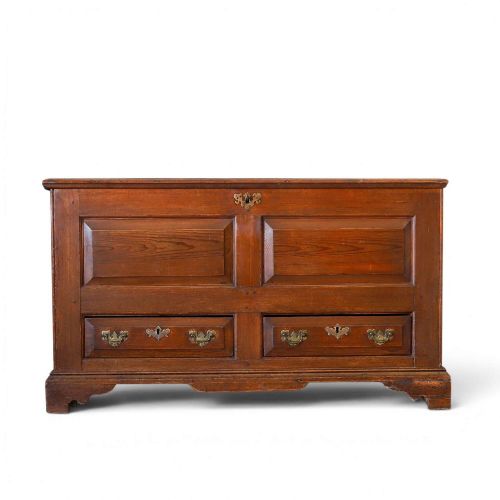
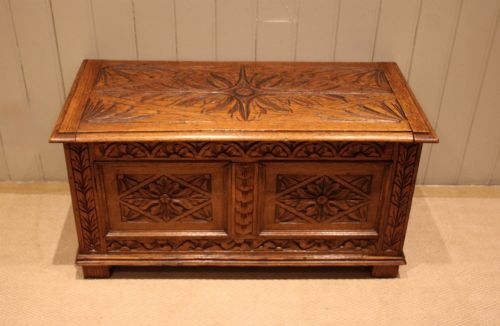
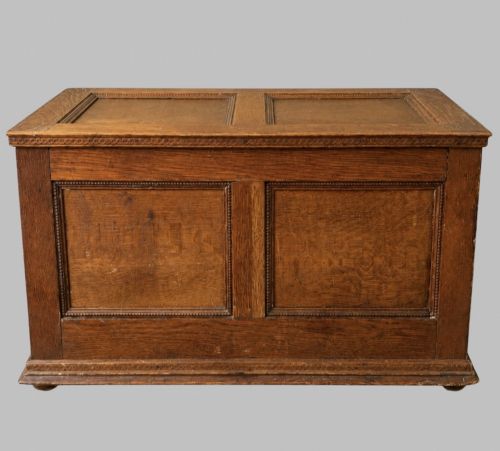
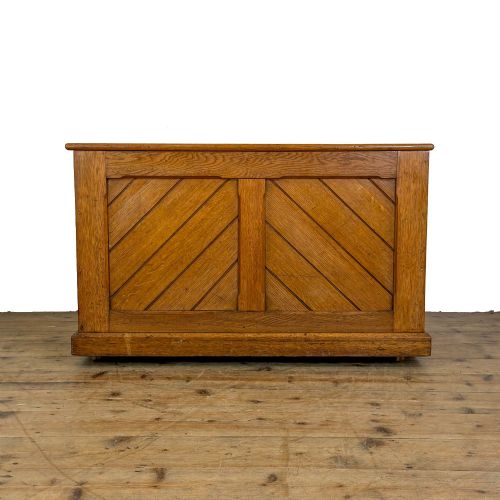
A vintage panelled coffer is a heavy storage chest constructed with frame and panel technique, designed originally to hold blankets, linen or valuables in domestic spaces.
The pieces appearing on this page span from the seventeenth century through to the Edwardian period and the early twentieth century, reflecting centuries of woodworking tradition.
Most examples encountered here are formed from oak, though variations include pine, hardwood, and leather-clad panels with iron or brass hardware.
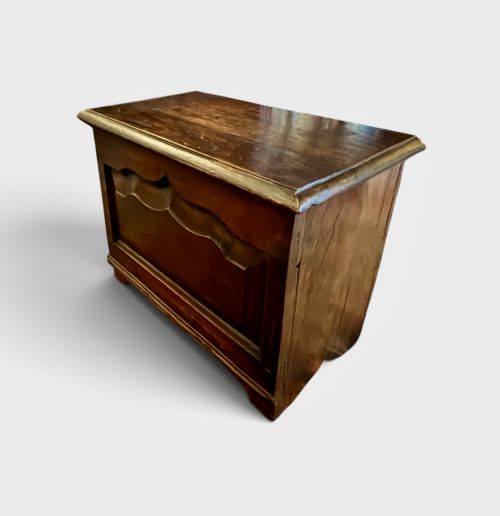
Functional variants such as mule chests with lower drawers, settle benches, and blanket boxes also appear alongside standard storage chests.
How they were made
Makers utilised solid oak and regional timber, joining upright stiles and rails around floating panels to allow for natural wood movement without splitting.
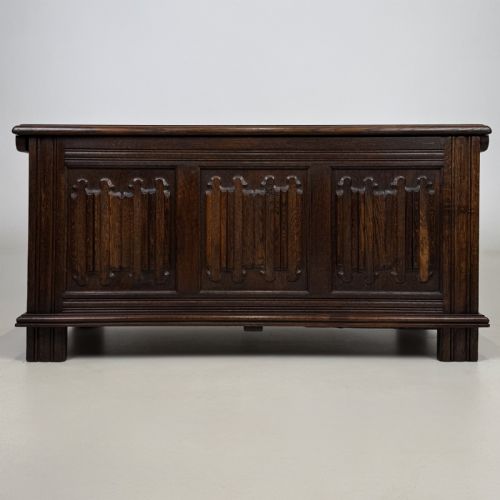
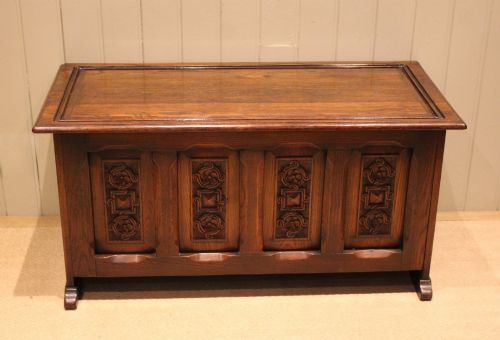
Surfaces frequently display carved decoration, ranging from geometric linenfold patterns and Jacobean motifs to plain panelled fronts finished with iron hinges and brass escutcheons.
Vintage Panelled Coffer Retail Price Guide 2026
Typical asking prices for vintage panelled coffer among the pieces listed under this phrase on Sellingantiques today, from the lower quarter to the upper quarter. They describe what is for sale here now, not the wider market.
Storage forms span traditional coffers, mule chests, log boxes, and settle benches with integrated seating.
What varies in quality
Quality rests in the integrity of the timber selection, the crispness of hand-carved detailing, and whether the frame remains structurally sound without extensive replacement parts.
Earlier seventeenth and eighteenth-century examples exhibit traditional pegged joinery and patination accumulated through age, distinguishing them from later revival pieces.
The Vintage Panelled Coffer Glossary
- Panelled
- A method of construction where a frame of stiles and rails holds a thinner central board, preventing the wood from warping. This technique defines the structure of traditional coffers.
- Mule chest
- A storage chest fitted with one or more drawers at the base beneath the main compartment. It combines the deep storage of a coffer with the accessible drawer space of a chest.
- Linenfold
- A carved wooden panel motif resembling folded cloth or linen. It is commonly found on Tudor and Jacobean revival blanket boxes.
- Stile and rail
- The vertical and horizontal framing members that hold the central panel in position. Traditional furniture relies on this jointing method for stability.
- Settle
- A wooden bench featuring a high solid back and often a hinged seat opening to storage below. These combine seating with the utility of a coffer.
Vintage Panelled Coffer: Frequently Asked Questions
What is a panelled coffer?
A panelled coffer is a robust storage chest built with a wooden frame surrounding fitted panels. These pieces served historically to secure garments, linens, and documents.
Over time, they evolved into decorative furniture items placed in hallways, bedrooms, and living spaces for both storage and seating.
How do I tell an older coffer apart from a revival piece?
Examination of the timber patination, tool marks, and construction joints helps determine age. Seventeenth and eighteenth-century pieces often display hand-cut pegs and irregular grain patterns.
Revival pieces from the nineteenth and twentieth centuries tend to show more uniform machine sawing and cleaner, less weathered surfaces.
What is the difference between a coffer and a mule chest?
A standard coffer opens only from the top lid to access the single interior compartment. A mule chest incorporates one or more storage drawers beneath the main box.
This addition of drawers allowed users to retrieve items without lifting the heavy lid or disturbing objects stacked on top.
How can I use a coffer in a modern home?
Coffers function well as blanket boxes at the foot of a bed, coffee tables in a sitting room, or hallway benches for shoes. Their sturdy construction supports everyday use while concealing household clutter.
Placing them away from direct heat sources protects the dry timber from splitting.