


Vintage Pair Leather Seats
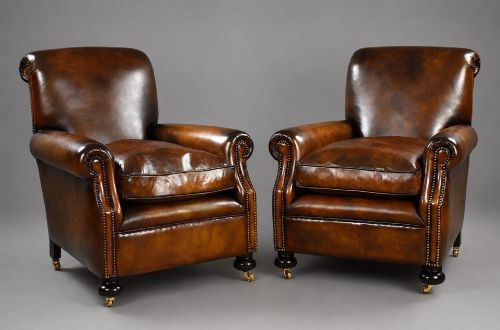
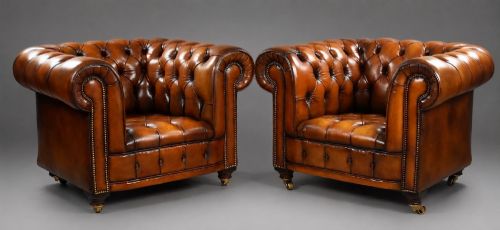
These vintage pair leather seats span robust 1930s club chairs and refined nineteenth-century library seating, offering matching comfort and enduring style for any interior.
Vintage Pair Leather Seats
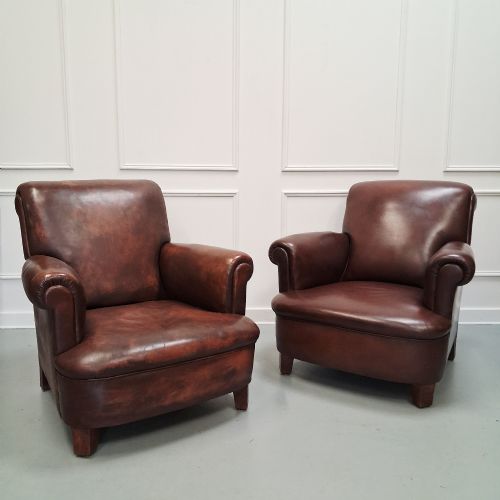
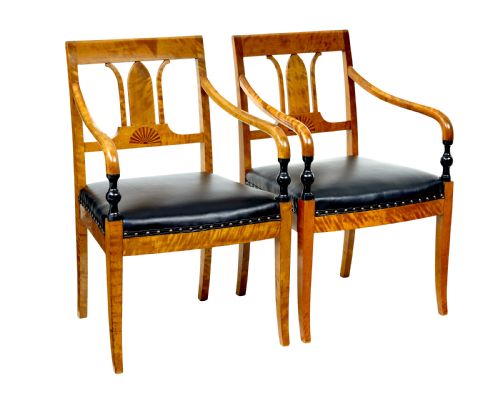
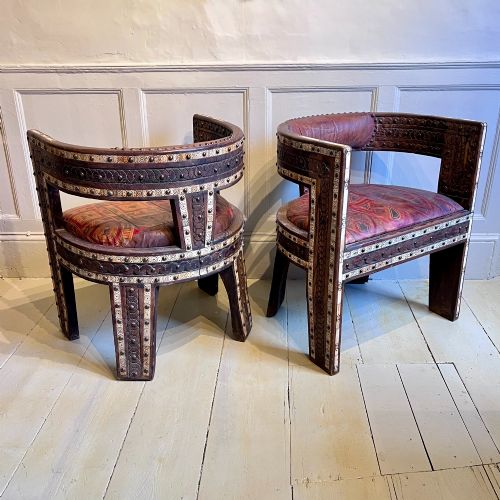
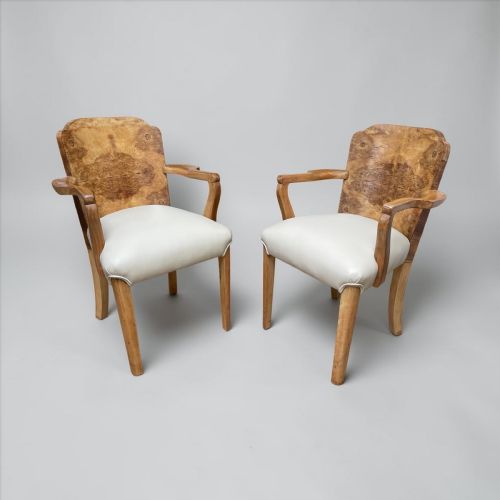
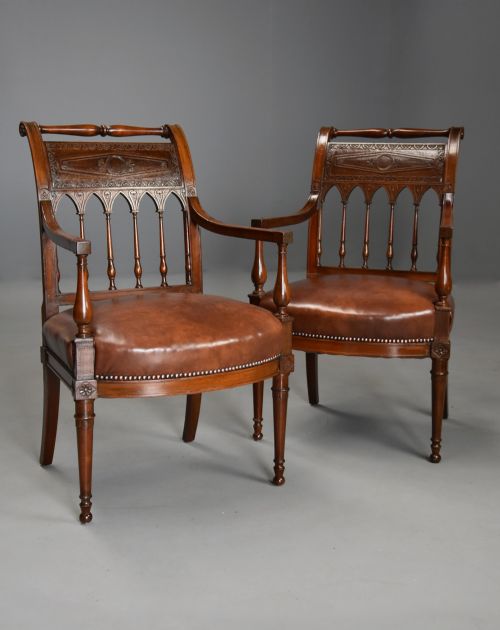
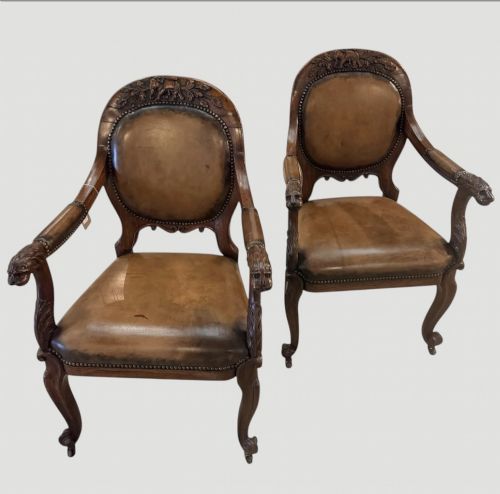
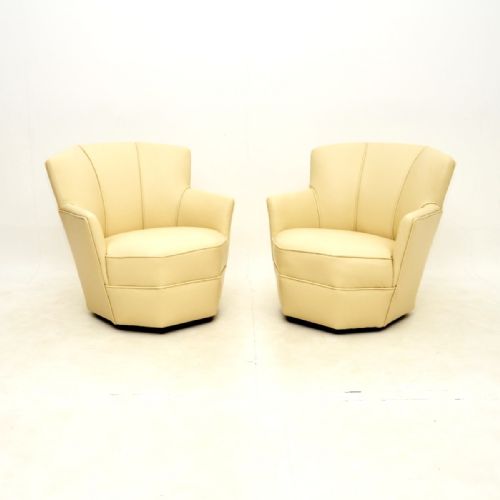
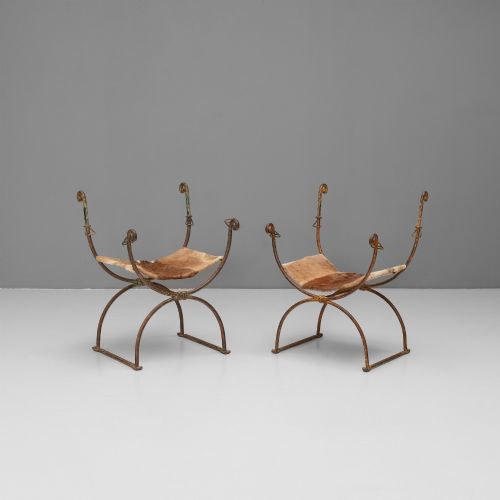
A search for vintage pair leather seats brings together matching pairs of upholstered chairs designed for comfort, study, and social rooms. The selections on this page range from nineteenth-century library armchairs to twentieth-century lounge seating.
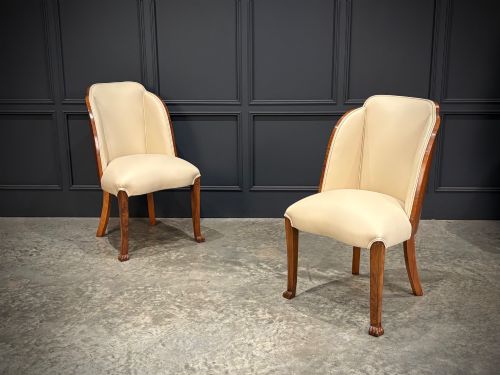
Buyers will most frequently encounter armchairs and club chairs from the 1930s, alongside nineteenth-century side chairs and desk chairs. These pieces appear in various configurations, including matching club suites and occasional seating.
The origins span English country houses, French salons, and Scandinavian workshops. Each pair reflects the domestic habits of its period, from formal Regency libraries to relaxed Art Deco sitting rooms.
Materials and construction
The framework relies on timber construction, utilising woods such as mahogany, walnut, oak, birch, rosewood, and hardwood. These structural timbers provide the sturdy bones necessary to support heavy upholstery and daily use.
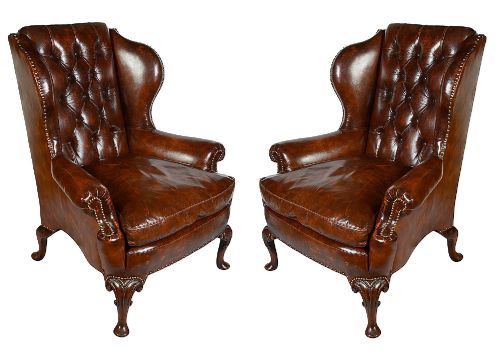
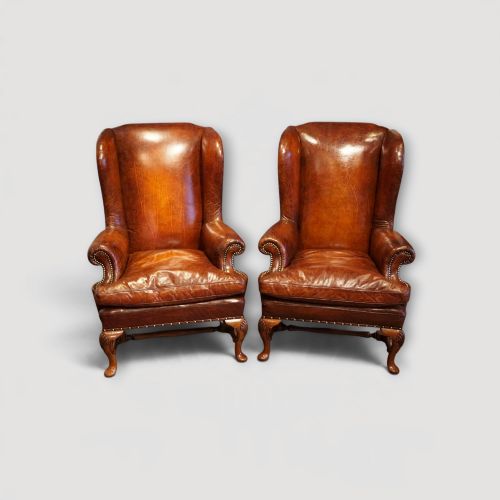
Upholstery centres on leather, frequently paired with supportive horsehair or padding and secured with traditional methods like studding or button-back tufting. Secondary metals such as brass appear in hardware details and castors.
Vintage Pair Leather Seats Retail Price Guide 2026
Typical asking prices for vintage pair leather seats among the pieces listed under this phrase on Sellingantiques today, from the lower quarter to the upper quarter. They describe what is for sale here now, not the wider market.
Some nineteenth-century armchairs were built wide enough to accommodate voluminous skirts without wrinkling the leather.
Assessing craftsmanship and finish
Quality rests in the integrity of the timber frame and the depth of the timber grain, particularly in polished walnut, mahogany, and satin birch pieces. Superior examples exhibit precise joinery and substantial weight.
The grade of the leather and the execution of upholstery work distinguish finer items. Hand-finished buttoning, careful stud placement, and patinated leather surfaces separate standard workshop output from exceptional cabinet maker production.
Hille·Harry and Lou Epstein
The Vintage Pair Leather Seats Glossary
- Bergère
- An enclosed upholstered armchair with wooden framing around the sides and back, often featuring cane panels or tight leather upholstery.
- Club chair
- A deep, comfortable upholstered armchair designed for relaxation, typically featuring soft leather upholstery and a low back.
- Gainsborough chair
- A wide, open-armed desk or library chair with an upholstered back and seat, standing on short legs originating in the eighteenth century.
- Carver chair
- An armchair designed to match a set of dining chairs, traditionally placed at the head of a dining table.
Vintage Pair Leather Seats: Frequently Asked Questions
What rooms suit vintage leather armchairs?
These chairs fit well in studies, libraries, and sitting rooms where comfort and visual weight matter. Their durable surfaces handle regular daily use while adding character to domestic spaces.
Matching pairs work effectively placed opposite a fireplace or flanking a central desk, creating visual symmetry in an interior layout.
How do I identify Art Deco chairs?
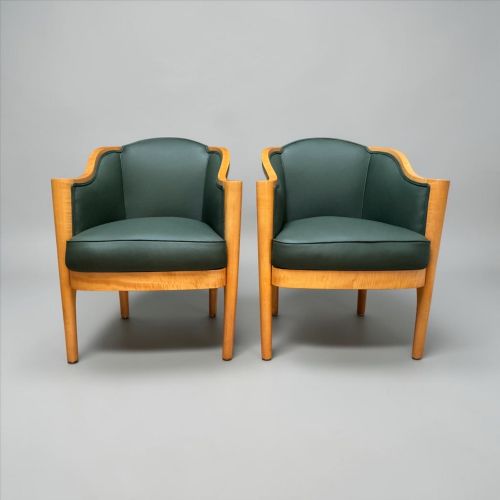
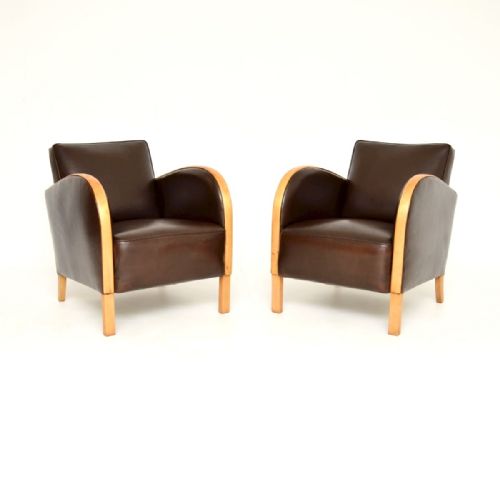
Art Deco seating from the 1930s often displays geometric silhouettes, rounded cloud shapes, and smooth surfaces in walnut or satin birch. The designs prioritize streamlined comfort.
Many examples pair polished wood frames with rich leather upholstery, reflecting the modernist shift away from heavy historicist ornamentation.
Are nineteenth-century library chairs supportive?
Nineteenth-century library and desk chairs were built for reading and writing, featuring supportive upright backs and firm padded seats. Woods like mahogany and oak provide rigid structural backing.
They offer a more structured sit than deep lounge club chairs, making them practical for prolonged desk work.
What timber types appear most frequently?
Walnut and mahogany dominate the older pieces, while birch and exotic hardwoods appear in twentieth-century Scandinavian and continental designs. Oak and general hardwoods support heavier library furniture.
These timbers dictate the natural tone of the frame, ranging from deep reddish-brown mahogany to lighter blonde birch.