






Vintage Painted Settee
A vintage painted settee brings undeniable charm to a room, offering practical seating wrapped in the character of French or Victorian design.
Vintage Painted Settee
A vintage painted settee encompasses a range of upholstered and caned seating forms, predominantly drawing on French Louis XV and Louis XVI styles alongside Victorian interpretations. These pieces function as decorative focal points in sitting rooms, conservatories, and bedrooms, combining substantial seating capacity with ornamental woodwork.
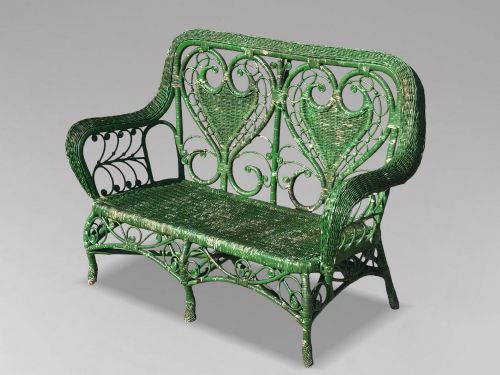
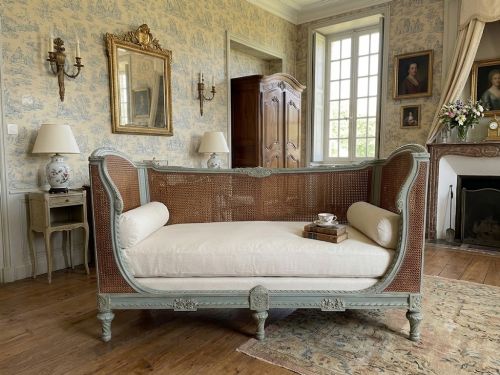
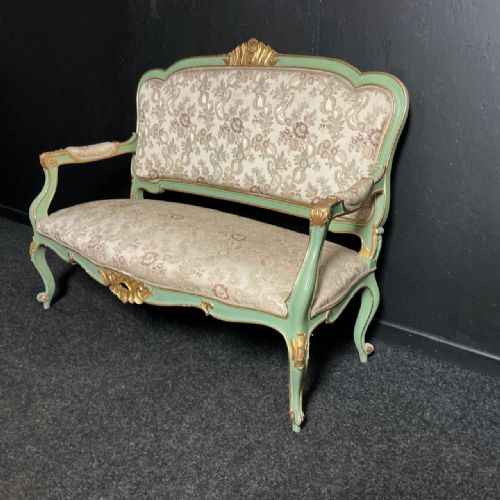
The items seen here span from the nineteenth century through the Edwardian period and into the mid-twentieth century, with French aesthetic influences dominating the selection. Buyers regularly encounter caned daybeds, two-seat sofas, and conservatory benches finished with painted or gilt surfaces.
Makers and manufacturers of this era produced forms ranging from grand gilt canapés to simpler garden benches in wrought iron and painted wood. The variety reflects domestic spaces shifting towards lighter, painted furnishings over heavy dark woods during the late nineteenth and early twentieth centuries.
Materials and construction
Carpenters utilised solid timbers such as beech for structural frames, shaping them into curved cabriole legs and ornamented crest rails associated with French revival aesthetics. Artisans applied paint directly to the wooden surfaces, sometimes layering it over gesso to build up decorative mouldings.
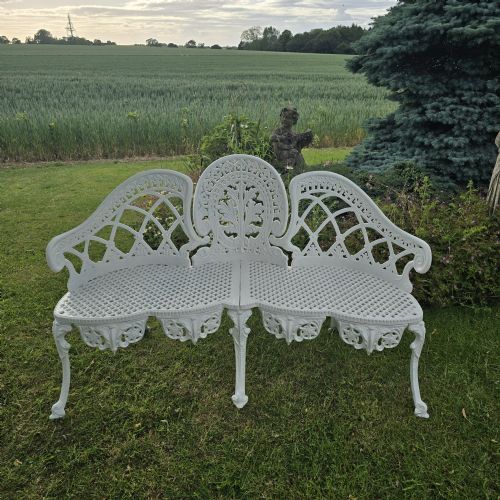
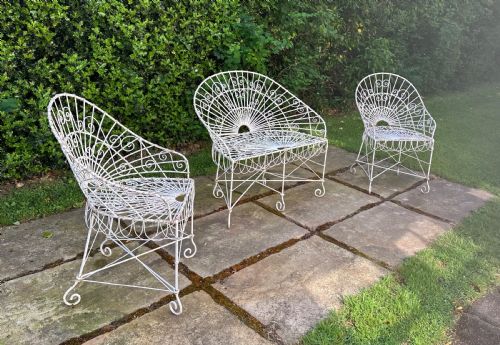
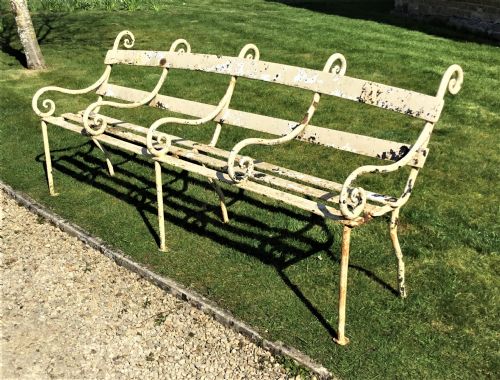
Outdoor iterations rely on durable wrought iron and heavy wood construction designed to withstand exposure while maintaining decorative scrollwork or slatted seating profiles.
Vintage Painted Settee Retail Price Guide 2026
Typical asking prices for vintage painted settee among the pieces listed under this phrase on Sellingantiques today, from the lower quarter to the upper quarter. They describe what is for sale here now, not the wider market.
One recorded settee carries an association with author Daphne du Maurier and her novel Rebecca, proving furniture can harbour literary ghosts.
Quality and craftsmanship
The integrity of the carved wooden frame dictates the baseline of quality, with tighter joints and crisper hand-carved detail separating superior pieces from simpler workshop outputs. Frames that retain their original structural rigidity without excessive movement demonstrate careful initial joinery.
The condition of integrated canework significantly influences the merit of a piece, as intact, hand-woven cane requires patient restoration if damaged. Similarly, the application of the painted finish - whether original layered pigment or later decoration - determines historical authenticity and visual depth.
Proportion and decorative restraint set finer French-style canapés apart, where balanced proportions in the armrests and backrest create an elegant silhouette rather than a heavy one.
The Vintage Painted Settee Glossary
- Canapé
- An upholstered sofa or settee, typically with a decorative wooden frame stemming from French design traditions. These pieces often feature exposed painted wood and carved details along the top rail.
- Bergère
- An enclosed upholstered armchair or settee with solid upholstered sides, frequently featuring caned panels on the back and arms. Originating in France, this form prioritises comfortable domestic lounging.
- Louis XVI Style
- A neoclassical design aesthetic characterised by straight tapered legs, geometric symmetry, and classical motifs like fluting and ribbonds. Pieces in this style reject the curving asymmetry of earlier Louis XV furniture.
- Cane
- Material woven from the outer bark of rattan palms, utilised to create light, resilient panels for seat backs and bases. Its presence lightens the visual weight of large wooden furniture frames.
Vintage Painted Settee: Frequently Asked Questions
How do I clean a painted settee?
Dust wooden frames regularly with a soft, dry cloth to prevent dirt accumulation on the painted surface. Avoid harsh chemical cleaners that might strip historical pigment or damage delicate finishes.
For fabric or caned sections, use a low-suction vacuum attachment to clear debris from crevices. Treat canework gently to prevent brittle fibres from snapping.
Where should I place a settee?
These pieces suit living rooms, large hallways, or bedrooms where their decorative profiles can be viewed from multiple angles. Their relatively compact size compared to full three-seat sofas makes them useful for filling awkward alcoves.
Keep them away from direct sunlight and strong heat sources to protect fragile painted wood and natural cane from drying out and cracking.
Are these settees comfortable?
Comfort varies depending on the specific construction, with upholstered models offering softer seating supported by traditional interior stuffing. Caned settees provide a firmer, more resilient seat that works well with loose scatter cushions.
Many historical pieces feature upright backs designed for formal posture rather than lounging, reflecting the social habits of their respective periods.
How do I identify a French style settee?
Look for characteristic architectural elements such as cabriole legs, carved floral crests, and exposed wooden frames finished in paint or gilt. French Louis revival pieces often display balanced proportions and sweeping armrests.
Notice the use of integrated canework and exposed joinery that distinguishes continental European seating from heavier domestic British Victorian styles.