




Vintage Oval Wooden Tray
A vintage oval wooden tray brings tactile warmth and period elegance to any room, serving drinks or sitting smartly on a stand as a low table.
Vintage Oval Wooden Tray
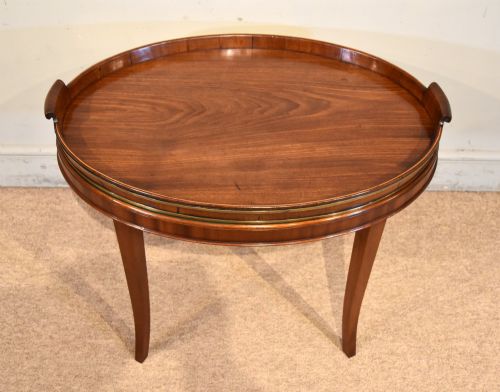
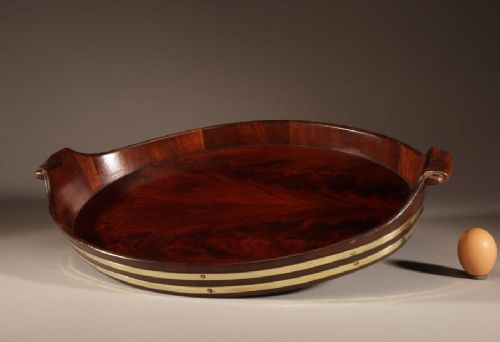
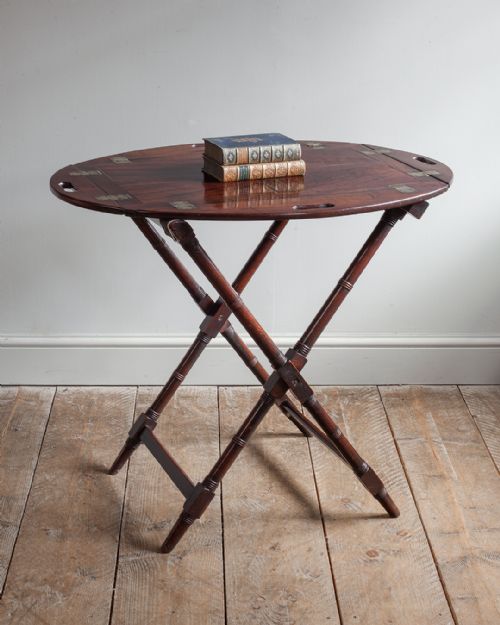
A vintage oval wooden tray is a functional serving piece or tabletop that turns up in a range of historical periods, from Georgian and Victorian workshops to Edwardian and later modernist studios. These pieces appear in serving formats, on folding stands as butler trays, and adapted into low coffee tables for contemporary interiors.
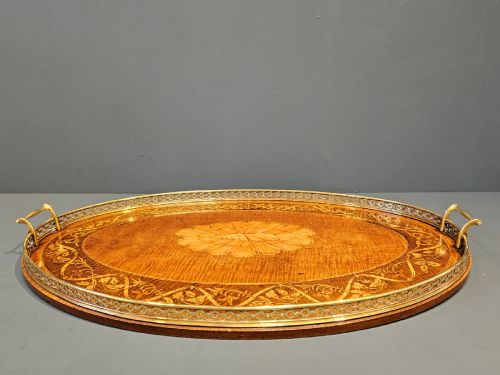
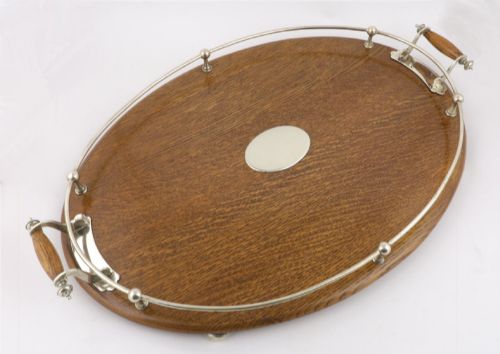
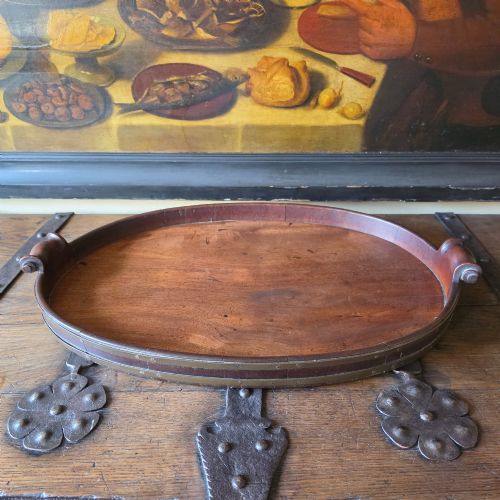
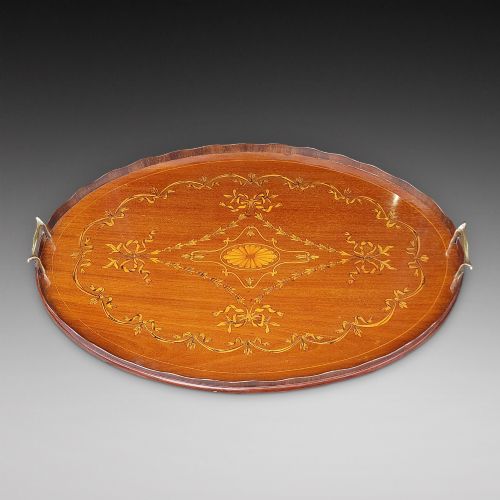
The materials and construction vary widely across the inventory, encompassing rich mahogany, sturdy oak, walnut, and decorative veneer work like oyster and satinwood inlay. Makers often integrated brass handles, galleried edges, silver plate, or glass to elevate the utility of the tray into something highly decorative.
What varies in quality
The distinction between standard examples and exceptional pieces rests on the choice of timber, the precision of the inlay work, and the integrity of the original structure. Fine trays exhibit crisp marquetry, well-matched wood veneers, and robust joinery that survives centuries of handling.
Vintage Oval Wooden Tray Retail Price Guide 2026
Typical asking prices for vintage oval wooden tray among the pieces listed under this phrase on Sellingantiques today, from the lower quarter to the upper quarter. They describe what is for sale here now, not the wider market.
The Vintage Oval Wooden Tray Glossary
- Gallery
- A raised rim or border around the edge of a tray, often pierced or fitted with brass, designed to prevent items from sliding off. This feature is common on tea and serving trays from the Georgian and Victorian periods.
- Marquetry
- The art of applying decorative pieces of veneer to a structure to form intricate patterns and pictures. Makers often utilised contrasting timbers like satinwood and mahogany.
- Butler tray
- A portable serving tray with hinged or fixed sides, frequently paired with a folding wooden stand. These pieces frequently function as occasional tables today.
- Oyster veneer
- Branch wood cut cross-wise to produce small, circular patterns resembling oyster shells. This technique creates a distinctive decorative surface on period wooden pieces.
- Coopered
- Constructed using staves of wood joined side by side with metal or wooden bands, traditionally used for buckets and barrels before being adapted for round and oval trays.
Vintage Oval Wooden Tray: Frequently Asked Questions
How do I use a vintage tray today?
These trays function traditionally for serving drinks or displaying glassware on a sideboard. Alternatively, placing them on a folding stand creates a practical coffee table for a living room.
Their sturdy construction and decorative rims make them suitable for organising objects on desks or coffee tables. Many collectors prefer to mount them on low stands to highlight the inlaid timber surfaces.
How do I date a wooden tray?
Dating relies on examining the timber species, construction methods, and decorative styles such as Georgian inlay or Edwardian marquetry. Hand-cut dovetails, original brass hardware, and the type of polish provide clear indicators of age.
Comparing the edge profile and base construction against known period pieces helps narrow down the decade. Subtle shifts in design preferences from the 18th century through to the 1930s guide accurate attribution.
Are these trays suitable for daily use?
Most solid wood trays withstand regular handling, provided they receive proper care and protection from excessive moisture. Using coasters and gentle cleaning methods preserves the historic polish and delicate veneers.
Trays fitted with delicate satinwood inlay or glass panels require more careful treatment than robust mahogany or oak examples. Regular maintenance keeps the timber nourished and protects the original surface.