



Vintage Oval Etagere
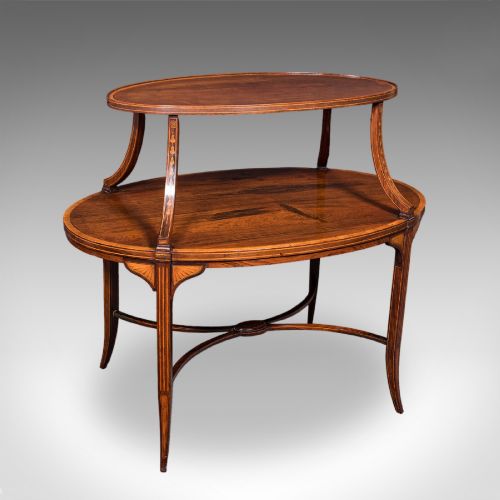
These vintage oval etagere pieces offer tiered display surface and elegant proportions, making them a practical choice for holding books and ornaments.
Vintage Oval Etagere
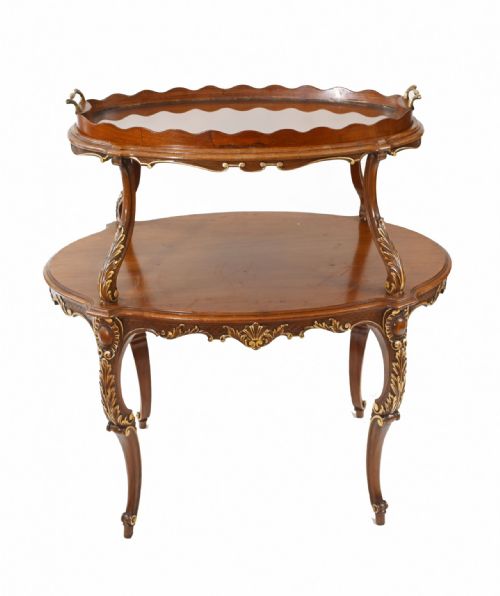
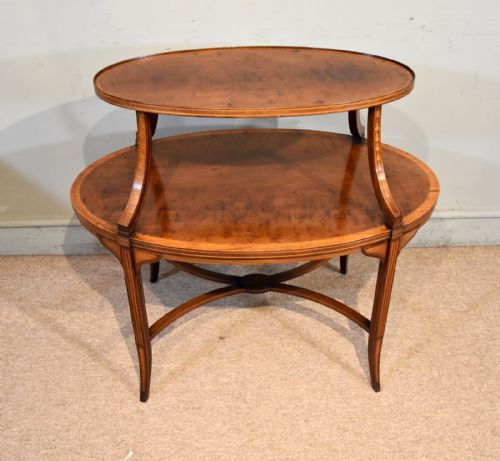
The versions you are most likely to meet on this page span from the nineteenth century through the Edwardian period and into the nineteen-twenties and nineteen-thirties. They appear in forms such as Sheraton Revival tiered tables, French-influenced designs, and campaign-style washstands.
Makers and craftsmen utilised distinct stylistic revivals, incorporating classic oval tops and multiple tiers for practical display. Their origins stretch from British workshops to continental European makers.
How they were made
Makers built these pieces primarily using timbers such as mahogany, walnut, and satinwood, often enhanced with delicate marquetry inlay. Brass fittings and gilt-brass mounts frequently secure the tiers and corners, adding structural definition.
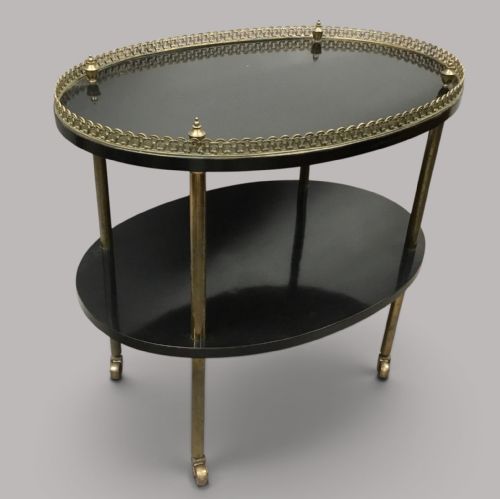
Glass panels appear in shelving components, while ebonised finishes provide a dark contrast on twentieth-century examples. Artisans shaped the oval tops to graceful curves, supporting them with turned or slender upright pillars.
Vintage Oval Etagere Retail Price Guide 2026
Typical asking prices for vintage oval etagere among the pieces listed under this phrase on Sellingantiques today, from the lower quarter to the upper quarter. They describe what is for sale here now, not the wider market.
Even campaign washstands managed to look polite.
What varies in quality
The standard of timber selection and inlay work separates finer examples from simpler production. Subtle variations in the crispness of brass mounts and the precision of the joinery indicate the skill of the original workshop.
Proportion and balance dictate the visual success of each piece, with superior models maintaining elegance across multiple tiers without feeling heavy. The depth of the polish and the integrity of the structural joints further distinguish individual pieces.
The Vintage Oval Etagere Glossary
- Etagere
- A piece of furniture consisting of a set of open shelves for displaying small objects or ornaments. These tiers are often oval in plan.
- Marquetry
- Decorative woodwork in which delicate pieces of coloured wood, shell, or ivory are fitted into a veneer to form patterns. This technique frequently decorates Edwardian tabletops.
- Sheraton Revival
- A late nineteenth and early twentieth-century design movement inspired by the neoclassical furniture of George Sheraton. It is characterised by satinwood inlay and refined proportions.
- Campaign washstand
- Portable furniture designed for travel, typically featuring brass mounts and folding elements. These pieces combine utilitarian function with sturdy framing.
Vintage Oval Etagere: Frequently Asked Questions
What is an etagere used for?
An etagere provides multiple open tiers for displaying small objects, books, or decorative items within a room. Their compact footprint allows them to sit beside seating or in corners without crowding the floor space.
Historically, they served as ornamental stands in sitting rooms and parlours. Today, they function well as side tables or display surfaces in modern interiors.
How do I date a vintage etagere?
Dating relies on examining the timber species, construction methods, and decorative styles present on the piece. Edwardian and Sheraton Revival examples often feature crisp satinwood inlay and light mahogany frames.
Nineteenth-century models tend to show heavier timber turning and deeper hand-polished finishes. Twentieth-century pieces may incorporate ebonised wood or bronze display elements.
Are these tables sturdy enough for daily use?
Most tiered tables are built with slender uprights designed primarily for display rather than heavy weight. Distributing items evenly across the shelves helps maintain their stability during daily use.
Checking the joints where the tiers meet the uprights ensures the structure remains firm. They suit the placement of lamps, books, and decorative ceramics.
Where should I place an oval etagere?
The curved profile of an oval top makes these tables well-suited for positioning beside sofas or in open corners. Their open tiers keep rooms feeling light while offering practical surface area.
They also function effectively as freestanding display units against a wall. The absence of solid sides maintains an airy visual presence in the room.