



Vintage Outdoor Dining
Vintage outdoor dining brings together sturdy metal and weathered timber to create enduring spaces for eating in the open air.
Vintage Outdoor Dining
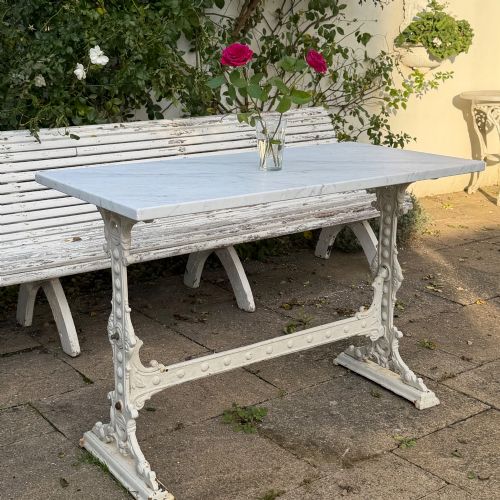
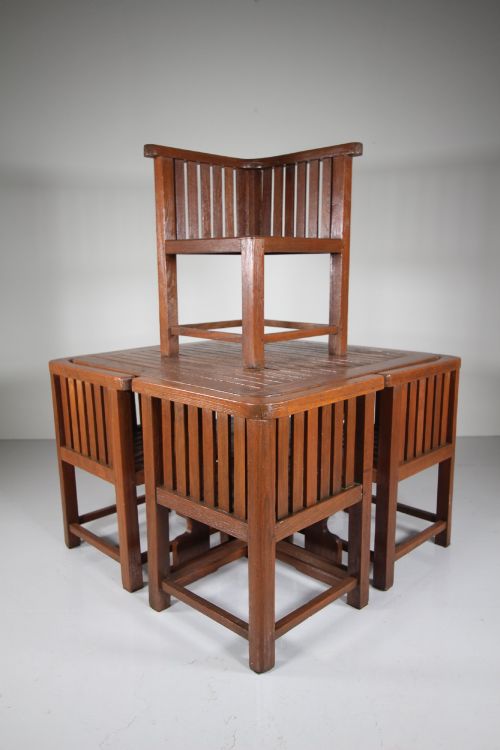
Vintage outdoor dining encompasses tables and chairs designed for use in gardens, patios, and courtyards. These ensembles span the Victorian period, the 1900s, 1910s, 1920s, and 1930s.
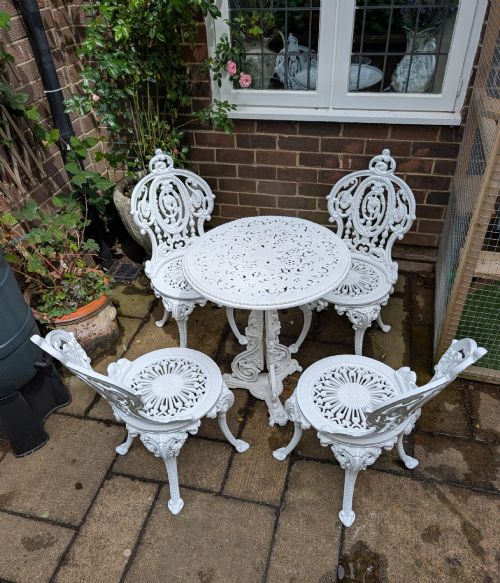
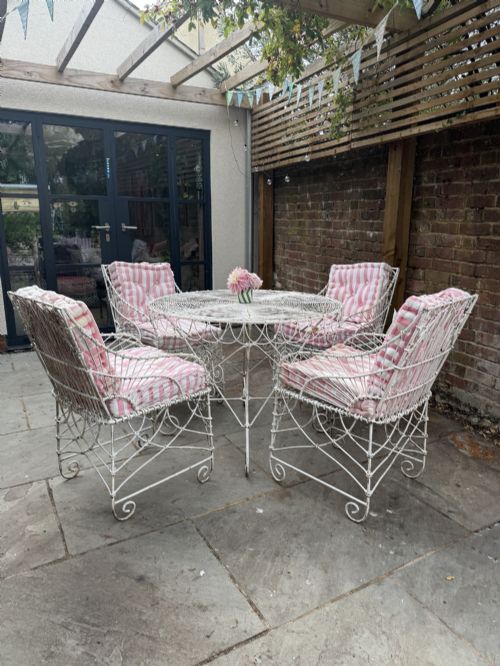
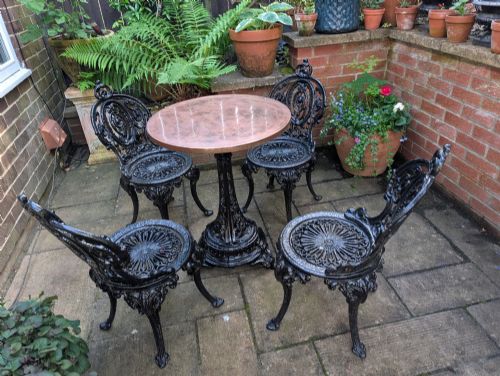
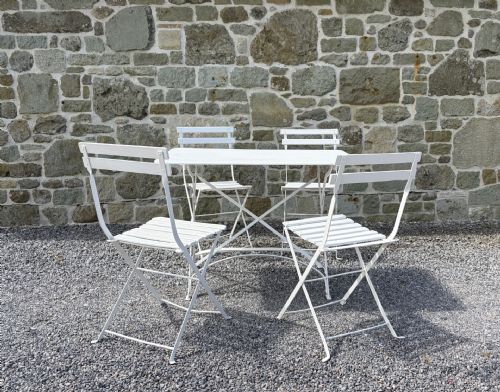
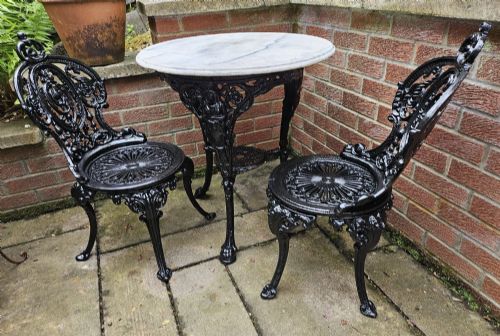
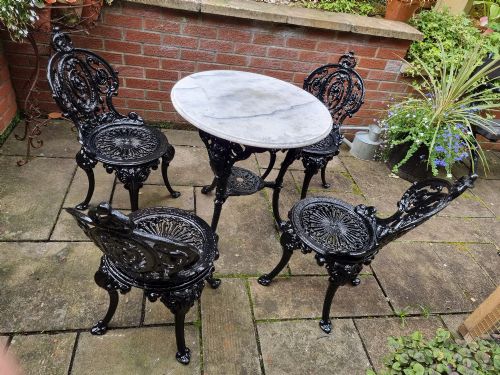
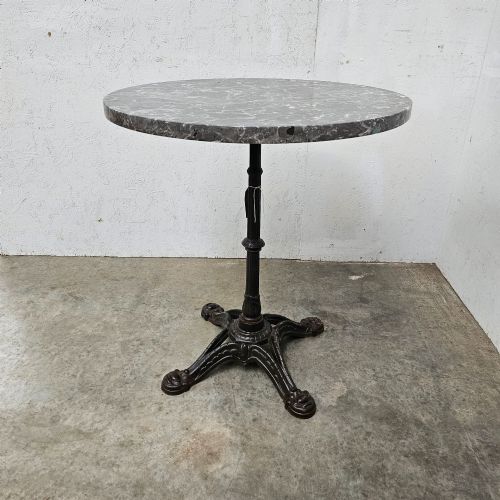
The selections on this page most commonly take the form of complete garden sets comprising a table paired with four chairs. Individual bistro tables and pairs of garden chairs also appear.
Origins range from British workshops to French provincial and industrial settings. Styles stretch from Gothic Revival and Arts and Crafts to French Country and Art Deco.
How they were made
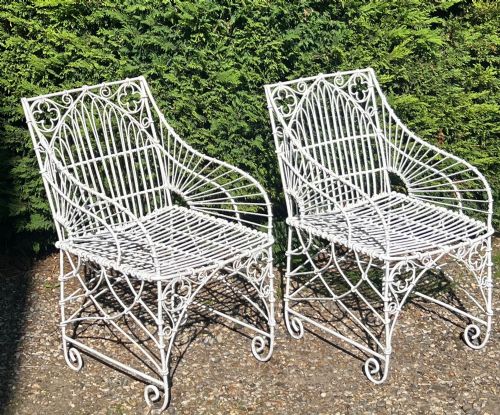
Makers utilised heavy cast iron and wrought iron for structural stability and intricate decorative frames. Wirework also appears in specific Victorian garden designs.
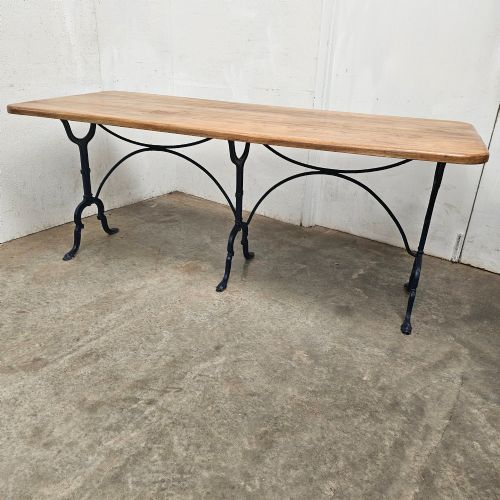
Timber surfaces utilise teak, elm, and general wood planks for tabletops and seats, paired with metal bases. Marble and zinc provide alternative hard-wearing tabletops.
Applied paint finishes protect the underlying metal and wood from weathering. Surviving pieces often show layers of historic paint accumulated over decades.
Vintage Outdoor Dining Retail Price Guide 2026
Typical asking prices for vintage outdoor dining among the pieces listed under this phrase on Sellingantiques today, from the lower quarter to the upper quarter. They describe what is for sale here now, not the wider market.
Certain French folding chairs retain grease pencil markings from long-forgotten cafe inventories scrawled beneath the wooden slats.
What varies in quality
The refinement of the casting separates standard garden sets from exceptional examples. Finer pieces display crisp detailing in the ironwork and heavier, more substantial construction.
Maker attribution and original labelling elevate certain items above anonymous production. Sets retaining original teak or specific designer associations command greater interest.
The integrity of combined materials, such as closely fitted marble or zinc tabletops on iron bases, marks superior execution.
Heals·Christopher Dresser
The Vintage Outdoor Dining Glossary
- Cast iron
- A sturdy iron-carbon alloy poured into moulds to create decorative garden furniture frames. It provides the heavy weight and ornate scrollwork seen on Victorian and later tables.
- Bistro set
- A small table accompanied by two or four chairs, traditionally used in cafes and small outdoor spaces. These sets utilise folding or compact iron and wood formats.
- Wirework
- A technique of bending and welding metal wire into intricate mesh and scroll patterns. Victorian wirework pieces combine lightness of form with structural resilience.
- Gothic Revival
- An architectural and decorative style drawing on medieval forms, featuring pointed arches and trefoil motifs. Iron garden chairs in this style replicate stone tracery.
- French provincial
- A regional domestic style associated with rural France, prioritising practical utility and honest timber construction. Pieces from this tradition often pair iron frames with elm tops.
Vintage Outdoor Dining: Frequently Asked Questions
How do I clean vintage garden ironwork?
Wash metal surfaces gently with warm water and mild soap to remove accumulated dirt without disturbing the historic surface. Avoid harsh abrasives that strip away patination and protective paint layers.
Dry the metal thoroughly after cleaning to prevent surface oxidation. Apply a suitable preservative wax or oil if the bare iron requires moisture protection.
Can these dining sets stay outside year round?
Heavy cast iron and teak pieces withstand outdoor exposure well due to their inherent material durability. However, prolonged exposure to harsh winter frost and persistent damp can accelerate weathering.
Store wooden elements and more delicate wirework under cover during the coldest months. Protecting marble and zinc tabletops from freezing water prevents cracking.
How do I identify a Victorian garden table?
Victorian tables typically feature heavy cast iron pedestals or legs decorated with naturalistic leaf motifs, scrolls, or Gothic Revival tracery. The construction relies on threaded bolts and substantial metal thickness.
Compare the proportion and weight against later twentieth-century patio furniture. Earlier pieces generally display deeper casting relief and simpler, utilitarian jointing beneath the top.
What is the difference between bistro and garden sets?
Bistro sets originate from French cafe culture and are designed for smaller footprints, often featuring round tables and folding chairs. They prioritise portability and space-saving utility.
Garden sets tend to be heavier, static arrangements intended for permanent placement on lawns or patios. They utilise fixed cast iron frames and larger rectangular or round timber tops.