




Vintage Oriental Urn Lamps
These vintage oriental urn lamps bring distinct form and patterned colour into a room, turning earlier vases and vessels into practical lighting.
Vintage Oriental Urn Lamps
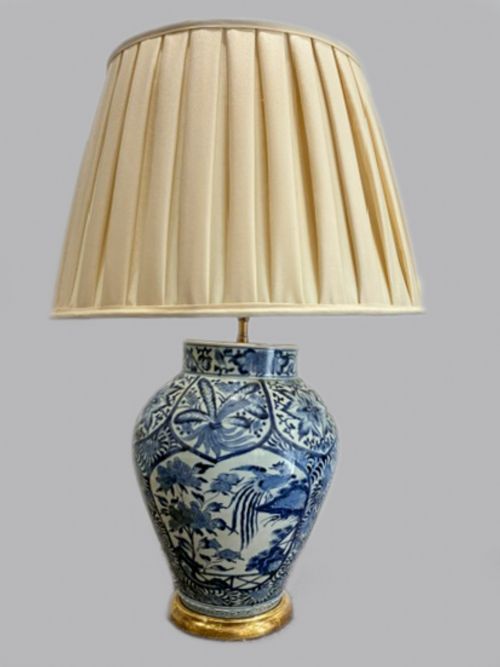
Vintage oriental urn lamps take traditional forms, such as vases, jars and vessels originating from Asian periods including the Meiji era and Qing dynasty, and convert them into functional table lighting. You will frequently find pieces originating from the nineteenth century alongside examples spanning the seventeenth to the early twentieth century.
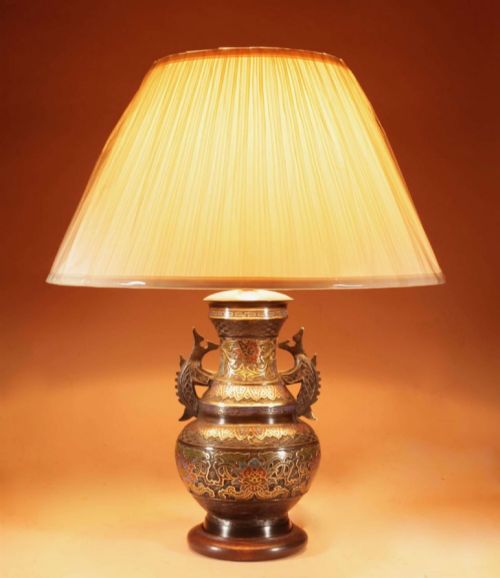
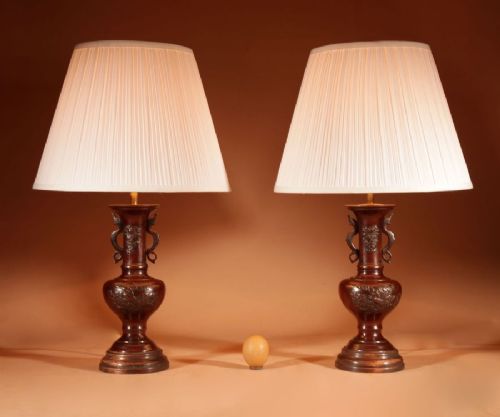
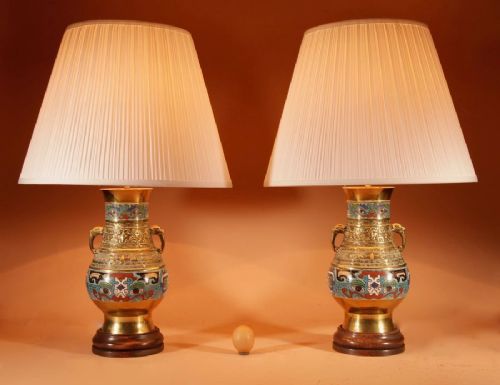
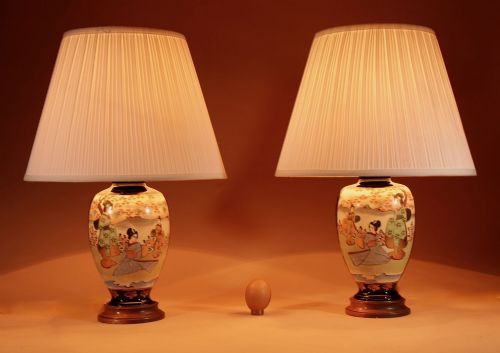
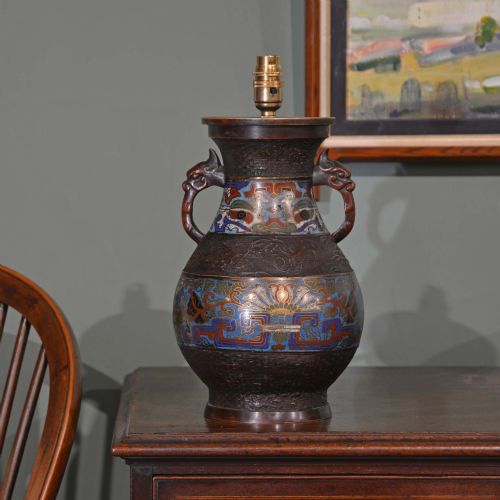
The selection on this page centres primarily on ceramic, porcelain and bronze bodies, often paired with fabric or silk shades. Forms range from Satsuma and Arita Imari porcelain to cloisonné enamel and champlevé bronze.
Beyond direct vase conversions, the listings include related supporting pieces such as lamp tables, side tables and planter stands made from rosewood and hardwood. These items provide a cohesive setting for the primary lighting pieces across various traditional styles.
How they were made
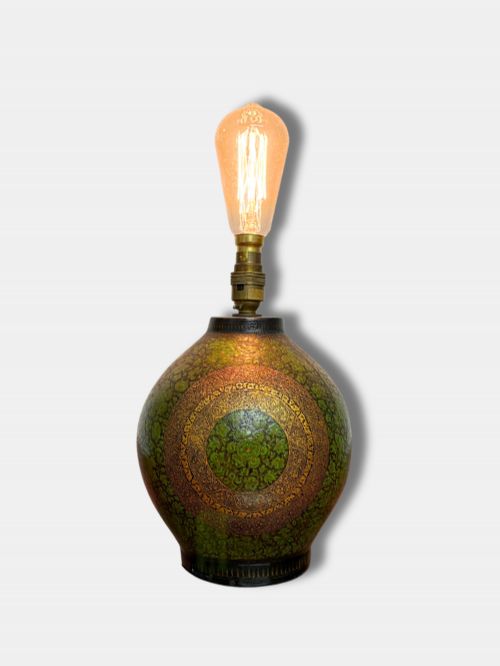
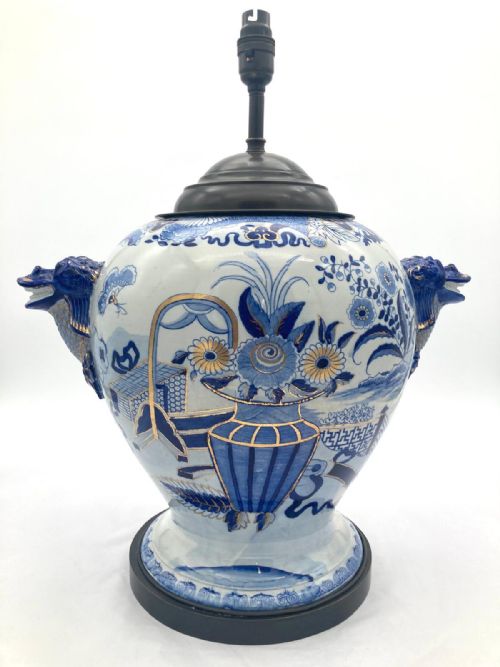
Makers shaped these lamps from materials such as bronze, brass, ironstone, porcelain and ceramic, frequently applying detailed champlevé or cloisonné enamel work to metal surfaces. Painted decoration, gilt gold and green finishes, and black and gold lacquer appear across the various ceramic and wooden bodies.
Many of these items began life as utilitarian vessels or decorative display pieces, such as blue and white crackle ware vases or Canton vases, before undergoing professional conversion into wired table lamps at a later date.
Listings feature materials ranging from delicate silk and fabric to heavy brass, bronze, porcelain, ceramic, enamel and wood.
What varies in quality
Quality rests on the integrity of the original vessel and the subtlety of its surface decoration, whether hand-painted porcelain or intricate enamel work. Earlier examples from the seventeenth and eighteenth centuries display distinct potting characteristics compared to later nineteenth- and twentieth-century production.
The standard of the conversion also plays a role, distinguishing lamps that preserve the structural balance and historical character of the host vessel from those with heavier alterations.
The Vintage Oriental Urn Lamps Glossary
- Cloisonné
- A metalwork technique where thin wire partitions are soldered to a base to create cells filled with enamel paste. These pieces are then fired and polished to a smooth finish.
- Champlevé
- An enamel technique where troughs or cavities are carved directly into a thick metal surface and filled with vitreous enamel before firing. It yields bold, deeply set colour patterns.
- Imari
- A style of Japanese porcelain featuring a distinct palette of underglaze blue, iron red, and gilt accents. Originating in Arita, these export wares became widely collected in Europe.
- Satsuma
- A type of Japanese earthenware characterised by a pale, ivory-coloured crackle glaze. Pieces are typically decorated with intricate polychrome designs and gilt.
- Baluster
- A curved architectural or vessel form that swells outward near the base and tapers toward the neck. This silhouette frequently forms the body of larger table lamps.
Vintage Oriental Urn Lamps: Frequently Asked Questions
How do I choose the right size lamp?
Consider the scale of the original vessel and the height of the intended surface. Larger bronze or porcelain urns work well on sturdy side tables, while slender forms suit smaller spaces.
Ensure the proportions of the base balance with the shade and the surrounding furniture in the room.
Are these lamps recently wired?
Many converted lamps receive updated wiring to meet modern safety standards while retaining their antique bodies. Rewired examples ensure reliable daily use.
Check individual descriptions for specific details regarding electrical fittings and cord lengths.
How do I care for antique ceramic lamps?
Dust porcelain and bronze surfaces gently with a soft, dry cloth to protect the painted or enamelled decoration. Avoid abrasive cleaners that can damage delicate glazes.
Handle the lamp body carefully when changing bulbs or adjusting the position on the table.
What periods do these lamps represent?
The selection spans multiple centuries, including seventeenth-century Arita wares, nineteenth-century Canton pieces, and Meiji period bronzes. Each era brings distinct manufacturing techniques and artistic styles.
Later pieces from the early twentieth century often combine traditional eastern bodies with contemporary western electrical fittings.