


Vintage Optical Lens
These vintage optical lens pieces bring precision brass, glass and mahogany into a modern room.
Vintage Optical Lens
When you search for vintage optical lens items, you find a collection of scientific instruments, magnifying glasses and desk accessories dating from the nineteenth century through the interwar period. These objects bridge the gap between practical laboratory tools and decorative desk items.
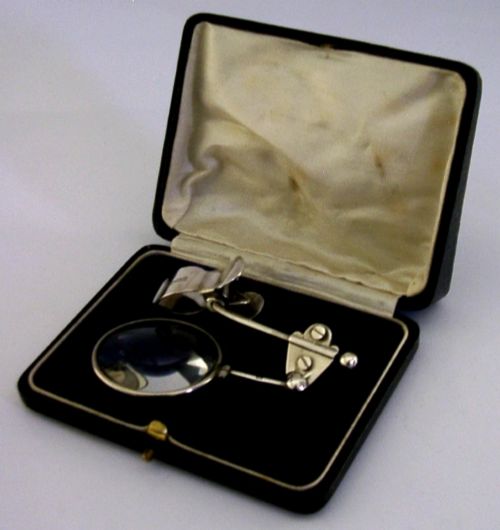
The pieces you meet most often on this page include brass-mounted desk magnifiers, cased optometrist test glass kits and mahogany-cased microscopes. Makers such as H Hughes & Son London, Francis West of Fleet Street London and CW Dixey London appear across the inventory.
Victorian and Edwardian examples dominate the selection, spanning styles from Victorian and Edwardian Arts & Crafts to Art Deco. Materials range from cast iron and sterling silver to velvet, silk and leatherette.
How they were made
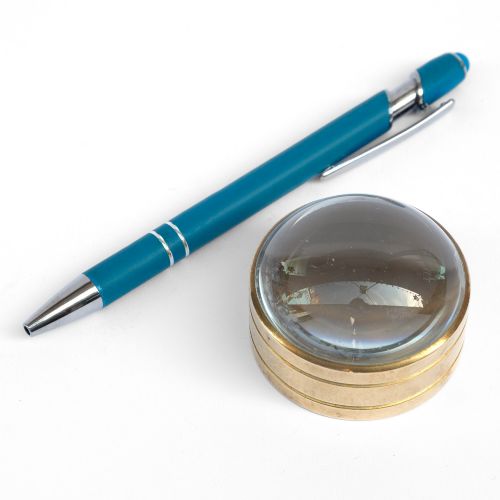
Makers utilised heavy brass and solid mahogany to house precision glass lenses, often mounting them on pivoting stands or housing them within fitted wooden cabinets. Sterling silver frames and celluloid handles also appear among desk and pocket magnifiers.
Internal linings utilise materials like velvet, silk and leatherette to protect delicate glass components inside fitted boxes and test kits. Cast iron provides stability for heavier desktop and scientific apparatus.
Listings feature items spanning the nineteenth century, 1900, 1910, 1920 and 1930 periods.
What varies in quality
Quality rests in the clarity of the glass and the integrity of the original casing, whether mahogany, brass or silver. Maker signatures from firms like CW Dixey London or Francis West elevate the standing of an instrument.
Complete sets with intact test glasses or original fitted boxes command greater attention than loose or modified lenses. The precision of the mechanical mountings and the preservation of delicate linings mark the difference between standard items and superior examples.
The Vintage Optical Lens Glossary
- Stanhope lens
- A type of cylindrical magnifier that produces a high magnification image without requiring a complex compound lens setup.
- Bullseye magnifying glass
- A convex lens mounted on a pivoting stand designed to focus light or enlarge text on a desktop.
- Optometrist test glasses
- A collection of graduated lenses housed in a fitted cabinet used by practitioners to measure visual acuity.
- Celluloid
- An early thermoplastic material utilised for handles and decorative elements on late nineteenth-century desk accessories.
Vintage Optical Lens: Frequently Asked Questions
What is a vintage optical lens used for today?
These pieces serve as decorative desk accessories, reading aids and display objects in studies and libraries. Collectors also appreciate them as examples of historical scientific craftsmanship.
Larger items like cased microscopes and optometrist sets function as striking focal points on shelves and tables.
How do I date a vintage optical lens?
Dating relies on maker signatures, material choices and housing styles typical of periods like the Victorian era or the 1920s. Hallmarks on sterling silver mounts provide precise assay years for specific pieces.
Cabinet construction and the presence of original paper labels often narrow down the decade of manufacture.
Are these lenses still optically useful?
Many magnifiers and desk lenses retain their optical properties and function effectively for reading fine print or inspecting details. Scientific instruments may require careful handling due to their age.
The primary appeal for buyers often balances practical utility with historical aesthetic value.
How should I care for brass and mahogany instruments?
Keep brass and mahogany items away from direct sunlight and excessive moisture to protect the wood finish and metal polish. Dust glass components gently with a soft cloth.
Preserving original velvet or leatherette linings requires stable room temperatures and gentle handling.