
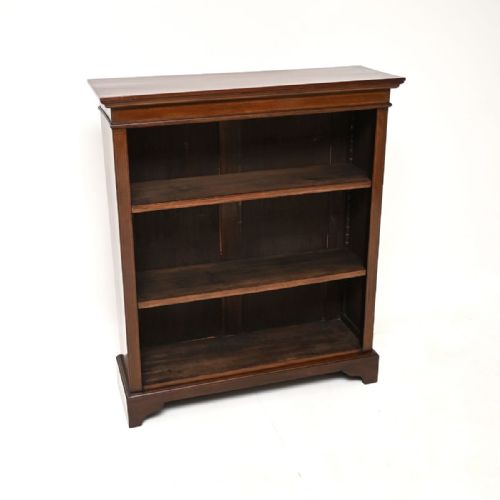
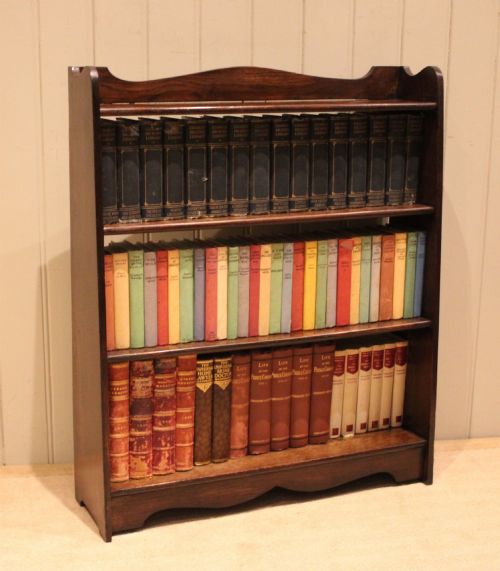
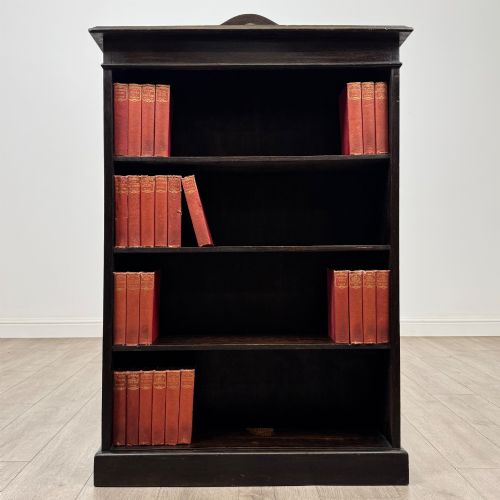
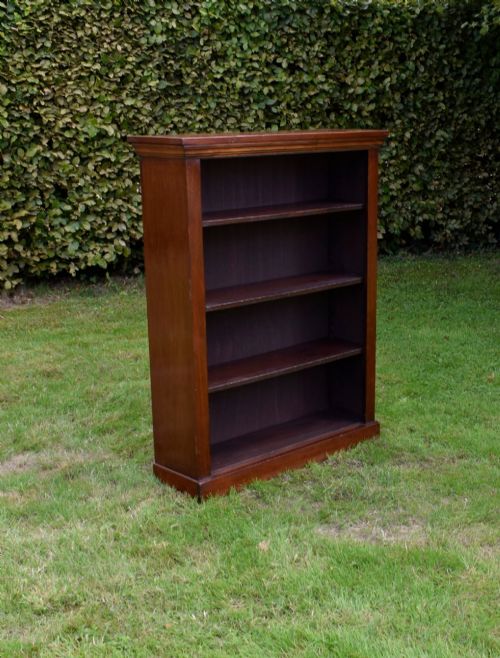
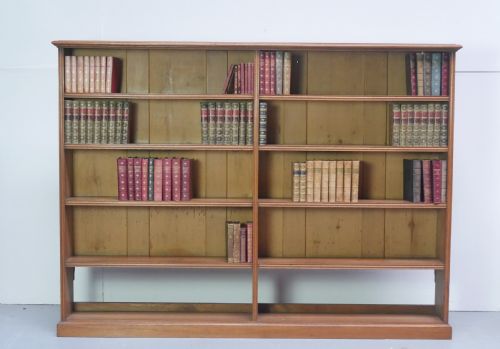
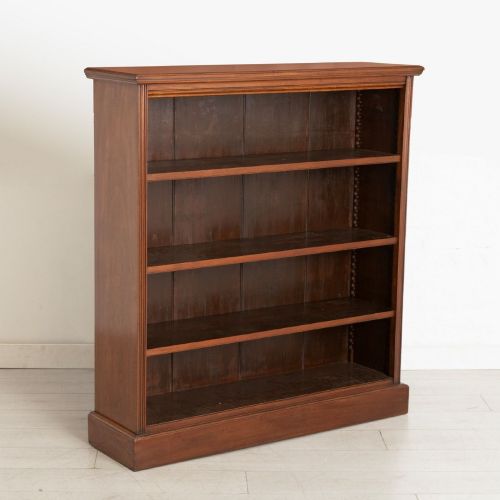
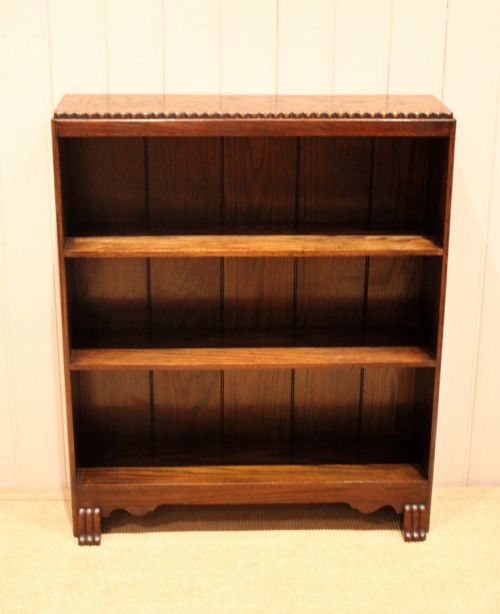

Vintage Open Front Bookcase
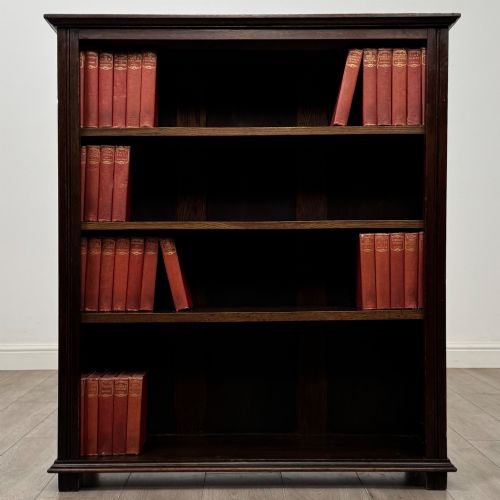
A vintage open front bookcase brings immediate warmth and accessibility to a room, offering practical shelving paired with the character of older timber.
Vintage Open Front Bookcase
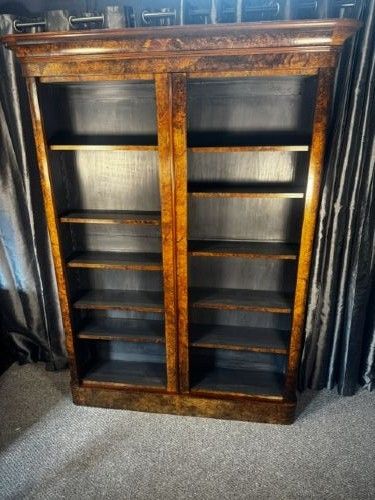
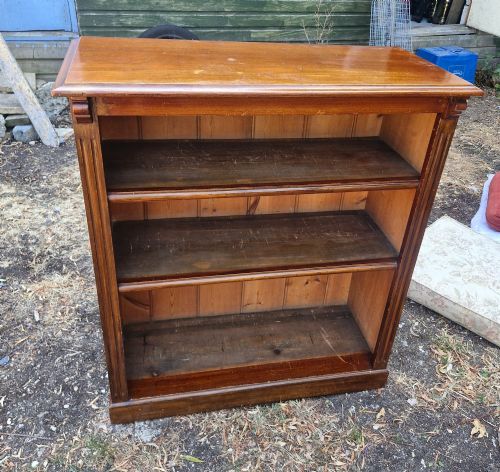
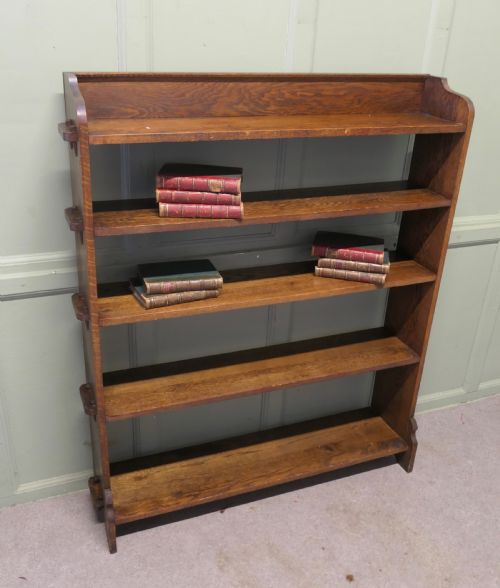
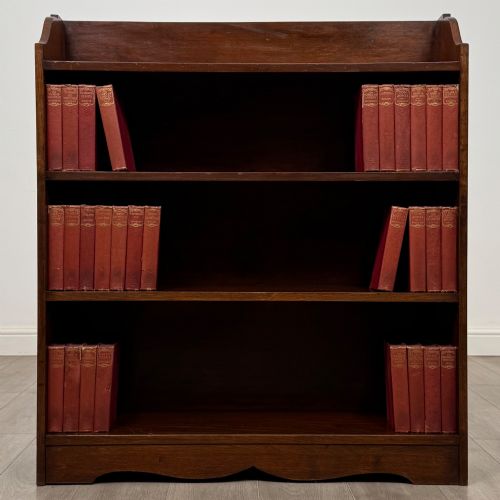
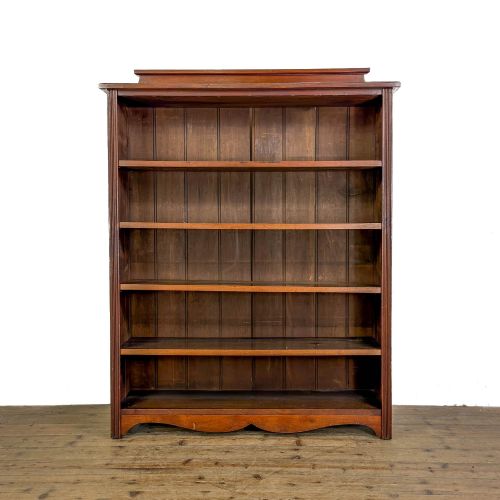
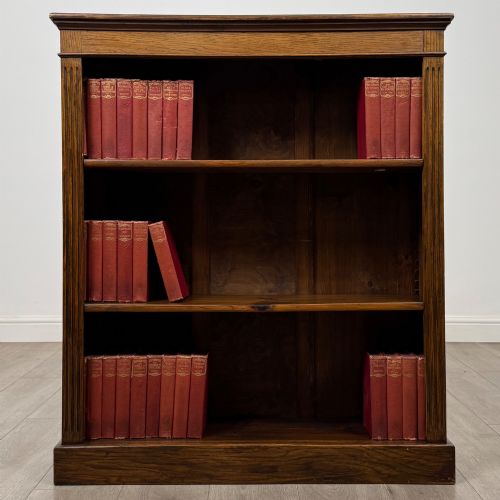
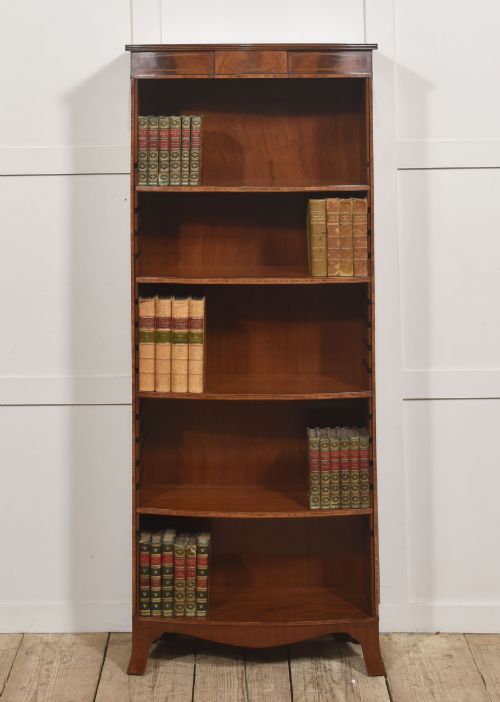
A vintage open front bookcase is defined by its lack of doors, allowing direct access to shelves and the spines of books, and the selection here spans periods from the nineteenth century through the 1930s. Buyers searching for a vintage open front bookcase will encounter various forms, including straightforward rectangular shelving units, tiered waterfall designs, and breakfront arrangements.
The material palette is dominated by oak and mahogany, alongside walnut, burr walnut, and pine, reflecting the primary woods utilised across Victorian, Edwardian, and Art Deco workshops. Many examples incorporate specific decorative elements such as inlaid stringing, beaded edges, carved mouldings, and adjustable shelving to suit changing storage needs.
Materials and construction methods
Construction relies heavily on solid timbers and veneers of oak, mahogany, and walnut, often enhanced with brass hardware and glass or satinwood accents where appropriate. Cabinetmakers utilised traditional joining techniques to build stable carcases capable of supporting heavy volumes over decades of domestic use.
Surface treatments range from carved details and applied mouldings to contrasting wood inlays, giving each piece its individual texture and visual depth. The integration of adjustable shelves in several pieces demonstrates a practical approach to interior joinery during the nineteenth and early twentieth centuries.
Current listings feature pieces spanning the 19th Century, Victorian era, Edwardian period, and the 1930s.
Differentiating quality across pieces
Quality in these items is determined by the selection of figured veneers, the precision of cabinet joinery, and the subtlety of decorative flourishes such as inlay or carving. Finer examples display carefully matched wood grains on breakfront facades and balanced proportions that elevate standard storage into considered furniture.
The presence of secondary timbers, the integrity of adjustable shelf mechanisms, and the crispness of mouldings further distinguish standard workshop production from more ambitious furniture making. Better pieces maintain structural rigidity while retaining refined detailing around cornices and plinths.
The Vintage Open Front Bookcase Glossary
- Breakfront
- A cabinet or bookcase whose central section projects forward from the flanking wings. This configuration adds architectural depth to the room.
- Waterfall bookcase
- A shelving unit featuring stepped shelves that recede from bottom to top in a cascading profile. Such pieces are frequently associated with the early twentieth century.
- Inlay
- A technique where contrasting woods or materials are set into the surface of a piece to create decorative patterns. Edwardian examples often feature delicate mahogany stringing.
- Beaded edge
- A narrow, rounded moulding applied to the framing or shelves of furniture. This detail provides a subtle textural finish to otherwise plain timber.
Vintage Open Front Bookcase: Frequently Asked Questions
What is an open front bookcase?
An open front bookcase is a freestanding shelving unit designed without doors, providing direct and immediate access to the books or objects stored within.
These pieces range from tall library furniture to smaller shelf units intended for domestic parlours and studies.
How do I date a wooden bookcase?
Dating relies on observing the primary timber, the style of decoration, and construction methods characteristic of periods like the Victorian era or the 1930s.
Details such as inlaid satinwood, carved oak mouldings, or waterfall tiers offer clear stylistic clues to a piece's era of origin.
Are the shelves usually adjustable?
Many examples feature adjustable shelves supported by traditional wooden bearers or modern track systems, allowing the interior height to be customized.
This adaptability was particularly common in larger library and office furniture designed to accommodate books of varying sizes.
What woods were commonly used?
Oak and mahogany are the most frequent materials found in these listings, alongside walnut, burr walnut, and pine.
Cabinetmakers selected these hardwoods for their structural strength and attractive grain patterns, often enhancing them with contrasting inlays.