


Vintage Office Desk Organiser
A vintage office desk organiser brings order to papers while adding period character to a workspace.
Vintage Office Desk Organiser
A vintage office desk organiser serves to sort paperwork, letters and stationery upon a writing surface. Buyers searching for a vintage office desk organiser encounter a practical range of nineteenth century and twentieth century desk accessories.
The selections available here encompass stationery cabinets, pigeon holes, desk tidies and perpetual calendars. These desktop furnishings reflect working practices from the Victorian, Edwardian and Art Deco periods.
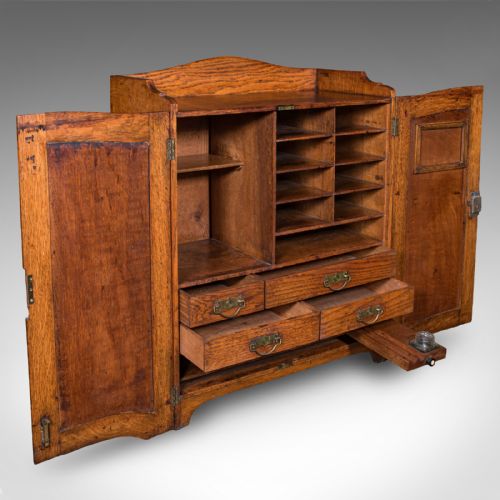
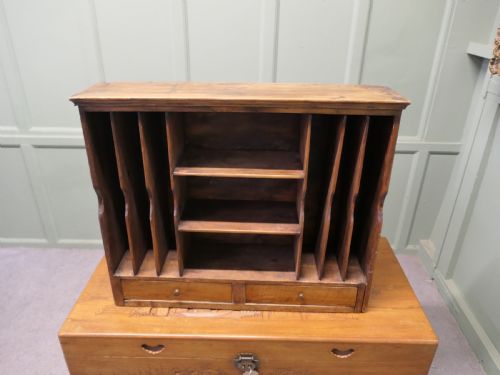
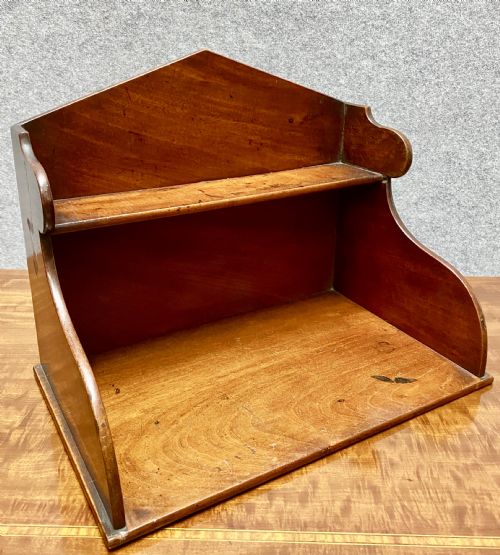
Common formats include mahogany pigeon holes, oak letter organisers and marble desk tidies with bronze or brass details. Items range from simple wooden shelf units to compartmentalised cabinets designed for clerks and insurance agents.
Materials and construction methods
Construction relies heavily on timbers such as mahogany, oak and pine, shaped into desktop storage units and cabinetry. Joinery techniques from the nineteenth and early twentieth centuries ensure sturdy compartments for sorting documents.
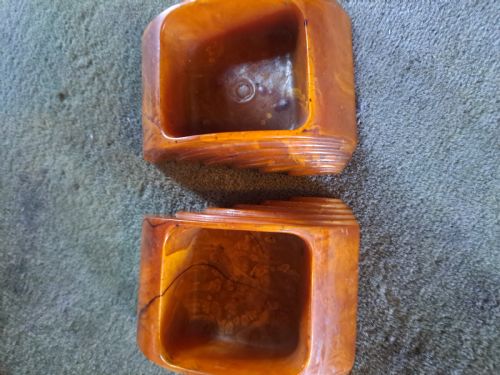
Metal and stone components appear in specific pieces, including brass clips, bronze figures and black marble bases. Bakelite and catalin emerge in later Art Deco examples, such as stamp wetters from around nineteen thirty.
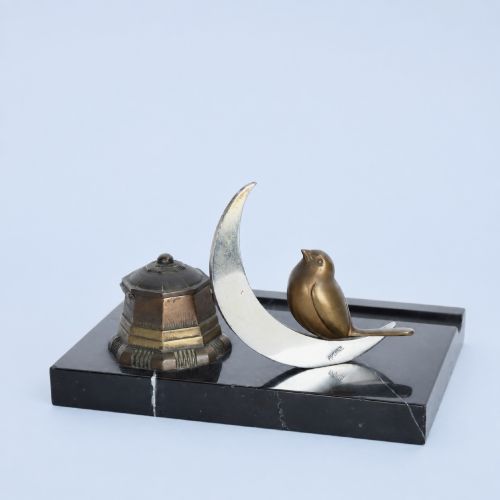
A cast bird perched on a black marble crescent moon watches over one Art Deco desk tidy.
Judging quality in desktop storage
Quality rests on the choice of timber and the precision of the compartment joinery. Finer pieces employ solid mahogany or dark oak with well-fitted pigeon holes and substantial hardware.
Artistic execution elevates desk tidies, particularly where marble and bronze or carved elements combine. The presence of functional mechanisms, such as working perpetual calendars or intact stamp wetters, distinguishes better survivals.
Amberg
The Vintage Office Desk Organiser Glossary
- Pigeon holes
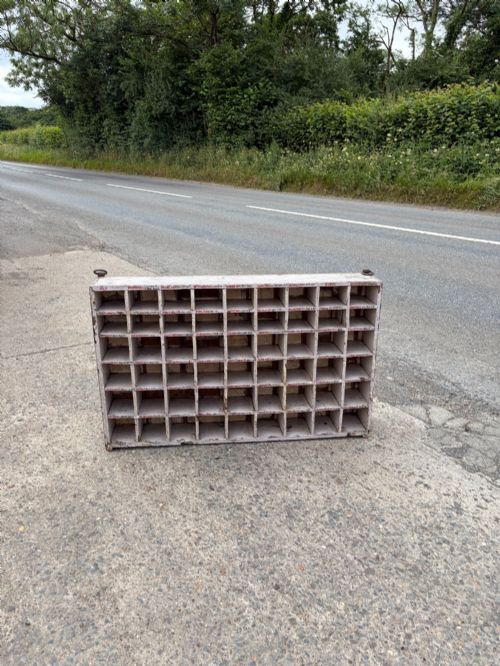
- Compartments arranged in rows for sorting mail and papers. These open slots form the core of many desktop storage units.
- Perpetual calendar
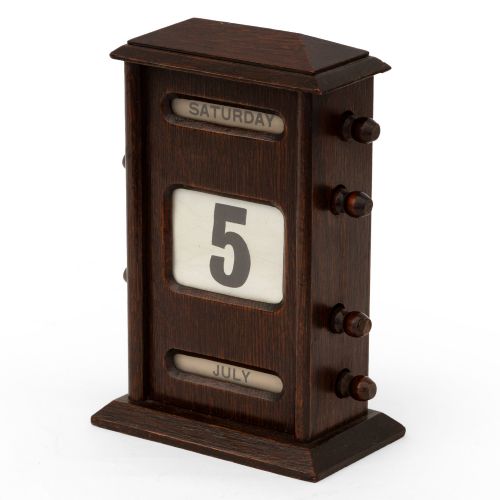
- A dating device with adjustable cards, rollers or dials for daily use. Such items frequently incorporate brass mounts or wooden frames.
- Stationery cabinet
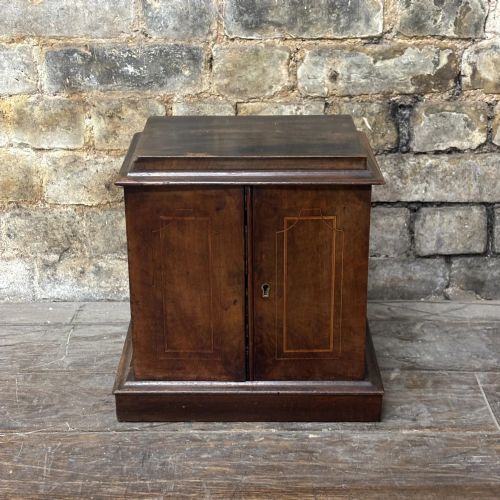
- An enclosed desk accessory featuring doors or a fall-front to conceal writing paper and envelopes. They often date from the Victorian and Edwardian eras.
- Desk tidy
- A tray or compartmentalised block designed to hold inkwells, pens and stamps. They appear in materials ranging from marble to polished hardwoods.
- Bakelite
- An early synthetic plastic utilised for desk accessories during the Art Deco period. Items made from this material often feature vibrant colour tones.
Vintage Office Desk Organiser: Frequently Asked Questions
What items count as a desk organiser?
Desk organisers encompass stationery cabinets, pigeon holes, letter racks and desk tidies designed to sort paperwork.
They range from simple wooden desktop shelving to compartmentalised marble and bronze desk accessories.
How were pigeon holes used?
Pigeon holes served to sort incoming mail, correspondence and office documents before the widespread adoption of modern filing.
Clerks and agents kept them on desks or counters for rapid document retrieval.
What materials are typical for these pieces?
Timbers such as mahogany, oak and pine form the bulk of nineteenth and early twentieth century storage units.
Brass, bronze, marble and early plastics like Bakelite appear in smaller desk tidies and perpetual calendars.
How do I date an organiser?
Dating relies on materials, hardware and style markers from periods such as the Victorian era or nineteen thirty.
Art Deco items often feature black marble and Bakelite, while nineteenth century examples favour solid mahogany.