
Vintage Oak Wooden Chairs
Vintage oak wooden chairs bring sturdy domestic utility and centuries of timber character straight into a modern interior.
Vintage Oak Wooden Chairs
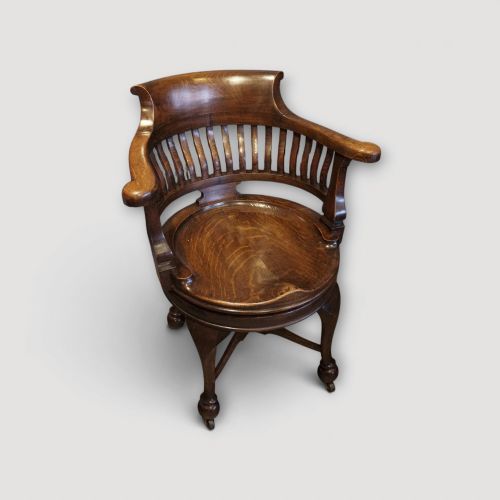
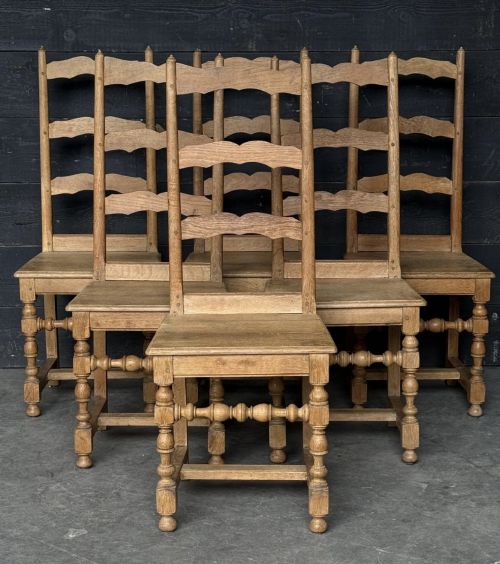
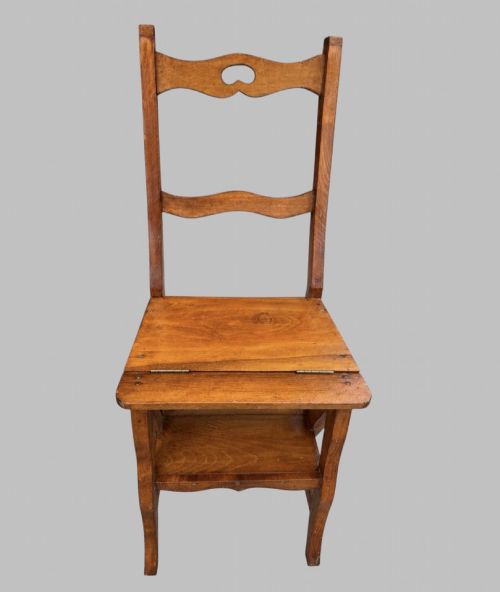
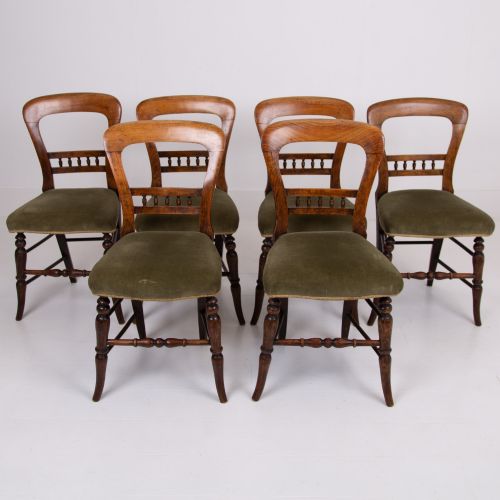
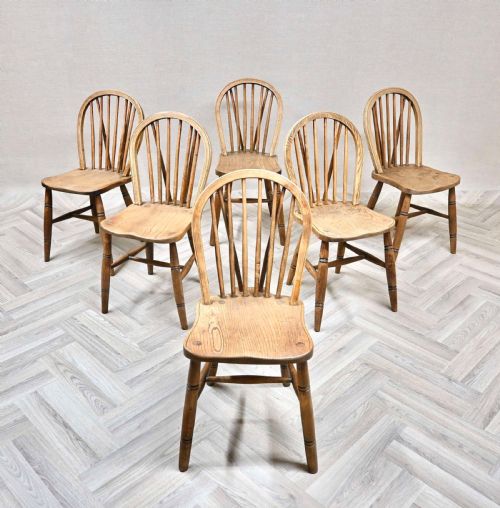
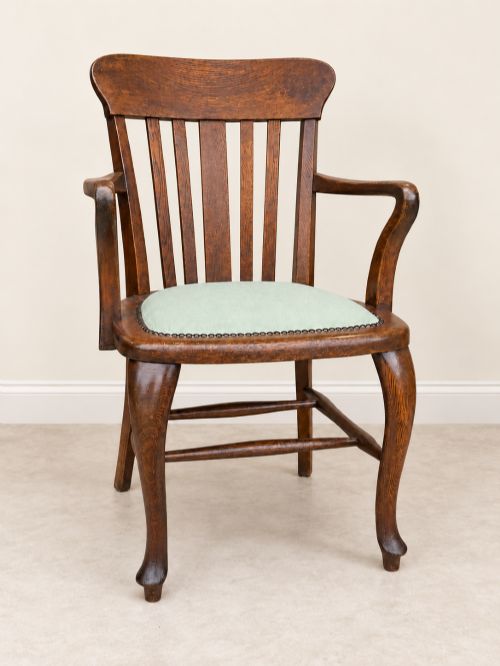
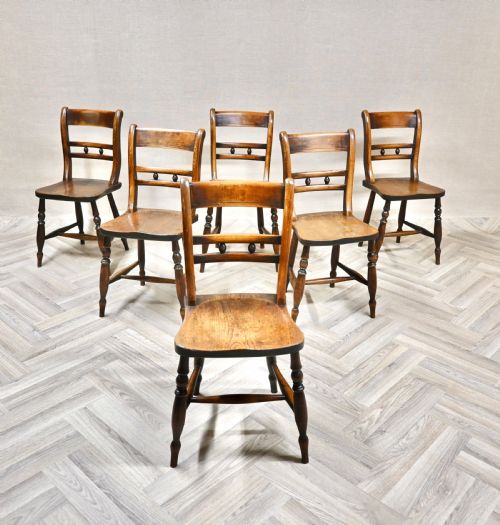
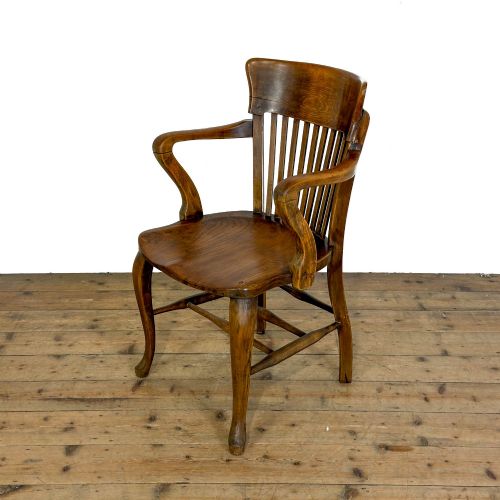
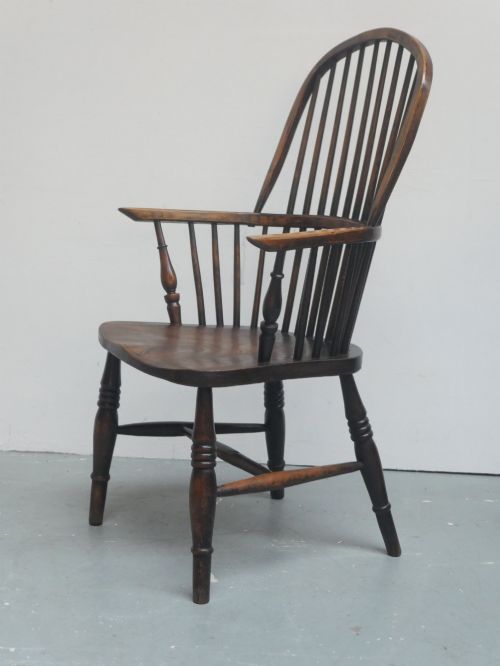
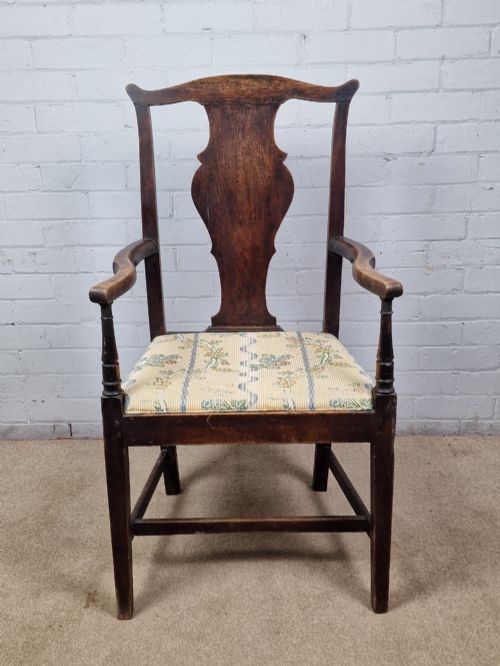
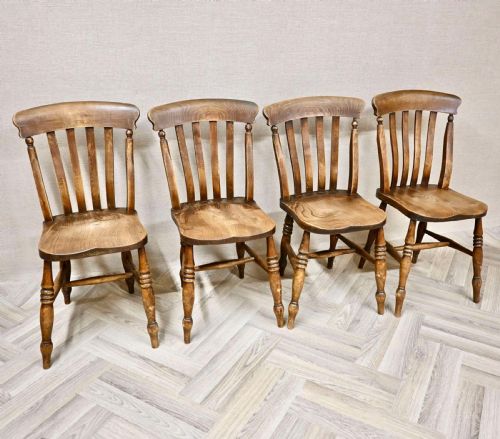
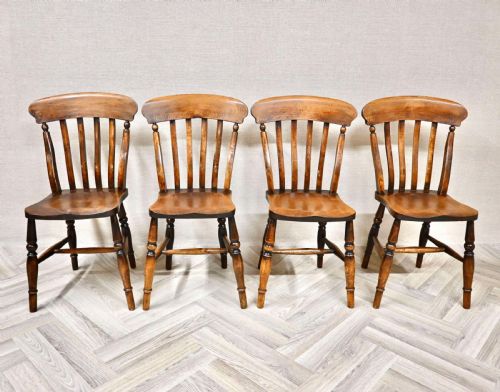
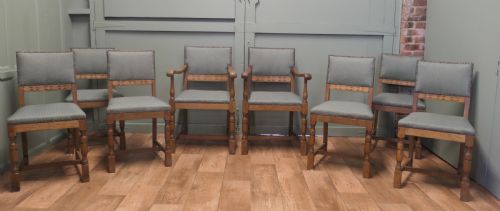
Vintage oak wooden chairs encompass a broad spectrum of practical seating spanning from the eighteenth century through to the early twentieth century. Buyers seeking vintage oak wooden chairs will encounter various forms, including Windsor country kitchen seats, Arts and Crafts dining sets, and formal hall chairs.
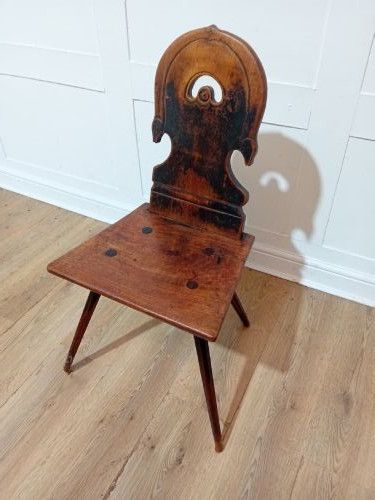
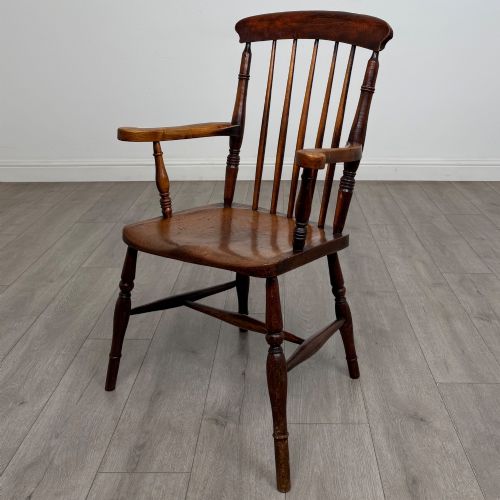
The selection ranges from single armchairs and rocking chairs to large sets intended for dining rooms. Regional styles such as Scottish, Yorkshire, and West Country pieces frequently appear alongside English country designs.
Makers utilised alternative native timbers alongside oak, incorporating elm, beech, ash, and rush for seats and structural components. Domestic and institutional commissions, including pieces marked for St Paul's Cathedral, demonstrate the varied environments these seats originally inhabited.
How they were made
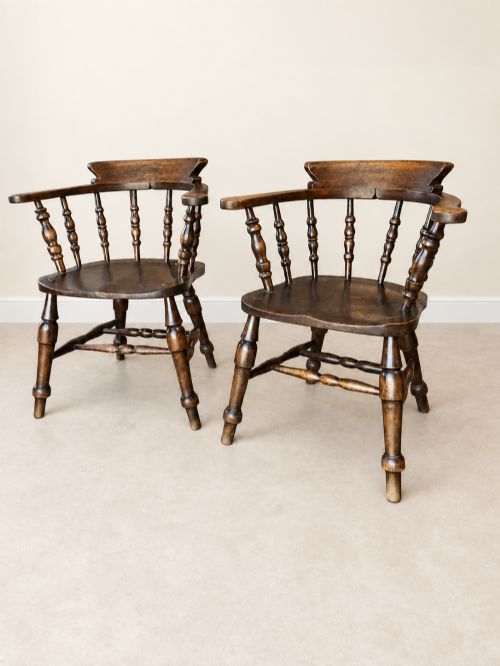
Makers constructed these chairs primarily from solid oak, frequently combining it with elm, beech, and ash for turned spindles, bentwood hoops, and solid plank seats. Bobbin turning, spindle framing, and steam bending defined the structural integrity of country and vernacular designs.
Rush seating appears across Arts and Crafts and vernacular examples, woven tightly to form durable pads within wooden frames. Joinery methods relied on traditional pegging and mortise and tenon construction rather than modern adhesives.
Seating includes sturdy furniture made for St Paul's Cathedral and tiny child-sized armchairs built with the same ambition as full-scale dining seats.
What varies in quality
Quality rests in the original integrity of the timber, the crispness of turned details, and the survival of untouched surface patination. Examples retaining original rush work, maker stamps, or historical site markings command greater attention from collectors.
Structural alterations, replacement stretchers, and aggressive modern stripping diminish the historic character of older seating. The harmony of a harlequin set relies on consistent proportions and shared vernacular traits rather than factory uniformity.
Liberty Morris And Co·Edward Barnsley
The Vintage Oak Wooden Chairs Glossary
- Windsor
- A traditional wooden chair featuring a solid carved wooden seat into which the legs and back spindles are directly wedged.
- Rush seat
- A woven seating surface made from dried marsh grasses twisted into cords and patterned across the frame.
- Bobbin turned
- A method of lathe-turning timber into a series of rounded spheres or discs resembling beads on a string.
- Harlequin set
- A collection of individual chairs sharing similar period characteristics and proportions rather than originating as a single workshop batch.
Vintage Oak Wooden Chairs: Frequently Asked Questions
How do I identify a Windsor chair?
Windsor chairs feature distinct construction where legs and back spindles insert directly into a thick sculpted wooden seat plank. They often include bowed backrests and central splats.
Look for vernacular country traits, steam-bent hoops, and traditional joint pegging rather than standard framed upholstery.
What is a harlequin dining set?
A harlequin set is a gathering of individual chairs that share similar periods, heights, and general styles without having been made together as a matched factory batch. These groupings allow buyers to seat larger parties around a table.
Careful attention to timber tone, turnings, and scale ensures the gathered chairs sit harmoniously together.
How should I care for antique oak timber?
Maintain antique oak by keeping chairs away from direct heat sources and sudden temperature shifts that dry out ancient timber. Simple dusting and occasional application of traditional wax preserve the natural surface sheen.
Avoid modern liquid polishes that contain silicones and build up unwanted layers over the grain.
Can I use these chairs every day?
Most antique wooden seating was built for rigorous daily utility and remains thoroughly robust for regular domestic use today. Checking joints and rush seats periodically ensures they handle modern weight comfortably.
Heavier Windsor and kitchen chairs suit heavy dining use, while delicate hall or decorative chairs require more mindful placement.