
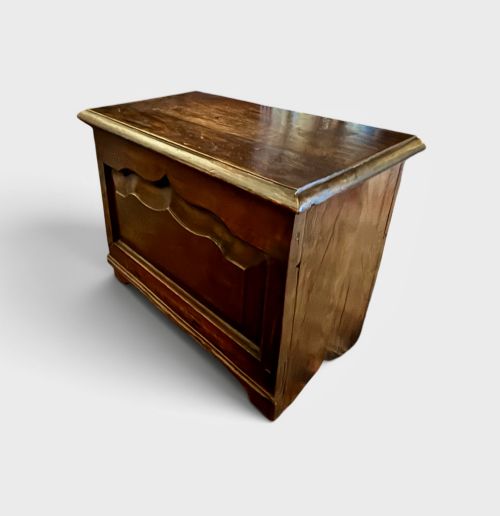
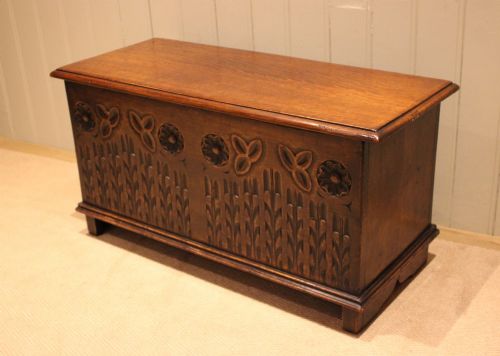
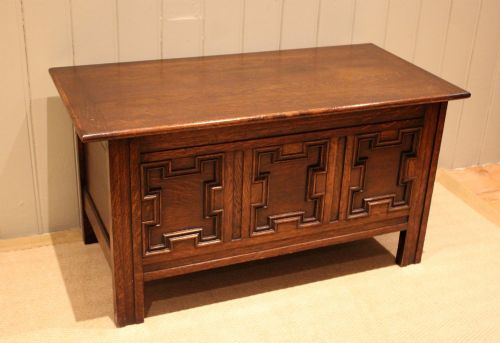
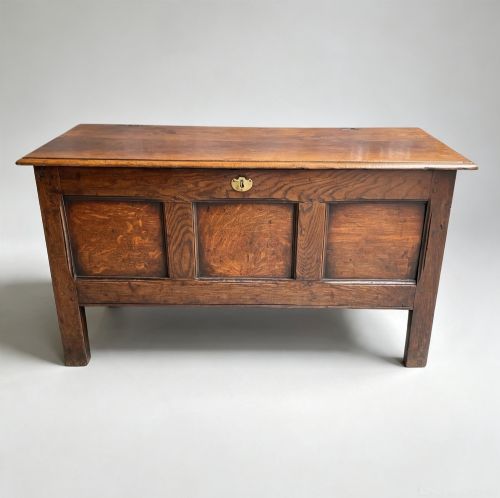
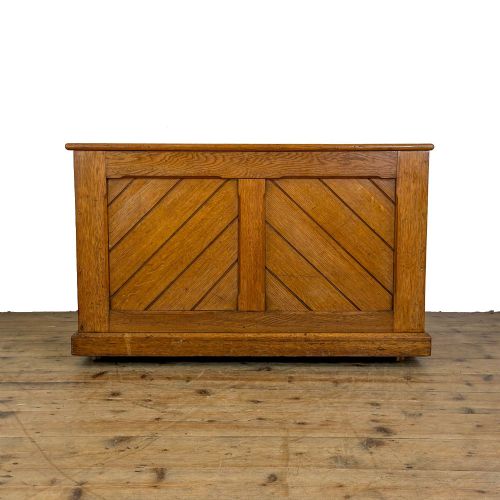
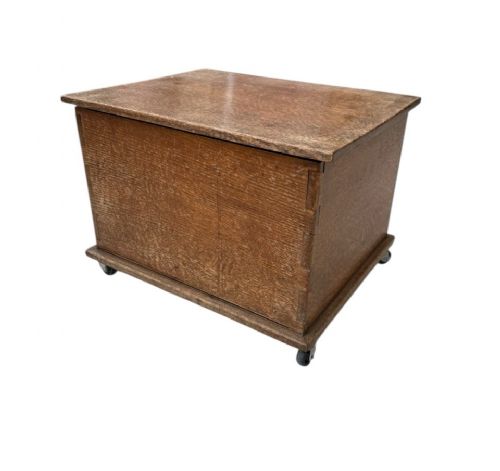

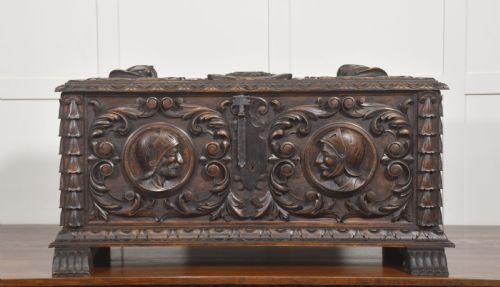
Vintage Oak Trunk Coffer
A vintage oak trunk coffer brings sturdy utility and centuries of carpentry into a modern room.
Vintage Oak Trunk Coffer
A vintage oak trunk coffer serves as a practical storage chest rooted in centuries of domestic utility. When searching for a vintage oak trunk coffer, buyers encounter forms ranging from simple boarded boxes to panelled blanket chests and mule chests fitted with lower drawers.
The pieces on this page span several centuries, with examples originating from the sixteenth century through to the twentieth century. Traditional country workshops and revivalist movements produced much of the surviving stock, utilising durable timbers suited for holding linens, documents and valuables.
Regional variations and functional adaptations define the selection. Buyers find pieces associated with specific uses, such as document boxes, marriage chests, and travel trunks reinforced with iron or brass bands.
How they were made
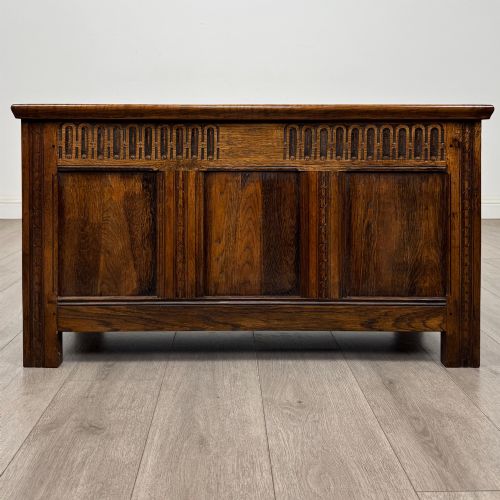
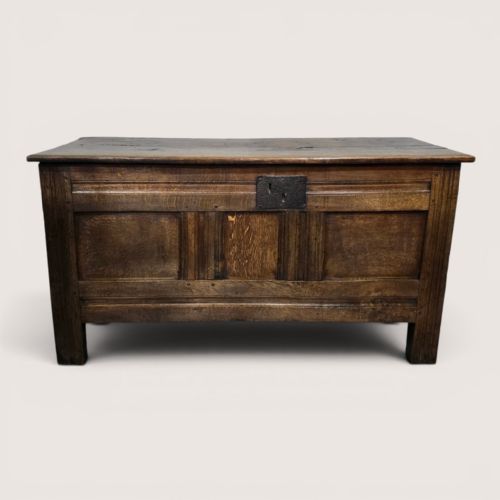
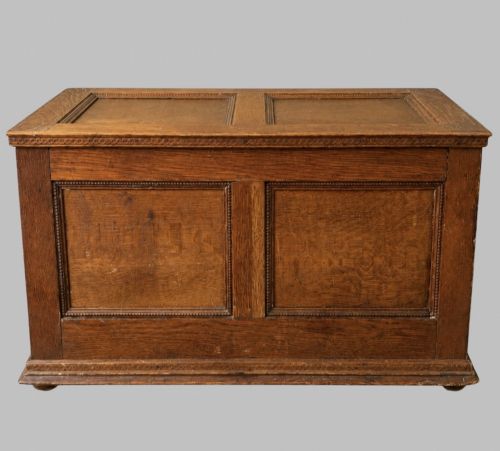
Carpenters constructed these pieces primarily from solid oak, occasionally incorporating elm, walnut, and painted wood for specific panels or secondary elements. Traditional joinery techniques, including mortise and tenon frames, secured the heavy lids and sides.
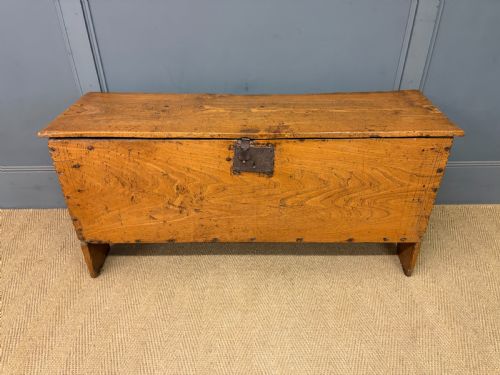
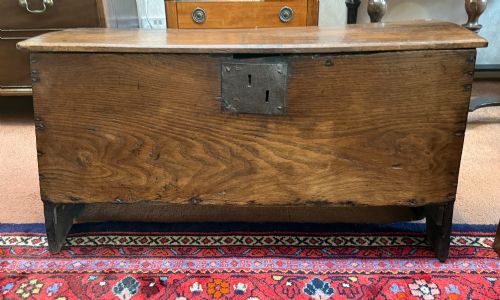
Metal reinforcement played a structural role in surviving travel and storage pieces. Blacksmiths and metalworkers applied iron, wrought iron, and brass bands, hinges, and locks to protect corners and secure contents during transit.
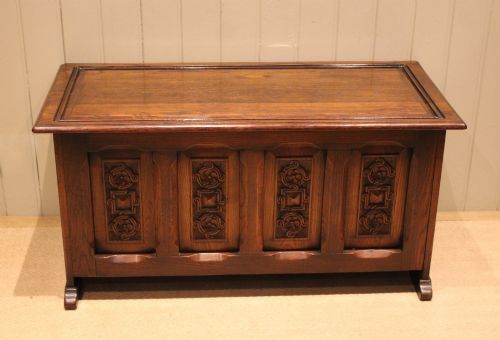
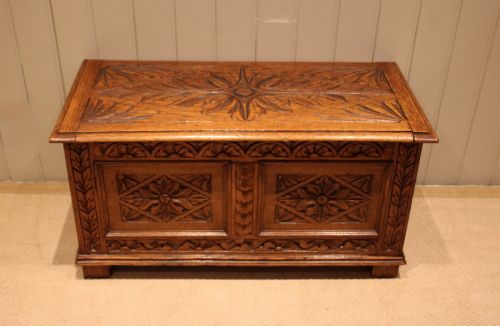
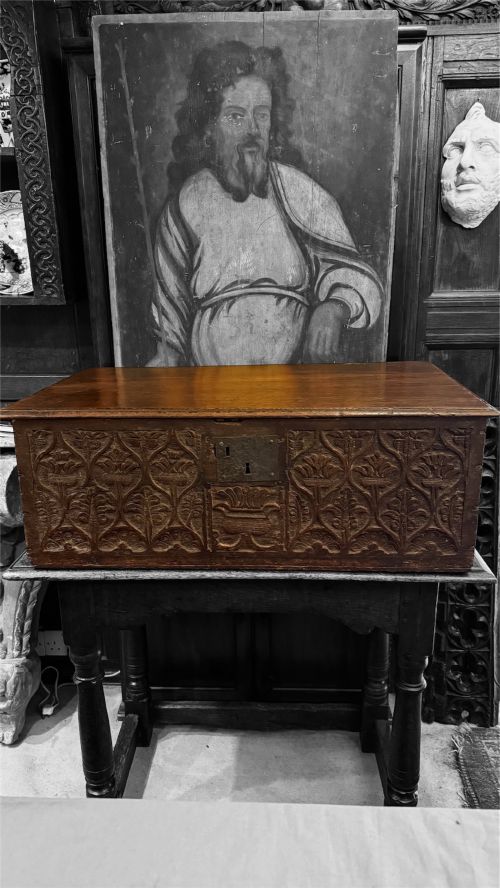
Surface decoration ranges from plain boards to elaborate hand-carved panels featuring geometric motifs, figural medallions, and green man carvings. Some twentieth-century examples display limed finishes or dark wax patination applied over the grain.
Listings feature solid oak and elm construction spanning from the sixteenth century through to the Edwardian period and Arts and Crafts movement.
What varies in quality
The integrity of the original timber and joinery dictates the standing of an individual piece. Heavy solid oak construction with minimal modern replacement parts separates utilitarian containers from master-carpentry examples.
The complexity and execution of surface ornamentation distinguish standard storage boxes from high-status furniture. Crisp hand-carving, well-executed panel assembly, and original hardware retain greater historical character than plain or heavily restored surfaces.
The Vintage Oak Trunk Coffer Glossary
- Coffer
- A heavy wooden chest traditionally used for storing valuables, documents, or household goods. Early examples often feature boarded construction or heavy stile-and-rail framing.
- Mule chest
- A storage chest equipped with one or more drawers built into the base beneath the main compartment. This form bridges the gap between the traditional coffer and the modern chest of drawers.
- Boarded construction
- A method of building chests using thick planks joined simply at the edges with nails, dowels, or pegs. This technique represents the earliest and most direct form of box-making.
- Panelling
- A method of framing thin wooden panels within grooved uprights and rails to allow timber to expand and contract naturally with humidity changes. It prevents the wood from splitting over long periods.
- Till
- A small internal compartment or lidded box built into the upper corner of a larger chest to hold small valuables or coins.
Vintage Oak Trunk Coffer: Frequently Asked Questions
What is a coffer used for?
Historically, households utilised coffers for storing valuable items, textiles, and dry goods securely.
Today, they function well as living room coffee tables, blanket storage at the foot of a bed, or hallway seating.
How do I date an oak coffer?
Carpentry methods offer the clearest indication of age, moving from simple boarded planks in sixteenth-century pieces to complex panel framing in later periods.
Tool marks, timber shrinkage, and the style of surface carving help narrow down the decade of manufacture.
What is the difference between a coffer and a mule chest?
A standard coffer consists of a single top-opening compartment enclosed by four sides and a lid.
A mule chest adds a drawer or bank of drawers beneath the main storage well for easier access to smaller garments.
Are iron bands original on storage trunks?
Many travelling trunks, silver chests, and campaign pieces received iron or brass bands to withstand rough handling during shipping and military use.
While some bands date to later repairs, period examples show integrated blacksmithing appropriate to the era.