

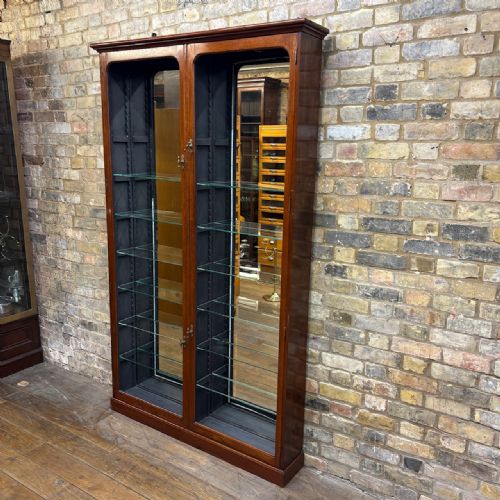


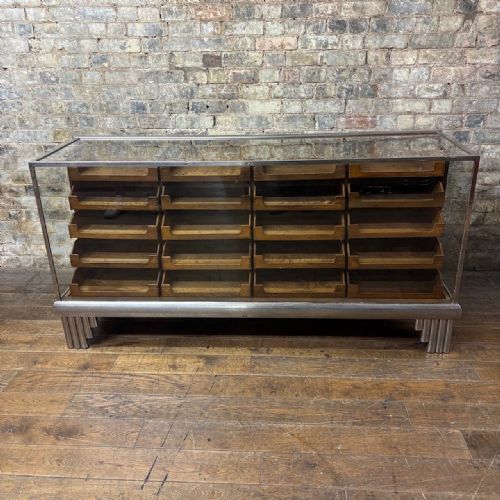
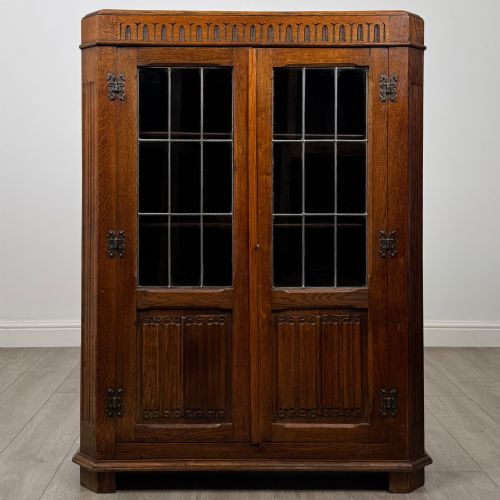


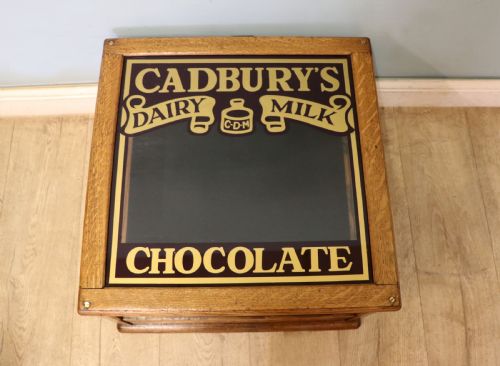

Vintage Oak Showcase
These vintage oak showcase pieces bring period character and clear visibility to displayed collections.
Vintage Oak Showcase
A vintage oak showcase serves to display and protect small objects, ranging from shop counters to countertop display cabinets and display domes.
Buyers encounter forms spanning Victorian, Edwardian, and Art Deco eras, alongside commercial haberdashery counters and museum display cases.
Origins include domestic settings and retail environments, utilising sturdy timbers alongside glass and brass fittings.
How they were made
Construction relies primarily on solid oak frameworks joined to large glass panes, supported by brass hardware, iron accents, and occasional chrome or lead details.
Surfaces feature specialised treatments such as linenfold carving or simple commercial finishes designed for daily retail use.
Vintage Oak Showcase Retail Price Guide 2026
Typical asking prices for vintage oak showcase among the pieces listed under this phrase on Sellingantiques today, from the lower quarter to the upper quarter. They describe what is for sale here now, not the wider market.
Current listings feature oak combined with glass, brass, iron, and chrome across Victorian, Edwardian, and Art Deco periods.
What varies in quality
The distinction between standard commercial fittings and finer examples lies in the crispness of timber carving, such as linenfold panels, and the refinement of brass or iron hardware.
Original glass integrity and the survival of makers' details or sign-writing elevate an individual piece above plain utility stock.
Dudley & Co
The Vintage Oak Showcase Glossary
- Linenfold
- A style of wood carving that imitates folded linen, commonly found on panels of early twentieth-century cabinets.
- Haberdashery counter
- A commercial shop fitting featuring multiple drawers and glass fronts, originally designed for storing and displaying small textiles or goods.
- Display dome
- A glass cover mounted on a wooden base, historically used for protecting delicate items such as taxidermy or ornaments.
- Leaded glass
- Glass panes held together by strips of lead, creating patterned windows within cabinet doors.
Vintage Oak Showcase: Frequently Asked Questions
What were vintage oak showcase units originally used for?
These cabinets served primarily in shops and commercial premises to display merchandise securely while keeping items visible to customers.
Smaller countertop versions and display domes were also utilised in domestic settings to exhibit personal collections or delicate objects.
How do I date an oak display cabinet?
Dating relies on observing construction methods, hardware materials, and stylistic cues such as Victorian proportions, Edwardian linenfold carving, or Art Deco geometry.
Commercial pieces often bear structural traits or sign-writing linked to specific early twentieth-century retail periods.
Are these showcases suitable for modern homes?
Their sturdy timber construction and glass viewing areas allow them to integrate easily into contemporary interiors for storing and exhibiting collectibles.
Countertop models fit neatly onto existing sideboards, while larger floor-standing counters function effectively as standalone furniture.
What is the difference between a counter and a cabinet?
Display counters are generally built for heavy commercial use with integrated drawers or low profiles intended for customer interaction across the top.
Cabinets are designed primarily for vertical wall or tabletop viewing without the heavy base structure of a shop counter.