


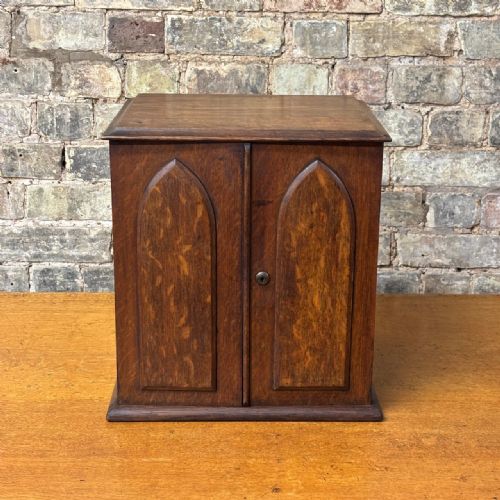


Vintage Oak Mini Cabinet
A vintage oak mini cabinet is a compact tabletop storage piece built from solid timber, offering small drawers or panelled doors to hold collectibles and curios.
Vintage Oak Mini Cabinet
A vintage oak mini cabinet brings small-scale storage into domestic spaces, appearing in forms such as spice cabinets, tabletop cabinets, and miniature chests of drawers. These pieces emerge from periods spanning the eighteenth century through the 1930s, encompassing Georgian, Victorian, and Edwardian eras.
The versions most frequently met on this page are tabletop collectors cabinets and small desktop drawers constructed from oak. They range from rustic Georgian spice chests to Gothic Revival panel door cabinets and interwar commercial countertop needle drawers.
Makers designed these compact pieces for specific desktop and countertop utility, whether holding spices in a kitchen or specimens in a study. Their small proportions allow them to sit easily on larger furniture surfaces while providing segmented internal storage.
How they were made
Makers constructed these cabinets predominantly from oak, often combining brass or iron hardware such as hinges, handles, and escutcheons with the primary timber. Selected pieces incorporate mahogany or copper details alongside the main oak structure.
Joinery techniques suited to small-scale furniture allowed craftsmen to build sturdy miniature chests and tabletop cases with functional drawers or panel doors. Surface work includes inlaid decoration and Gothic panel carving on cabinet doors.
Vintage Oak Mini Cabinet Retail Price Guide 2026
Typical asking prices for vintage oak mini cabinet among the pieces listed under this phrase on Sellingantiques today, from the lower quarter to the upper quarter. They describe what is for sale here now, not the wider market.
Listings span the eighteenth century, Victorian era, Edwardian period, and 1930s, using oak alongside brass, copper, and mahogany.
What varies in quality
The standard of construction distinguishes simpler commercial desktop drawers from finely detailed collectors cabinets and eighteenth-century spice chests. Superior pieces display careful timber selection, precise joinery, and integrated period hardware.
The refinement of decorative elements, such as inlaid woodwork and Gothic panelled doors, separates standard utility items from more ambitious cabinet work. Original hardware and sound drawer movement preserve the integrity of each piece.
The Vintage Oak Mini Cabinet Glossary
- Spice cabinet
- A small wall-mounted or tabletop cabinet traditionally used for storing culinary spices in domestic kitchens. These early examples often feature numerous small internal drawers behind a central door.
- Collectors cabinet
- A specialised piece designed to store and display small specimens, coins, or curiosities. They typically contain a series of shallow drawers fitted within a secure carcase.
- Gothic Revival
- A nineteenth-century design style drawing inspiration from medieval architecture. Pieces from this movement often utilise pointed arch motifs, tracery, and heavy panel doors.
- Haberdashery cabinet
- A commercial storage unit originally utilised in shops to organise small sewing goods, threads, or needles. Countertop versions usually feature multiple shallow glazed or panelled drawers.
- Miniature furniture
- Scale models or small-scale cabinet pieces constructed by makers to demonstrate woodworking skill or serve as specialised desk accessories.
Vintage Oak Mini Cabinet: Frequently Asked Questions
What were mini cabinets used for?
These compact pieces served various practical storage roles depending on their specific form. Spice chests held culinary ingredients, while collectors cases stored natural history specimens and small curiosities.
Countertop versions functioned in commercial settings to organise small dry goods or sewing notions. Their tabletop proportions kept frequently accessed items within arm's reach.
Where should I place a mini cabinet?
These small pieces suit placement on top of desks, sideboards, chests of drawers, or sturdy tables. Their compact footprints allow them to occupy minimal surface area while adding vertical storage.
Positioning them away from direct sunlight and heat sources protects the timber and finish. They function effectively as functional display pieces in studies, hallways, and living spaces.
Are these cabinets made of solid oak?
Many examples utilise solid oak for their primary external structures and drawer fronts. Cabinet makers frequently selected oak for its durability and prominent grain figure.
Secondary timbers may appear in internal drawer linings or back panels, which was standard practice in period cabinet making. Examining the grain and construction edges reveals the material composition.