

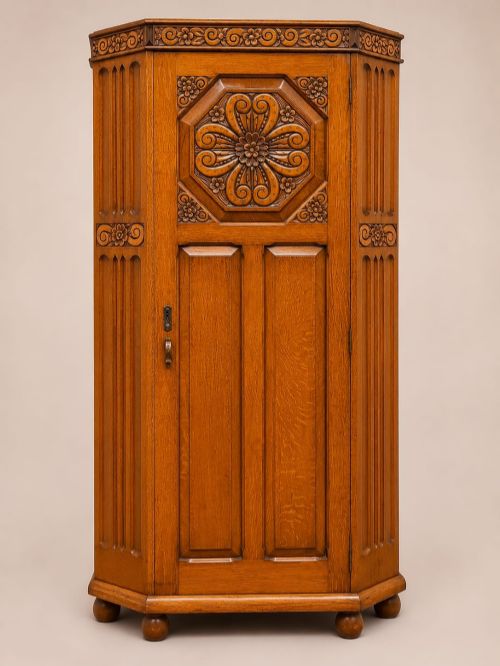
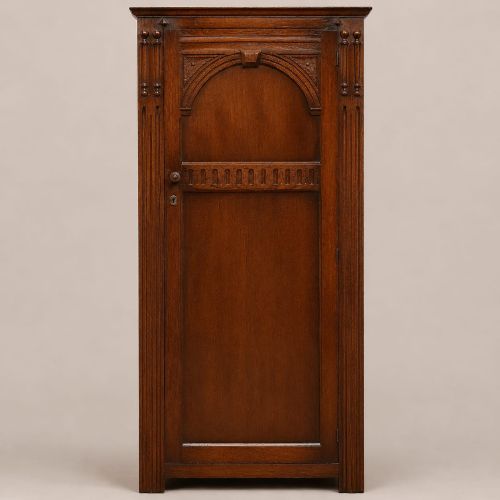
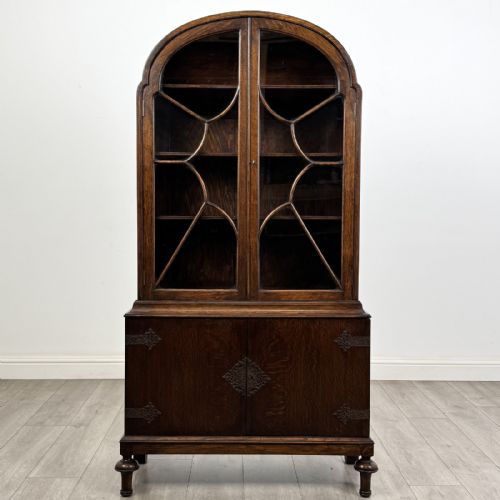
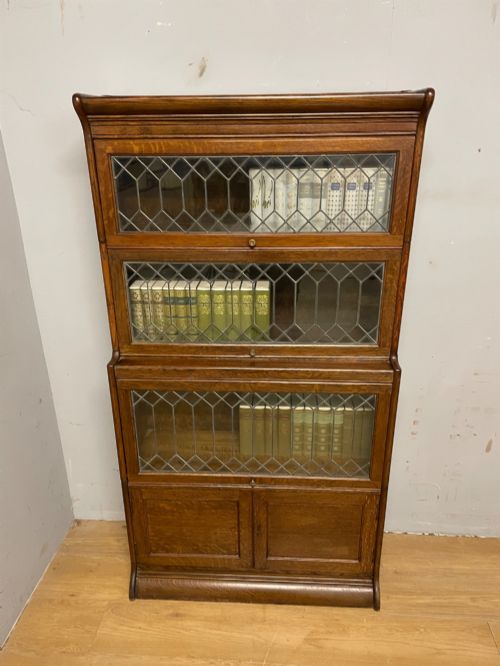
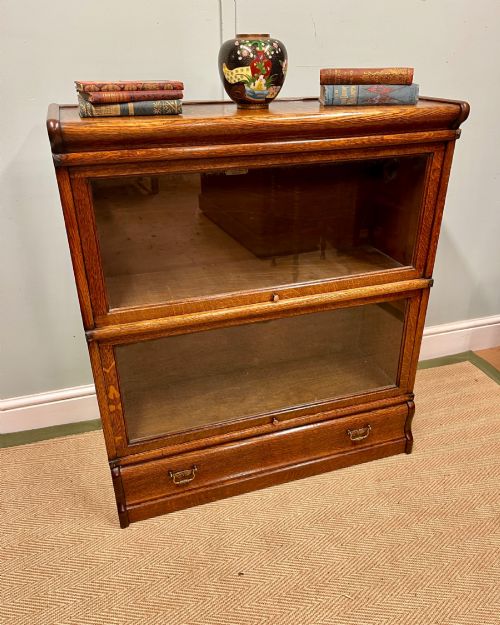
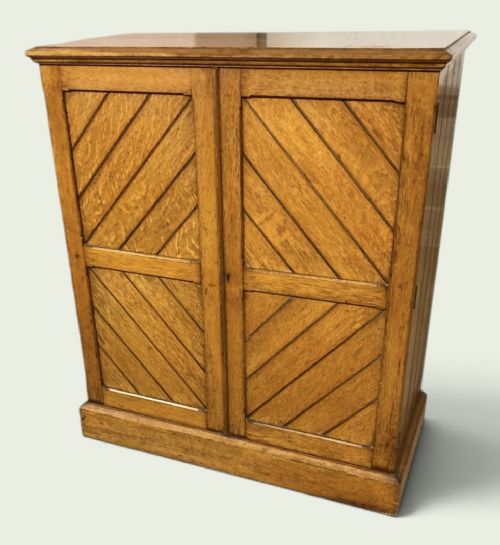
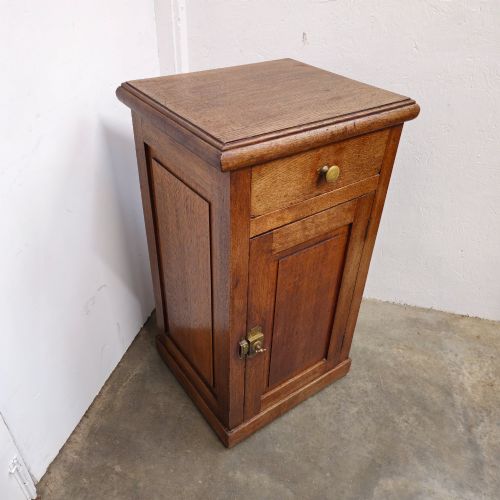
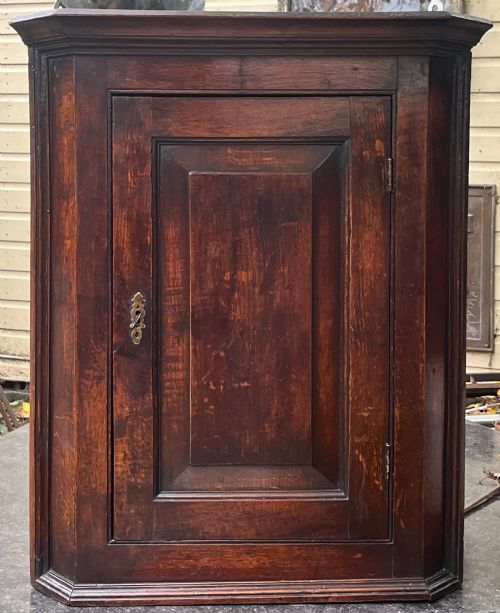
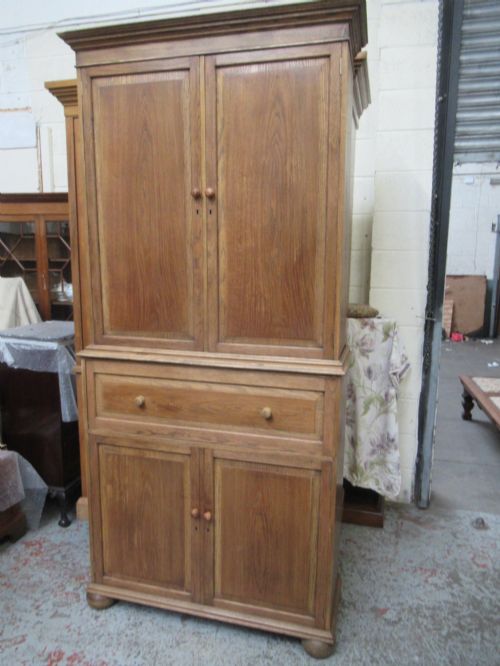
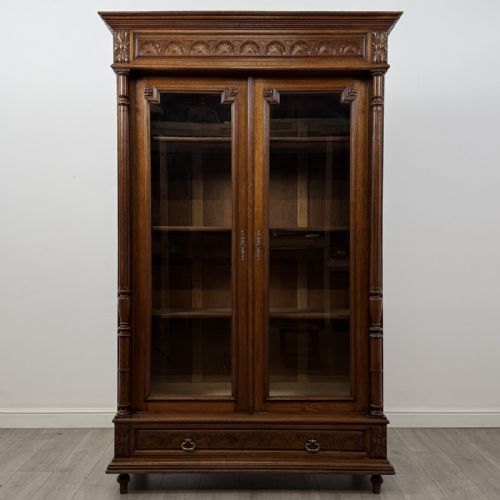
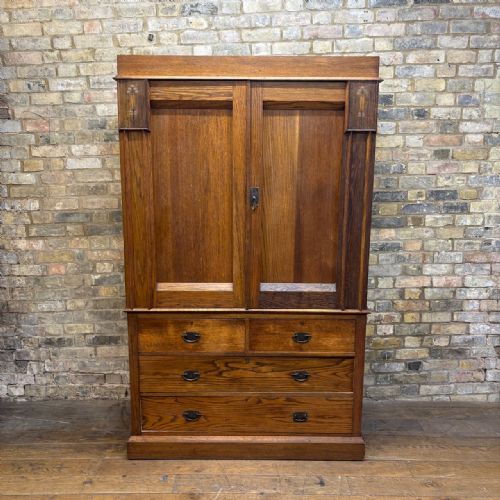
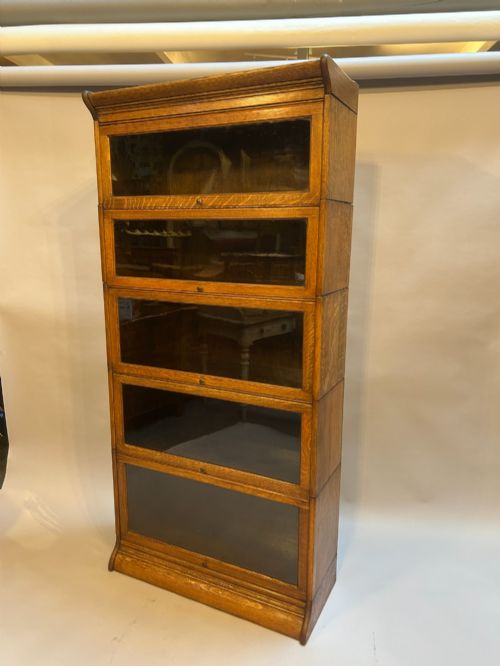
Vintage Oak Door
These vintage oak door examples offer solid timber construction and period character, bringing traditional craftsmanship and enduring utility into contemporary interiors.
Vintage Oak Door
A vintage oak door provides a sturdy entrance or interior division, carrying the weight and grain of a durable hardwood that withstands decades of daily use. Buyers seeking these items typically look to replace modern hollow panels with authentic period character, finding robust construction that grounds a room.
The options appearing on this page span the Victorian era through the mid-twentieth century, capturing shifts in domestic architecture from heavy panelled designs to lighter Arts and Crafts treatments. Mid-century and interwar examples often display simpler framing, while nineteenth-century pieces lean towards deep mouldings and fielded panels.
Many survivors show the influence of regional joinery workshops and established furniture houses that turned their woodworking skills to architectural joinery. Finding a matching pair or a single statement leaf requires patience, as dimensions vary widely across different residential periods.
Materials and construction methods
Makers relied primarily on solid oak, selected for its density and striking grain patterns, sometimes enhanced by quartersawing to reveal silver figure flecks. Joinery relied on traditional mortise and tenon joints, pinned with wooden dowels to ensure the frame held firm against seasonal timber movement without relying on metal fixings.
Hardware played a functional and decorative role, integrating brass hinges, iron strapwork, and occasionally leaded glass panels into the timber framework. French polishing, wax finishes, or surface staining protected the wood while accentuating the natural colour variations built up over years of exposure.
Vintage Oak Door Retail Price Guide 2026
Typical asking prices for vintage oak door among the pieces listed under this phrase on Sellingantiques today, from the lower quarter to the upper quarter. They describe what is for sale here now, not the wider market.
Listings feature oak material paired with brass, iron, and leaded glass across Victorian, Edwardian, and twentieth-century periods.
Distinguishing quality in period woodwork
Superior examples reveal themselves in the tightness of the joinery and the selection of timber, where quartersawn boards resist warping better than plain-sawn equivalents. The weight of the timber and the precision of hand-cut mouldings separate standard utilitarian joinery from workshop pieces designed for finer domestic interiors.
Preservation of original hardware, glass, and surface patina dictates the desirability of a piece. Alterations made to trim the height or width of a door often diminish its integrity, whereas untouched surfaces retain the subtle tool marks left by the original carpenter.
Gunn·Minty of Oxford·Heals·Lebus·Globe Wernicke·Crown Furniture
The Vintage Oak Door Glossary
- Quartersawn
- Timber cut radially from the growth rings to produce a straight grain pattern and greater dimensional stability.
- Mortise and tenon
- A joint wherein a projecting peg fits snugly into a corresponding cavity to lock two pieces of wood at a right angle.
- Fielded panel
- A central wooden insert with bevelled edges designed to fit within a surrounding frame while allowing for natural expansion.
- Patina
- The surface sheen and colour depth developed by wood and metal through age, handling, and repeated waxing.
Vintage Oak Door: Frequently Asked Questions
How do I measure for a vintage oak door?
Take measurements at multiple points across the width and height of the existing structural opening rather than relying on a single reading, since older houses rarely feature square frames.
Account for the need to plane edges slightly for a correct fit, keeping in mind that solid oak timber offers little tolerance for error once hung.
Can I use a vintage oak door externally?
Many sturdy examples suit exterior use provided the timber receives adequate weather protection and sits beneath a canopy or porch to shield it from driving rain.
Interior versions generally feature lighter construction or integrated glass panels that require sheltered placement to maintain their structural stability.
How do I maintain the finish on an old oak door?
Apply a nourishing beeswax or suitable hardening oil periodically to keep the timber hydrated and prevent the grain from drying out in heated environments.
Avoid harsh chemical cleaners that strip the existing surface sheen, opting instead for a soft, dry cloth to remove dust.
How do I date a vintage oak door?
Examine the construction details, such as hand-cut versus machine-cut hinge recesses, alongside the profile of the mouldings and the style of any integrated hardware.
Heavier raised panels typically point towards nineteenth-century origins, while simpler flush or glazed configurations often align with the interwar decades.