



Vintage Oak Desktop Rack
A vintage oak desktop rack keeps your correspondence and volumes orderly, bringing honest timber grain and solid construction to a working surface.
Vintage Oak Desktop Rack
These desktop pieces cover a practical range of desk accessories, letter boxes, stationery cabinets and extending book slides designed to keep workspaces tidy. The selection spans the Victorian and Edwardian eras through to the 1930s, showing how offices and libraries managed paper and volumes.
You are most likely to encounter extending book slides and stationary boxes built from solid timber. These items range from simple Arts and Crafts letter racks to elaborate revolving bookcases and doctor smoking cabinets.
Originating largely from English workshops, these pieces utilise traditional joinery to withstand daily use. The variety reflects the changing needs of domestic and professional studies over several decades.
Materials and construction
Oak serves as the primary structural timber, chosen for its durability and strong grain pattern. Workshops utilised quarter-sawn oak to display attractive medullary rays, particularly on Arts and Crafts pieces.
Metal components such as brass hinges, handles and latches provide functional contrast and secure closure for boxes and cabinets. Leather and glass elements occasionally appear as interior linings or protective panels within stationery cabinets and smoking cases.
Vintage Oak Desktop Rack Retail Price Guide 2026
Typical asking prices for vintage oak desktop rack among the pieces listed under this phrase on Sellingantiques today, from the lower quarter to the upper quarter. They describe what is for sale here now, not the wider market.
Listings feature oak combined with brass, glass, iron, leather and fabric across Victorian, Edwardian, Georgian and 1930s periods.
Assessing quality and craftsmanship
Superior examples demonstrate thoughtful timber selection, where the grain runs harmoniously across visible surfaces and joints fit tightly without excessive adhesive. Better stationery boxes and cabinets incorporate well-fitted internal compartments, secret drawers and robust hardware that operates smoothly.
The distinction between standard production and finer work lies in the carved detailing, such as subtle chamfering on book slides or hand-beaten brass fittings on Arts and Crafts pieces. Pieces that retain their original patination and operational mechanisms sit firmly at the higher end of the scale.
The Vintage Oak Desktop Rack Glossary
- Book slide
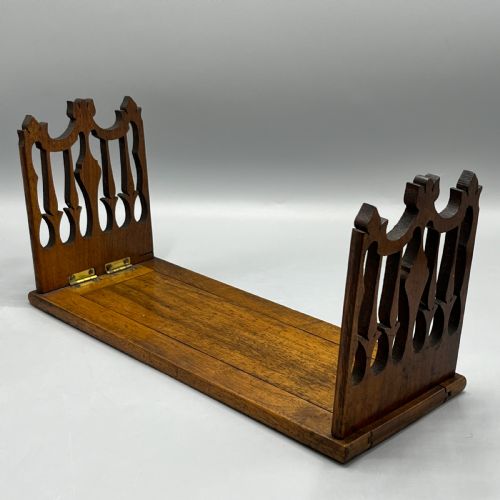
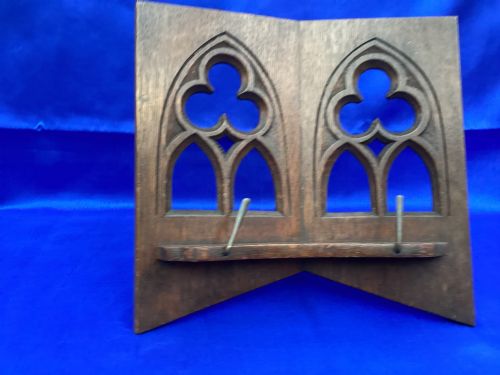
- An extending desk accessory featuring two upright ends connected by a base, designed to hold a variable number of volumes upright. The expanding mechanism allows the length to adjust as your collection grows.
- Stationery cabinet
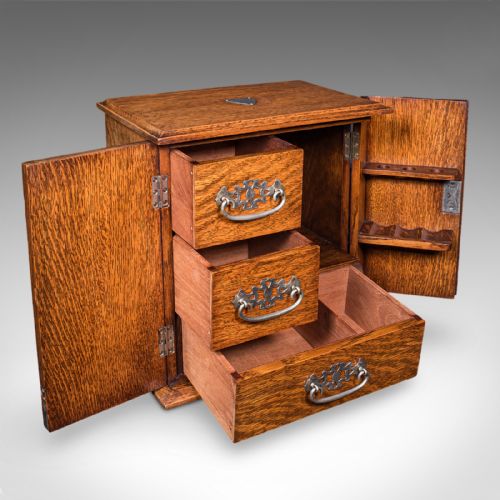
- A desk box fitted with internal divisions, pigeonholes and sometimes a sloped writing surface or drop-front door. These compartments kept paper, envelopes and writing implements organised.
- Arts and Crafts
- A design movement prioritising traditional craftsmanship, visible construction and simple forms over mass-produced ornamentation. Pieces in this style often feature exposed joinery and hammered metal hinges.
- Quarter-sawn
- A method of log cutting where the timber is sliced radially to the growth rings. This technique produces durable boards with a decorative grain figure often prized in quality oak furniture.
- Letter box
- A desktop container with a slotted lid or drop-front door specifically sized for incoming and outgoing mail. They frequently include brass mounts and lockable compartments.
Vintage Oak Desktop Rack: Frequently Asked Questions
How do extending book slides work?
Extending book slides feature a clever sliding mechanism where one section glides smoothly within or alongside another. This allows the overall length of the base to expand or contract depending on how many volumes you place between the upright ends.
This adjustable design keeps books securely upright without requiring fixed bookends on a desk or shelf.
Where were these pieces used?
These items belonged primarily in domestic studies, professional offices and home libraries. Solicitors, doctors and writers relied on stationery boxes and letter racks to sort daily paperwork and correspondence.
Today, they serve a similar role on modern desks, providing tangible organisation for letters, notebooks and reference materials.
How do I care for vintage oak furniture?
Protect vintage oak by keeping it away from direct sunlight and heat sources, which can dry out the timber and cause splitting. Regular dusting with a dry, soft cloth maintains the surface.
Applying a traditional beeswax occasionally helps nourish the wood and preserve the natural patination built up over decades of handling.