



Vintage Oak Corner Table
A vintage oak corner table fits neatly into awkward spaces while bringing solid timber grain and period character to a room.
Vintage Oak Corner Table
A vintage oak corner table serves as a functional surface designed specifically to utilise dead space in a room. When searching for a vintage oak corner table, buyers encounter various forms spanning from the late nineteenth century through to the mid-twentieth century.
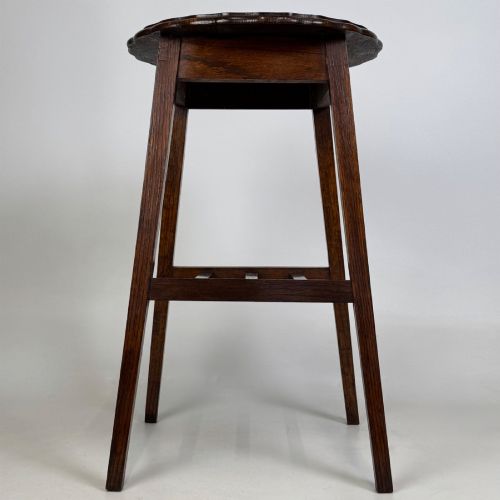
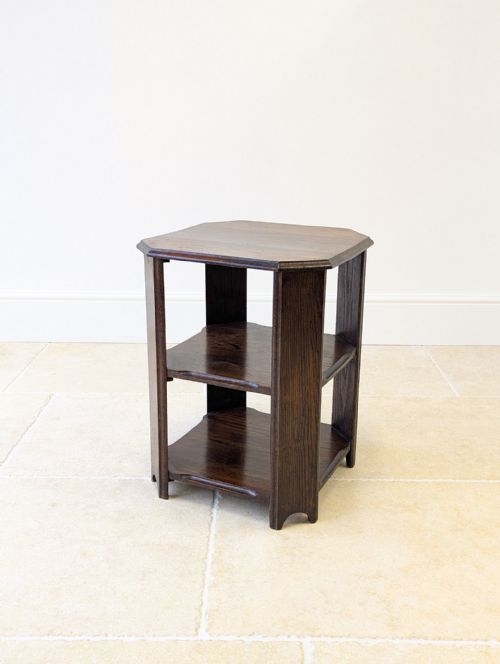
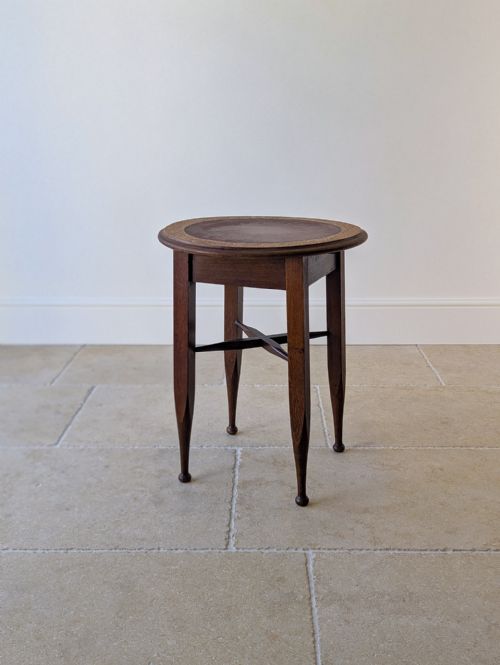
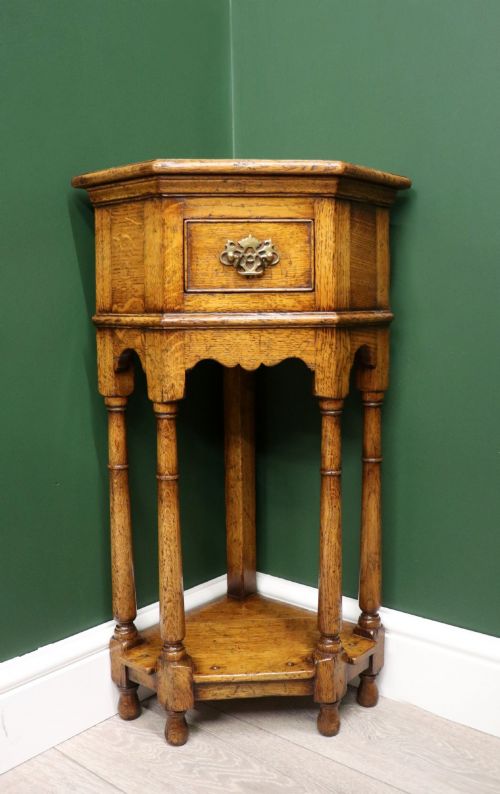
The selection includes occasional tables, side tables, and plant stands configured with triangular or corner-fitting tops. These pieces draw upon styles such as Edwardian, Arts and Crafts, and Jacobean Revival.
While most examples are constructed entirely from oak, other pieces in the broader selection incorporate walnut, ebonised wood, and paint finishes. Buyers are most likely to meet straightforward occasional tables and distinctive three-legged or trefoil designs.
Materials and construction methods
Makers utilised solid timber alongside oak veneer, shaping the wood to fit angular spaces and domestic interiors. Joinery techniques varied according to the prevailing style of the period, from simple turned supports to more intricate framing.
Surface details often include decorative elements such as barley twist turnings on plant stands and occasional tables. Other variations incorporate painted finishes or contrasting materials like brass alongside the primary oak construction.
Vintage Oak Corner Table Retail Price Guide 2026
Typical asking prices for vintage oak corner table among the pieces listed under this phrase on Sellingantiques today, from the lower quarter to the upper quarter. They describe what is for sale here now, not the wider market.
Object forms recorded here include occasional tables, console tables, coffee tables, plant stands, and stools.
Judging the quality of the work
Quality rests upon the integrity of the timber selection and the precision of the joinery used to unite the angled frame. Superior examples demonstrate thoughtful design in the grain pattern across the top and stability in the leg construction.
The distinction between standard production items and finer pieces lies in the crispness of any turned elements, such as barley twists, and the overall harmony of the proportions within a domestic corner.
The Vintage Oak Corner Table Glossary
- Occasional table
- A small movable table intended for intermittent use rather than a fixed dining or writing purpose. These pieces often occupy corners or spaces beside seating.
- Trefoil
- A three-lobed shape resembling a clover leaf, frequently seen in the top design of Arts and Crafts stools and tables. This geometric layout suits triangular corner placement.
- Jacobean Revival
- A nineteenth and twentieth century design style borrowing heavily from seventeenth-century English motifs, including heavy turning and dark oak finishes.
- Barley twist
- A spiral turning technique applied to table legs and plant stands, creating a dynamic vertical line that catches the light.
Vintage Oak Corner Table: Frequently Asked Questions
How do I style a corner table?
Position the piece firmly into an unused room angle to anchor empty wall space and provide a convenient surface for small lamps or decorative objects. The triangular footprint ensures it tucks away without obstructing walkways.
Combine the table with seating or complementary side pieces from similar eras to create a cohesive layout within the room.
What periods do these tables span?
The available pieces stretch from the late nineteenth century through the Edwardian era and into the mid-twentieth century, including nineteen-fifties examples.
Each decade brought subtle shifts in aesthetic preferences, moving from ornate revival styles toward cleaner modernist lines.
Are all these tables made of solid oak?
While the primary material across the selection is oak, some pieces incorporate oak veneer, walnut, ebonised wood, or painted finishes.
Construction methods reflect the manufacturing standards of their respective decades, utilising both solid hardwoods and secondary timbers.
Where should I place a plant stand?
Plant stands with tall, slender profiles or barley twist legs work effectively in corners where they can elevate greenery and add vertical interest to an interior.
Ensure the floor surface is level so that three or four-legged stands remain entirely stable under the weight of a pot.