




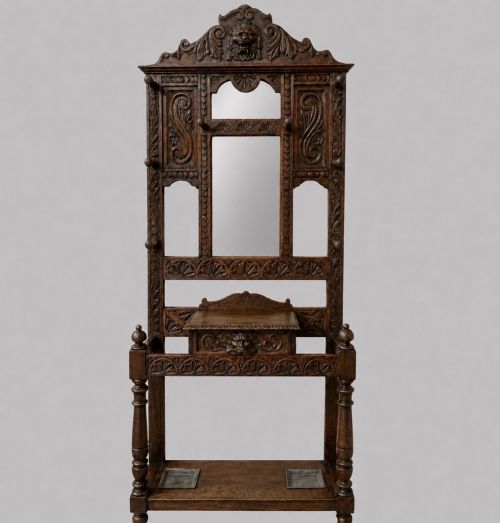
Vintage Oak Coat and Umbrella Stand
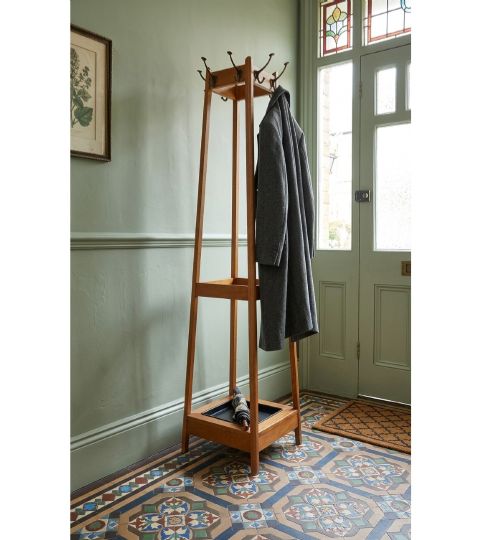
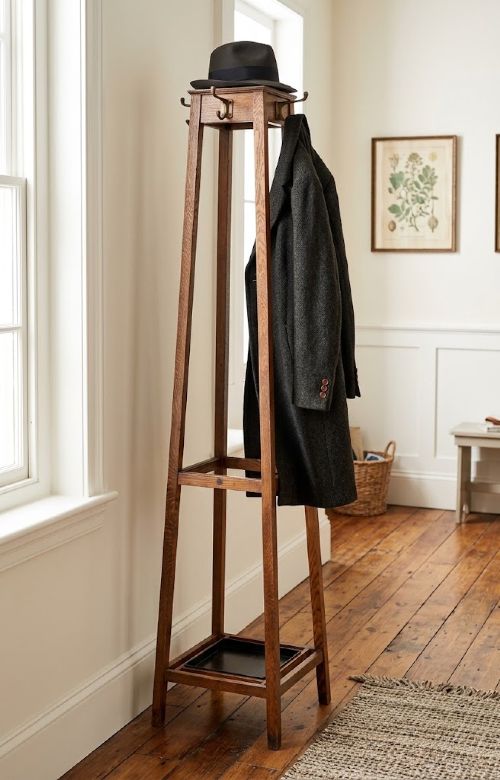
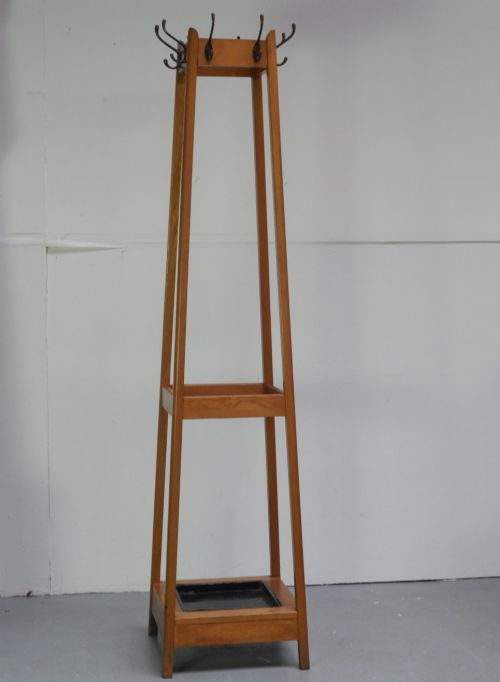
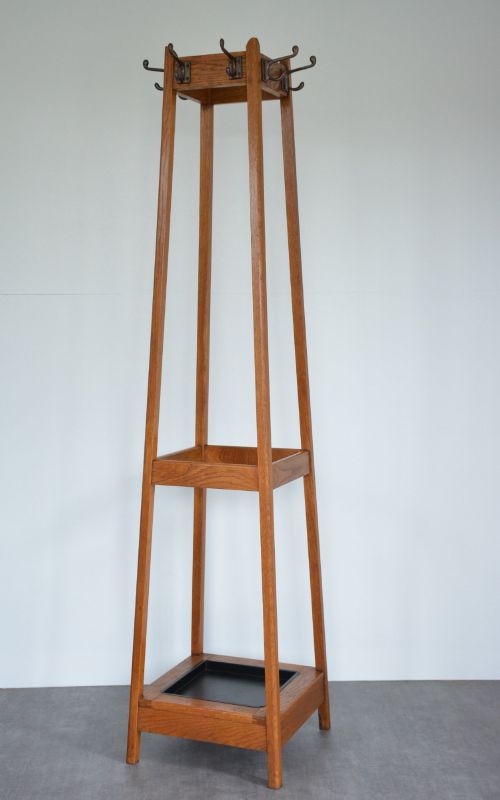
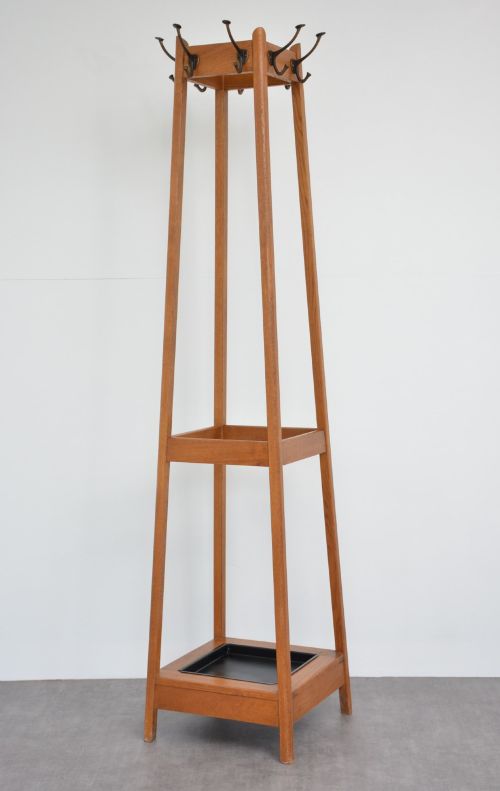
A vintage oak coat and umbrella stand anchors the hallway with sturdy timber, brass hooks, and practical drip trays designed for daily arrivals.
Vintage Oak Coat and Umbrella Stand
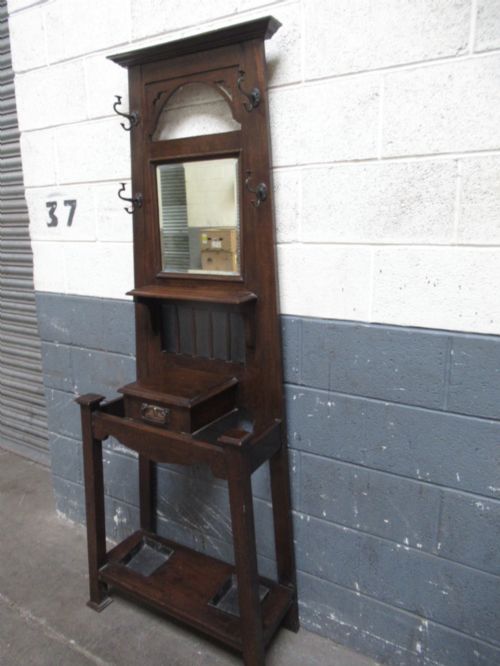
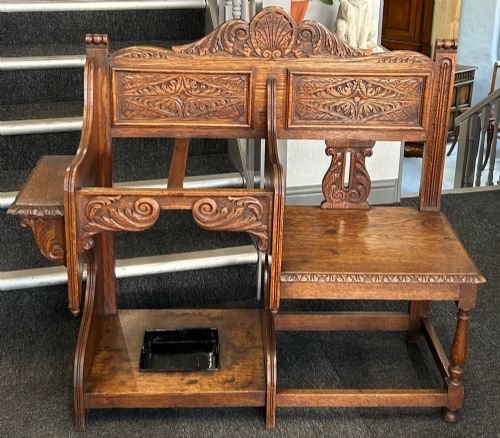
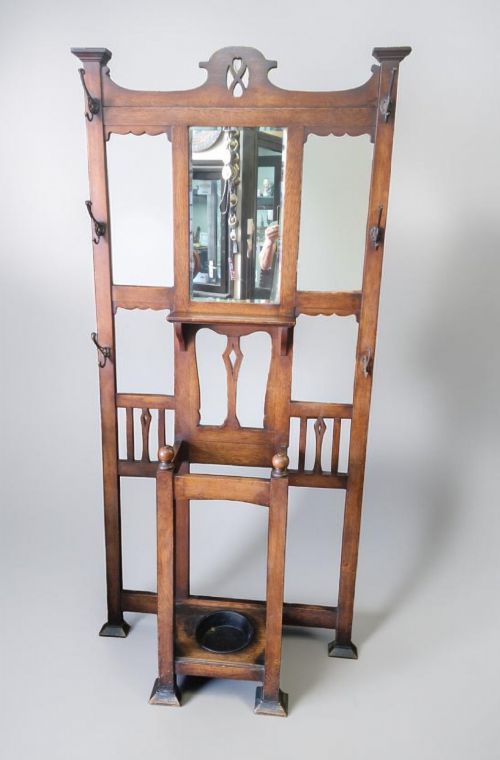
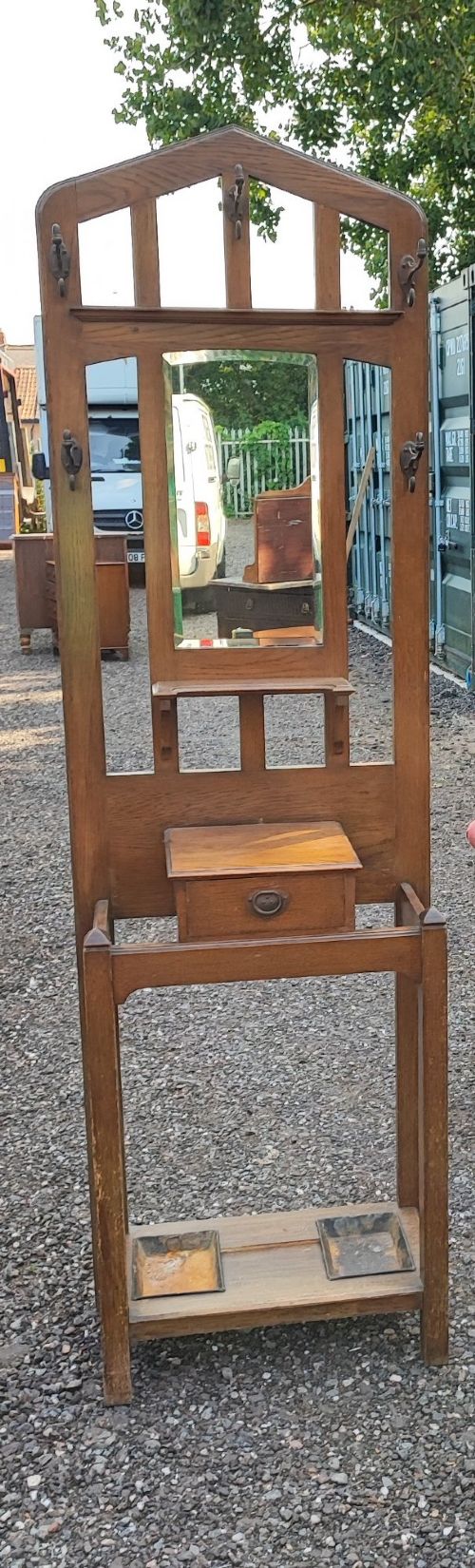
A vintage oak coat and umbrella stand serves as a substantial piece of entrance hall furniture designed to hold garments, walking sticks, and wet umbrellas. Buyers meet everything from compact wall-mounted racks to large multi-functional hall seats incorporating mirrors and carved panels.
The selection ranges across the nineteenth century, the Victorian and Edwardian eras, through to mid-century industrial designs. Pieces span simple coopered barrel stick holders to elaborate hall stands featuring integrated seats and brass hooks.
How they were made
Cabinetmakers utilised solid oak alongside golden oak, often employing cooperative construction for barrel-style stick stands secured with brass bands. Carved panels display Green Man motifs, floral flourishes, and geometric Arts and Crafts patterns.
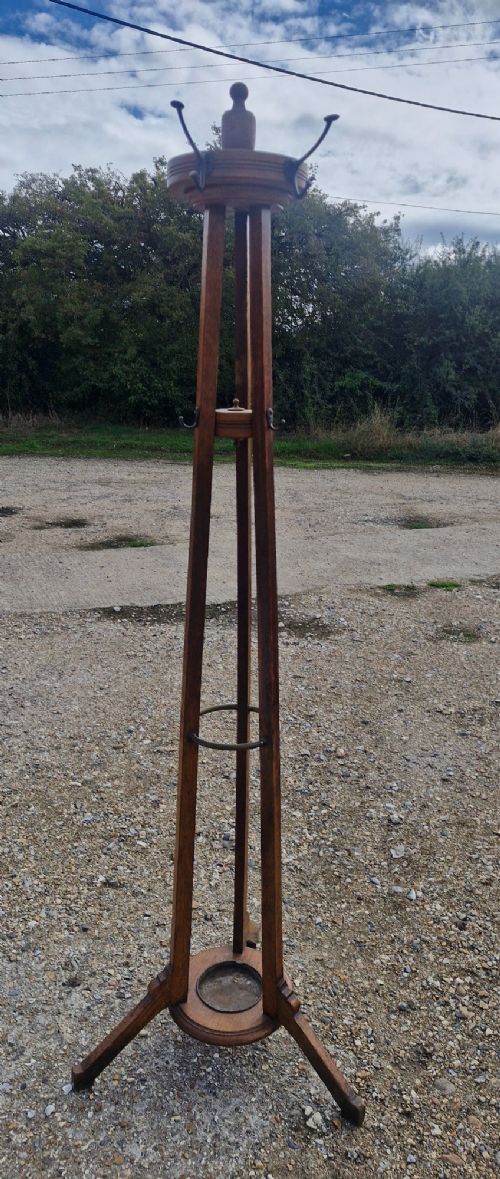
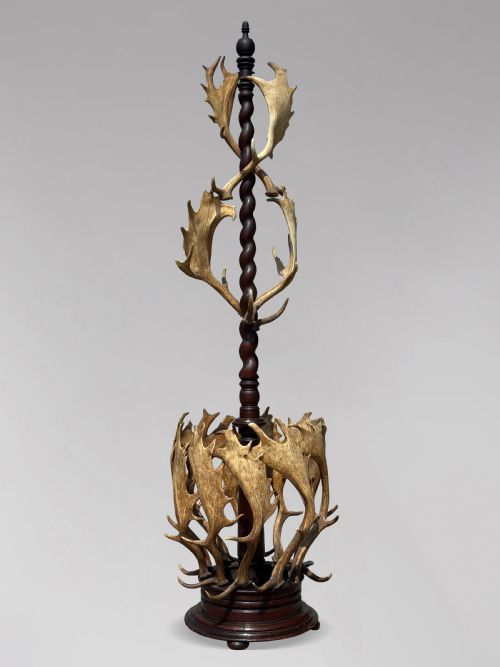
Functional metal elements including cast iron, brass hooks, and zinc drip trays were integrated to manage wet umbrellas and heavy coats. Some nineteenth-century examples incorporate natural materials such as cow horn and antlers into the timber framework.
Vintage Oak Coat and Umbrella Stand Retail Price Guide 2026
Typical asking prices for vintage oak coat and umbrella stand among the pieces listed under this phrase on Sellingantiques today, from the lower quarter to the upper quarter. They describe what is for sale here now, not the wider market.
Listings feature oak combined with brass, iron, glass, marble, and horn across Victorian, Edwardian, and Arts and Crafts styles.
What varies in quality
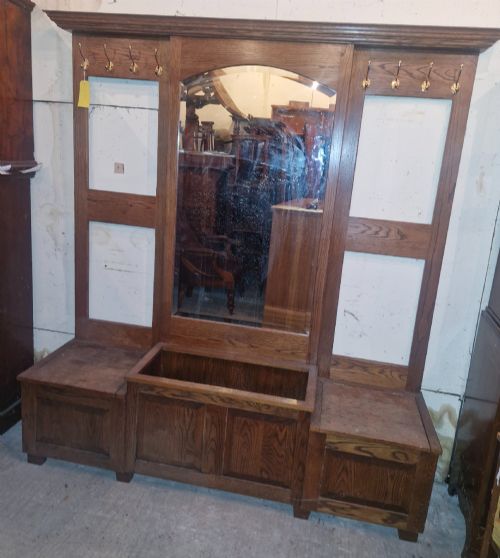
The distinction between standard utility items and finer examples rests on the depth of timber carving and the complexity of the internal framework. Pieces featuring integrated bevelled mirrors, tiled panels, and hinged storage seats represent more ambitious commissions than simple peg rails.
The retention of original hardware, such as marked brass coat hooks and removable metal drip trays, elevates a piece. Structural integrity in the joints and the crispness of applied mouldings separate workshop-produced furniture from basic utilitarian carpentry.
J. Parker of Woodstock
The Vintage Oak Coat and Umbrella Stand Glossary
- Hall stand
- A piece of entrance furniture combining coat hooks, umbrella holders, and frequently a mirror or small seat. These items organise hallway clutter while setting the decorative tone of an interior.
- Coopered
- A method of construction using narrow staves of oak bound together with metal hoops, traditionally used for barrels and cylindrical stick stands.
- Drip tray
- A removable metal basin placed beneath umbrella holders to catch water from wet sticks. This practical feature protects wooden flooring from moisture damage.
- Arts and Crafts
- A design movement favouring honest construction, simple forms, and visible craftsmanship. Oak hall stands from this tradition often display clean vertical lines and understated metalwork.
- Green Man
- A sculptural architectural motif depicting a face carved from leaves and foliage. It appears frequently as a decorative flourish on carved nineteenth-century oak furniture.
Vintage Oak Coat and Umbrella Stand: Frequently Asked Questions
How do I clean a wooden hall stand?
Dust the oak surfaces regularly with a dry cloth and feed the timber with traditional beeswax occasionally to nourish the grain.
Avoid using modern silicone sprays or placing the stand directly against damp walls or heat sources.
Can these stands support heavy winter coats?
Most solid oak frames with robust brass or iron double hooks hold heavy coats securely without strain.
Ensure wall-mounted versions are fixed firmly into masonry or studwork to bear the combined weight of winter garments.
What is the purpose of the metal tray?
The metal tray catches rainwater dripping from wet umbrellas and walking sticks placed in the lower holders.
Lifting out these trays allows owners to empty and dry them, preventing standing water from damaging the surrounding floor.
How do I date an oak hall stand?
Stylistic clues such as carved Green Man motifs point to Victorian Gothic Revival work, while clean geometric lines indicate Arts and Crafts influence.
Construction methods, screw types, and the presence of bevelled mirror glass also help narrow down the decade of manufacture.