





Vintage Name Card Stands
These vintage name card stands organise dining tables with miniature silver sculptures, birds, and hearts.
Vintage Name Card Stands
Vintage name card stands encompass place card holders, menu holders, and tableware accessories designed to seat guests or display menus at formal dinners. The pieces appearing here stretch from the Victorian era through the Edwardian period and into the nineteen thirties and fifties.
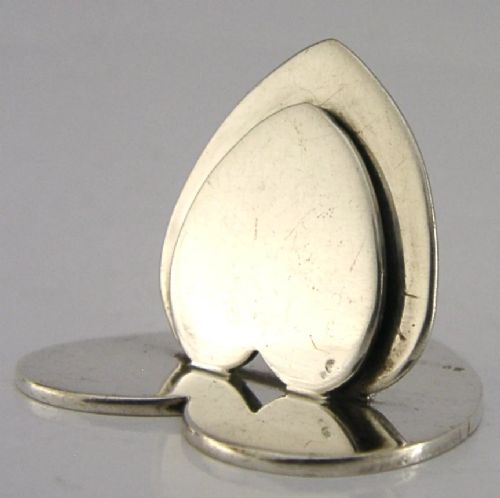
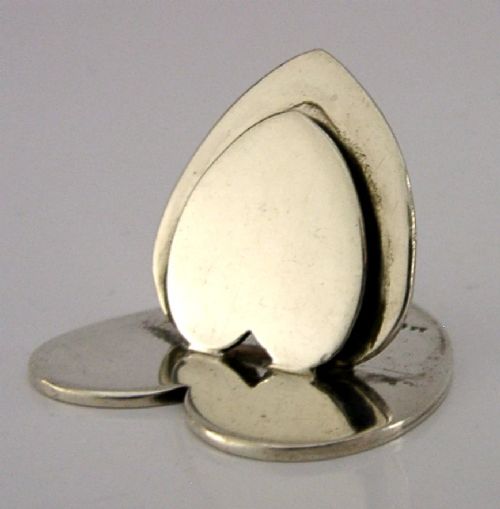
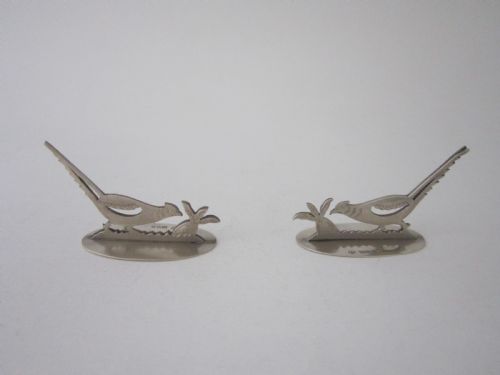
The most common forms on this page take the shape of small sterling silver figures, animals, and hearts, alongside occasional silver plated examples. They serve as both practical table markers and decorative silver objects.
How they were made
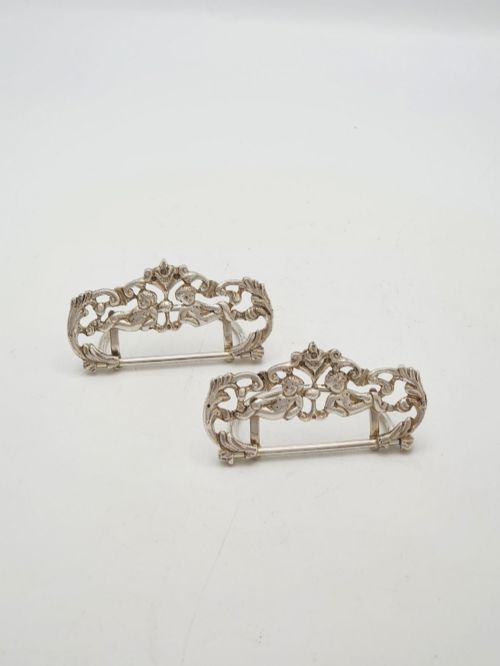
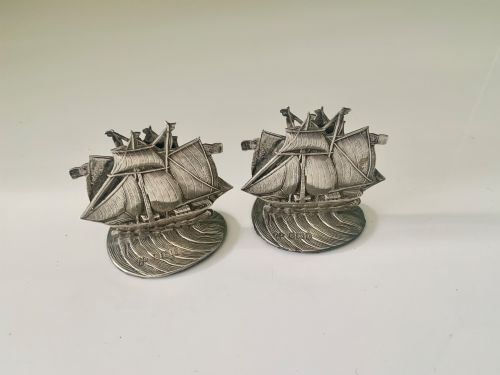
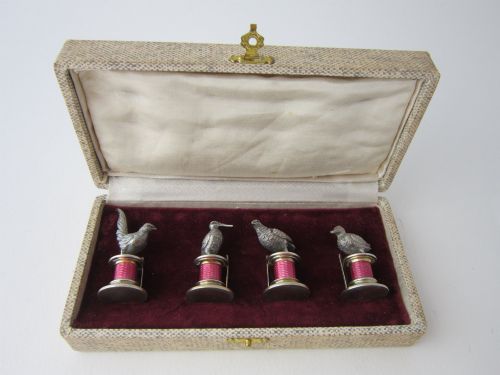
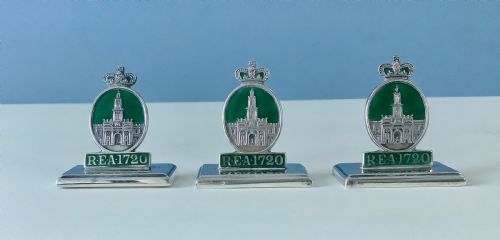
Silversmiths constructed these items primarily from sterling silver and silver plate, often utilising casting and stamping techniques to shape animals, cherubs, and galleons. Selected pieces incorporate guilloche enamel, velvet, silk, and leather to add colour and texture to the designs.
Vintage Name Card Stands Retail Price Guide 2026
Typical asking prices for vintage name card stands among the pieces listed under this phrase on Sellingantiques today, from the lower quarter to the upper quarter. They describe what is for sale here now, not the wider market.
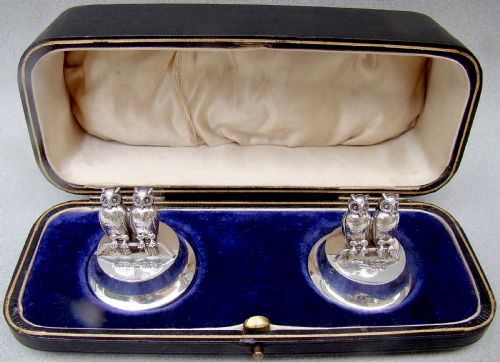
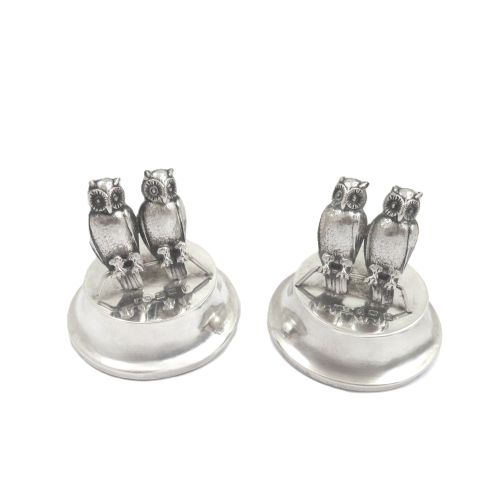
Dining guests at historic banquets could consult silver owls, swans, foxes, and even Alice in Wonderland characters to find their seats.
What varies in quality
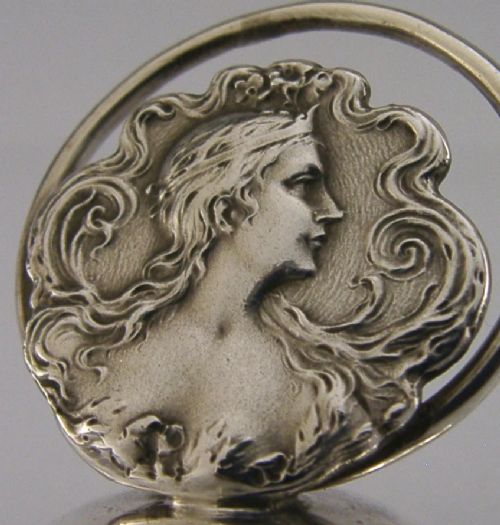
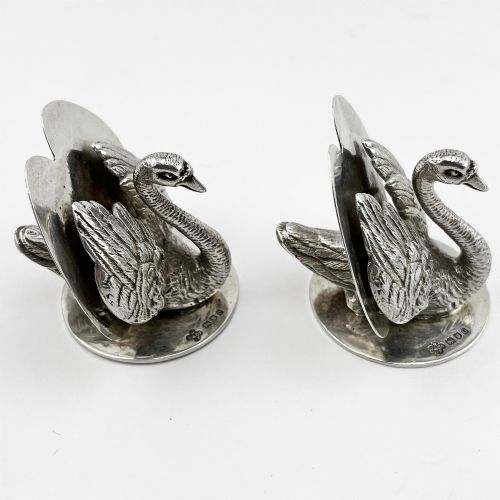
Quality depends upon the crispness of the casting and the depth of detail in figural subjects such as owls, foxes, and cherubs. Finer examples display sharp definition in feathers, mannes, and facial expressions without blurring from excessive polishing.
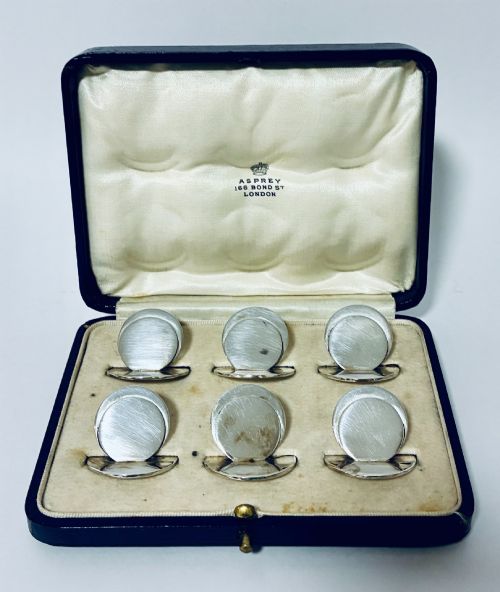
Sets that survive together in fitted boxes or maintain intact enamel work command greater interest than mismatched singles or damaged pieces.
Sampson Mordan·Levi and Salaman·Asprey·Liberty
The Vintage Name Card Stands Glossary
- Sterling silver
- A silver alloy containing ninety-two point five percent pure silver by mass, which is the standard material for the majority of these stands.
- Guilloche enamel
- Decorative enamel applied over a mechanically engraved metal background, seen on selected Edwardian and later pieces.
- Menu holder
- A table accessory designed to hold a printed menu card upright alongside individual place settings.
- Place card holder
- A small clip or stand intended to display the name of a dining guest in front of their seat.
- Silver plate
- A base metal coated with a thin layer of silver, utilised for mid twentieth century sets.
Vintage Name Card Stands: Frequently Asked Questions
What is the difference between menu and place card holders?
Menu holders are generally slightly larger to support a stiff menu card for the table or small group. Place card holders are built smaller to grip an individual name card for a single guest.
Both items share similar figural or geometric silver bases and fall under the same broader category of dining accessories.
How were these stands used on the dining table?
Hosts placed them around formal dining tables to guide guests to their designated seats and to display the evening's menu courses. They sat among glassware and silverware as both functional markers and decorative conversation pieces.
Sets often matched the theme of the host or the specific dinner party occasion.
How do I date an Edwardian silver card stand?
Dating relies heavily upon the hallmarks stamped into the silver, which record the assay office, date letter, and maker's mark. Stylistic clues such as Art Nouveau curves or Edwardian naturalism also help narrow the period.
Matching the hallmark date letter to standard assay office charts provides the exact year of manufacture.
Can I use vintage card stands for modern dinner parties?
They function just as well today for holding place cards or recipe cards at dinner parties as they did a century ago. Their solid silver construction makes them durable for regular use if handled with care.
Using them brings a touch of historical detail to contemporary table settings.