

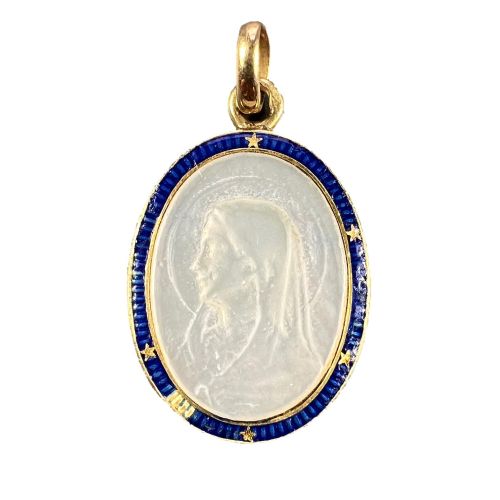
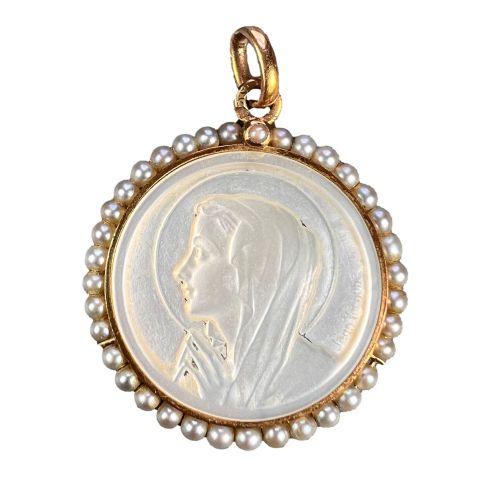

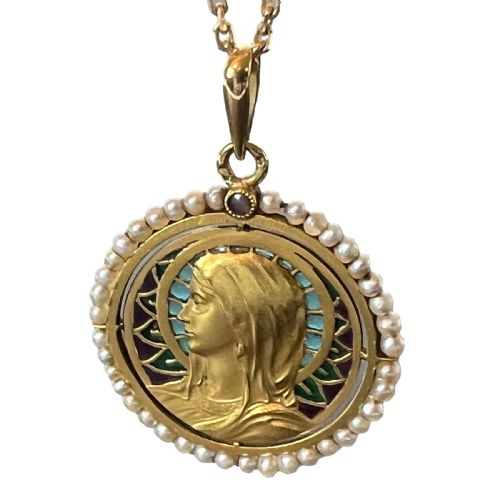


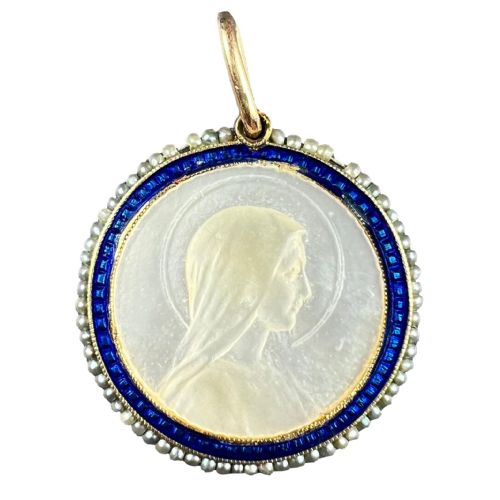
Vintage Mother Pearl Charm
These vintage mother pearl charm selections offer miniature devotion and decoration, crafted in gold and nacre for the pocket or chain.
Vintage Mother Pearl Charm
When you search for a vintage mother pearl charm, you encounter devotional medals and trinkets chiefly originating from France during the early twentieth century. These pieces combine lustrous nacre with precious metals to form small pendants worn close to the body.
The most common examples depict the Virgin Mary or Saint Therese set within shimmering pearl backgrounds. Such items function as personal charms or wearable pendants designed for everyday devotion or adornment.
Earlier eighteenth-century inlaid examples and mid-century items like silver rattles with mother of pearl teethers also appear. These diverse forms demonstrate how makers utilised the iridescent quality of nacre across different decades.
How they were made
Craftsmen shaped mother of pearl into smooth ovals and medallions, often mounting the iridescent material within yellow or white gold frames. Twisted wire or simple bezels secure the nacre base while highlighting its natural shimmer.
Many items incorporate vitreous enamel or plique-a-jour enamel alongside seed pearls and gold details to enhance the central religious figures. These delicate colour additions require precise firing techniques to bond glass paste securely to the metalwork.
Vintage Mother Pearl Charm Retail Price Guide 2026
Typical asking prices for vintage mother pearl charm among the pieces listed under this phrase on Sellingantiques today, from the lower quarter to the upper quarter. They describe what is for sale here now, not the wider market.
Some babies centuries ago chewed on mother of pearl mounted to silver handles rather than plastic.
What varies in quality
The sophistication of the metalwork and enamel separates simpler items from superior examples. Finely executed plique-a-jour work and detailed gold framing demand greater skill than plain wire mounts.
The clarity and depth of the mother of pearl itself also determine the character of each piece. Even selection and smooth iridescence create a more striking visual presence on the chain.
The Vintage Mother Pearl Charm Glossary
- Mother of Pearl
- The iridescent inner layer of mollusc shells utilised for decorative objects and charm bases. This material provides a shifting play of light across the surface.
- Plique-a-jour
- An enamelling technique where enamel is applied without a backing, resembling miniature stained glass. Light passes directly through the translucent coloured glass.
- Nacre
- The scientific term for mother of pearl, formed naturally by molluscs. It consists of microscopic plates that refract light into pearlescent hues.
- Pendant
- A decorative piece hanging from a neck chain or bracelet charm link. These items range from religious medals to small keepsakes.
- Seed Pearl
- Tiny natural pearls traditionally sewn onto garments or set into jewellery. They provide delicate borders around central medallions.
Vintage Mother Pearl Charm: Frequently Asked Questions
What is a mother of pearl charm?
A mother of pearl charm is a small decorative pendant or devotional medal utilising iridescent shell as its primary body. These items often feature gold mounts and miniature religious reliefs.
They are typically worn on charm bracelets or neck chains as personal keepsakes. Their compact scale makes them suitable for daily wear.
How old are these charms typically?
Most pieces found in this category date from the early twentieth century, specifically around nineteen ten and nineteen hundred. French religious medallions form the largest group within this timeline.
Earlier eighteenth-century inlaid examples and mid-century items also exist. Each period displays distinct mounting styles and framing techniques.
What metals are used in these pieces?
Makers predominantly employed eighteen carat yellow gold and white gold to frame the nacre medallions. Silver also appears in utilitarian items such as mid-century rattles.
Gold settings provide a durable and warm contrast to the silvery iridescence of the shell. These precious metals ensure the survival of the charms over decades of handling.
Who are the figures depicted on them?
The most frequent subjects are the Virgin Mary and Saint Therese rendered in miniature relief or enamel. These devotional images reflect the strong French religious manufacturing tradition of the period.
Such pieces served as personal talismans or commemorative items for their original owners. Today they are appreciated for both their spiritual iconography and fine craftsmanship.