

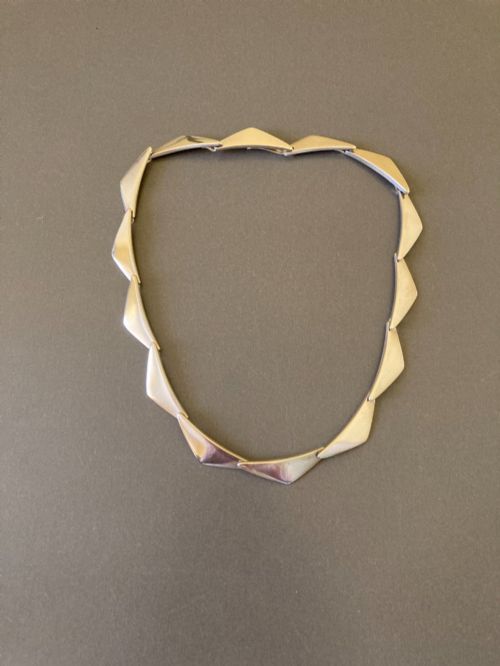
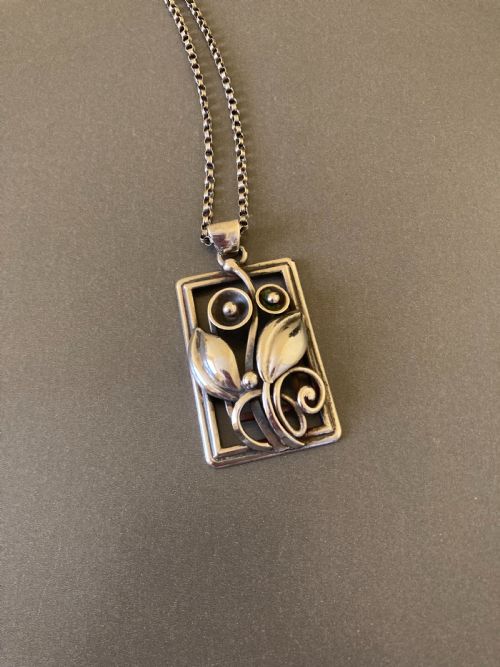
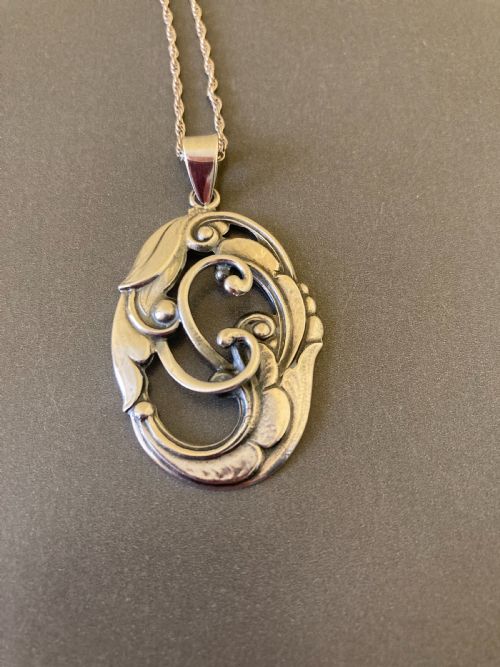
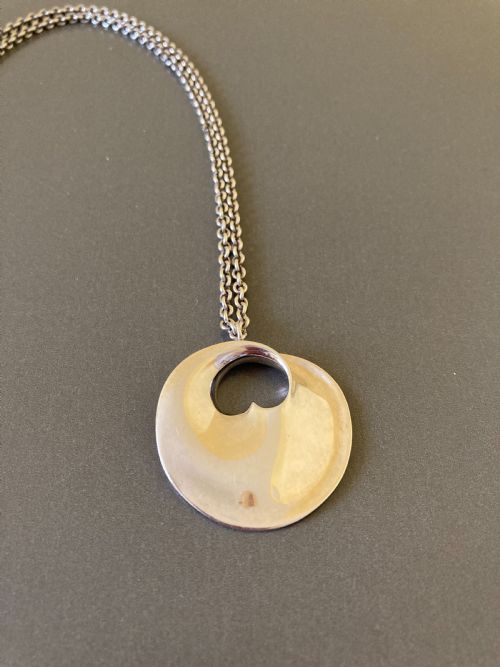

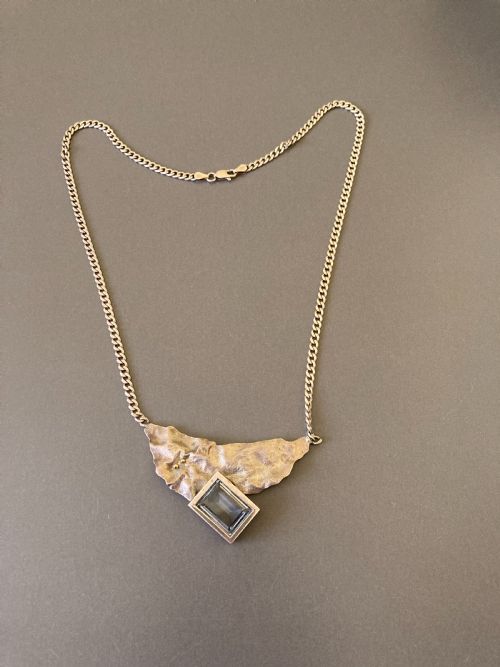


Vintage Modernist Necklace
A vintage modernist necklace brings together clean geometric lines and striking metallic forms, offering a bold statement for everyday wear.
Vintage Modernist Necklace
A vintage modernist necklace draws on mid-century, Scandinavian, and Art Deco styles, with the mid-century Scandinavian silver pieces forming the most common type encountered here.
The selections span from the 1930s through to the 1960s, appearing predominantly as pendants and torque necklaces rather than traditional bead or chain arrangements.
Makers from Denmark, Norway, and Germany dominate the offerings, bringing distinct regional interpretations to the modernist aesthetic.
How they were made
The construction relies heavily on sterling silver, German silver, and chrome, shaped into clean structural designs often punctuated by enamel or blue topaz and moonstone gems.
Early twentieth-century examples utilise industrial materials like galalith alongside plated metals, reflecting the machine-age influences of Art Deco workshops.
Materials across the selection include traditional sterling silver alongside chrome, galalith, and German silver.
What varies in quality
The standard of design integrity and metalwork finishing separates standard production pieces from the finer output of named Scandinavian silversmiths.
The clarity of applied enamel and the secure setting of stones such as opal and topaz determine the overall refinement of the piece.
Georg Jensen·G Hoppe·David Andersen·Jakob Bengel
The Vintage Modernist Necklace Glossary
- Galalith
- A semi-synthetic plastic derived from casein, widely used in Art Deco jewellery for its bright colours and smooth finish.
- Torque
- A rigid circular neck ring that remains open at the front, frequently utilised in Scandinavian modernist designs.
- German silver
- An alloy of copper, nickel, and zinc that contains no actual silver, prized for its bright appearance and durability.
- Skonvirke
- A Danish design movement encompassing organic forms and skilled silversmithing that preceded later modernist aesthetics.
Vintage Modernist Necklace: Frequently Asked Questions
How do I clean my silver pendant?
Use a soft microfibre cloth to gently polish the metal surfaces without applying abrasive dips that might damage enamel or softer stones like opal.
Keep the piece stored away from moisture and direct sunlight to preserve the finish of both the silver and any decorative inlays.
Are these necklaces comfortable for daily wear?
Most pendant necklaces and lighter silver chains sit easily against the collarbone for everyday use.
Torque necklaces and heavier statement pieces sit more rigidly on the neck, making them better suited to specific occasions.
How do I date a modernist necklace?
Examine the metal purity stamps, maker marks, and stylistic clues such as geometric chrome work or organic Scandinavian curves.
Pieces from the thirties often show industrial Art Deco influences, whereas items from the fifties and sixties favour fluid silver and enamel.
Can I replace a missing stone?
Sourcing replacement stones like vintage moonstone or blue topaz requires patience to match the cut and colour of the original era.
A specialist jeweller can assess the setting to ensure a secure fit without altering the integrity of the original modernist mount.