



Vintage Mirror Dresser
A vintage mirror dresser brings depth and light to a room, combining practical storage with integrated glass.
Vintage Mirror Dresser
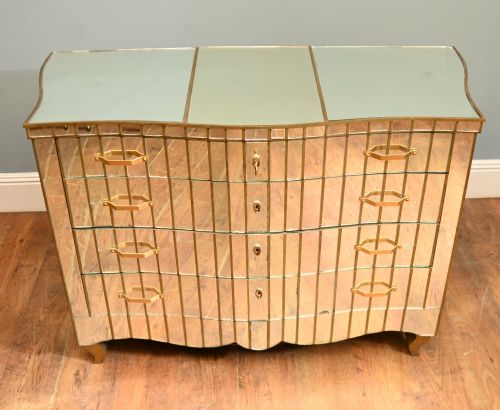
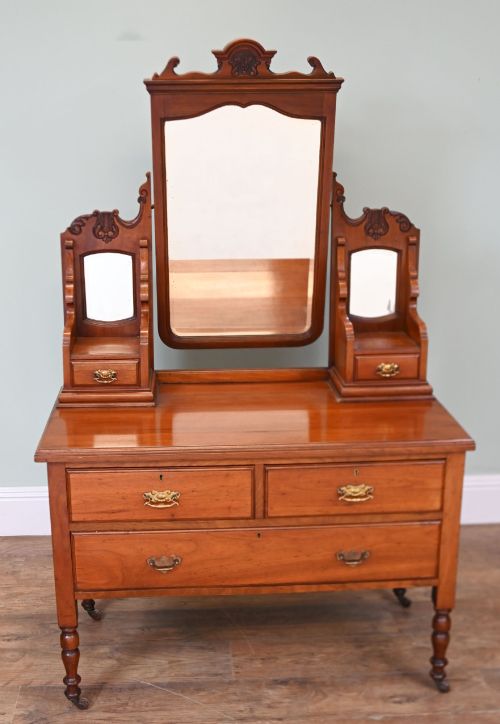
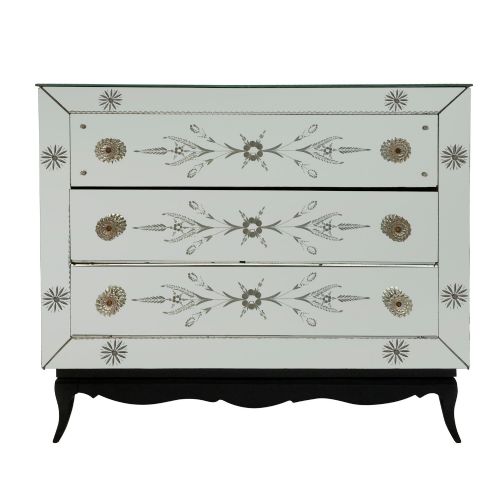
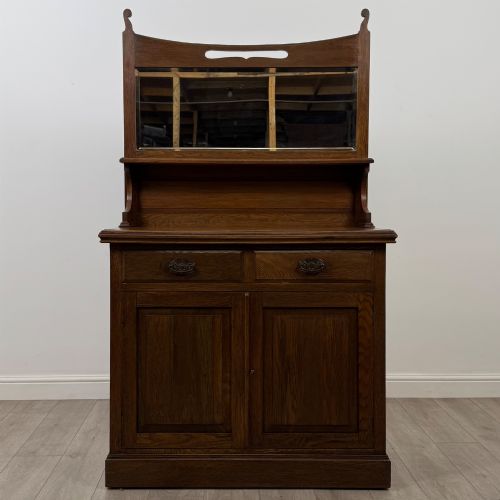
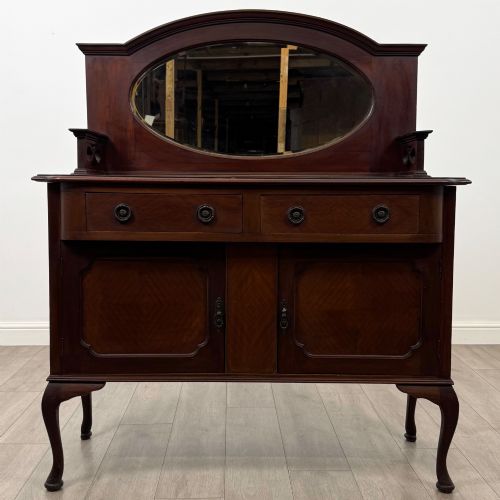
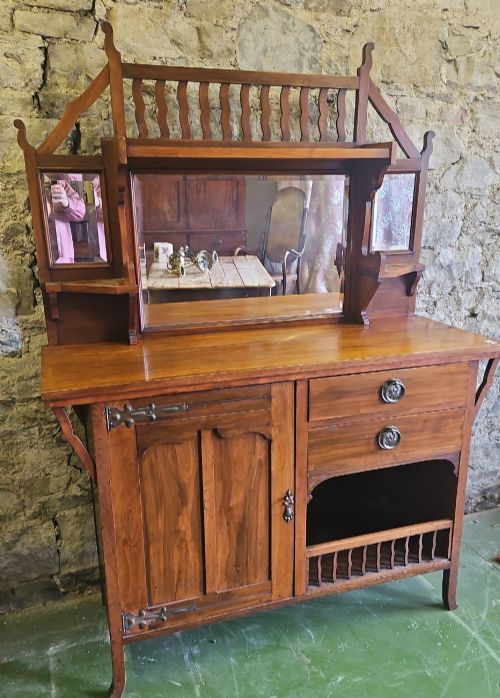
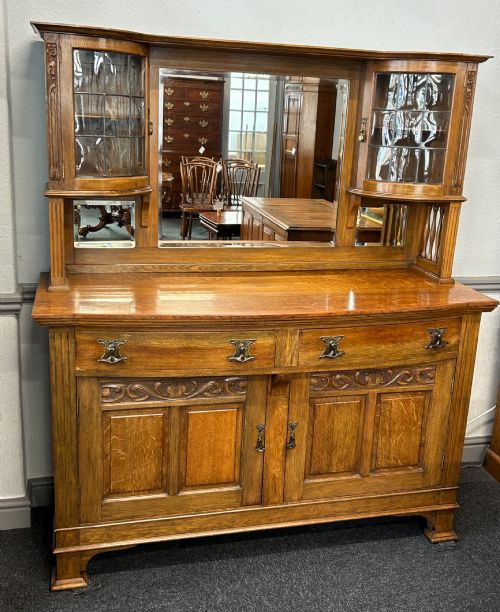
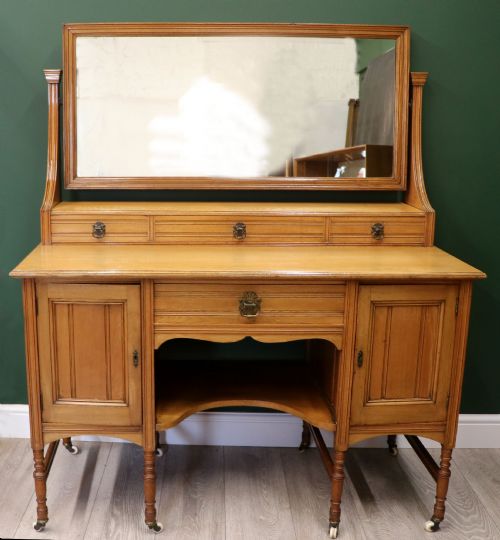
A vintage mirror dresser combines surface storage with a fixed or pivoting glass plate, typically taking the form of a dressing table, washstand or mirror-backed sideboard. These pieces emerge primarily from the Victorian, Edwardian and Art Deco periods, spanning the late nineteenth century through to the 1930s. Buyers searching for a vintage mirror dresser encounter diverse timber carcases, from golden oak to polished mahogany, each designed to anchor a bedroom or living space.
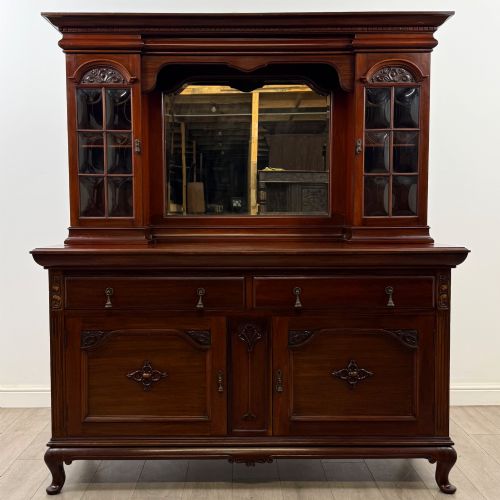
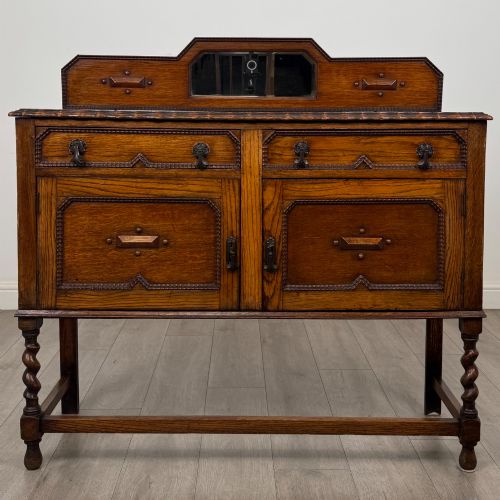
Edwardian oak and mahogany examples dominate the selection, frequently featuring oval or rectangular mirrors supported by upright arms. Art Deco pieces from the 1930s introduce streamlined geometry and mirrored drawer fronts, while Victorian iterations lean towards substantial pedestals and rich walnut or mahogany. The fusion of timber and reflective glass serves both a utilitarian function and an optical trick to expand smaller rooms.
Materials and construction
Cabinetmakers utilised solid and veneered hardwoods including oak, mahogany, walnut and pollard oak, often pairing them with brass hardware and cast iron internal mechanisms. Frames relied on traditional joinery techniques such as dovetailed drawers and tenon joints to support heavy glass plates. Timber surfaces received hand-applied wax or polish finishes to highlight natural grain patterns.
Mirror glass was silvered and set into rebated wooden frames, sometimes secured with decorative brass brackets or carved wooden supports. Washstands incorporated ceramic elements like majolica panels alongside marble or timber tops, while faux bamboo pieces utilised shaped wood to mimic exotic cane.
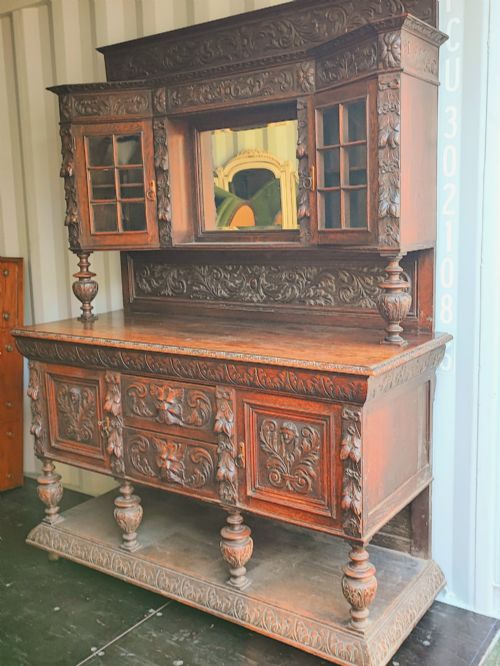
Some Edwardian oak sideboards hide ferocious Green Man carvings among their leaves, keeping a watchful eye on the dining room.
Assessing quality and craftsmanship
Quality reveals itself in the weight and selection of the timber, the crispness of hand-carved details like the Green Man motifs or floral Art Nouveau lines, and the structural integrity of the mirror supports. Superior examples employ thick, well-figured veneers and solid secondary timbers for drawer linings, ensuring smooth operation across decades of daily use.
The condition and clarity of the mirror glass heavily influence the piece, alongside original hardware such as brass drop handles and swing brackets. Pieces displaying integrated design cohesion - where the mirror frame complements the base proportions and decorative vocabulary - represent the highest tier of maker output.
The Vintage Mirror Dresser Glossary
- Mirror back
- A wooden sideboard or cabinet featuring an integrated vertical glass plate supported by upright frame members. This design element adds height to the furniture and reflects ambient light.
- Pedestal
- A structural support column or enclosed cupboard base beneath the main surface of a dressing table or sideboard. These units provide substantial storage flanking a central kneehole.
- Barley twist
- A decorative turning technique applied to wooden legs and supports, resembling a spiralling rope. This detail appears frequently on Edwardian oak furniture.
- Majolica
- Opaque tin-glazed earthenware featuring colourful moulded designs, occasionally inset into cabinet panels for decorative contrast. It adds a vibrant ceramic texture to wooden carcases.
- Faux bamboo
- Wood turned and painted to imitate the segmented stalks of natural bamboo. This technique gained popularity during the late nineteenth century for exotic dressing furniture.
Vintage Mirror Dresser: Frequently Asked Questions
How do I date a mirror dresser?
Dating relies on stylistic clues, construction methods and material choices recorded across the pieces. Victorian items show heavier proportions and dark mahogany or walnut, whereas Edwardian examples often feature lighter golden oak and simpler lines.
Art Deco items from the 1930s introduce geometric forms and mirrored surfaces, departing from earlier revival styles. Examining drawer dovetails and backboards helps confirm the manufacturing era.
Are the mirrors original?
Original mirrors often display subtle foxing, minor silvering losses or gentle distortion characteristic of older glass production methods. Replacement glass typically appears clearer and lacks these age-related imperfections.
Checking the bevel style and the fit within the wooden rebate helps determine if the glass has remained with the carcase since manufacture.
How do I clean the wood?
Maintenance involves dusting with a soft, dry cloth to prevent grit accumulation on polished surfaces. Periodic application of quality beeswax feeds the timber and preserves the lustre without building up heavy residues.
Harsh chemical sprays and excessive moisture should be avoided to protect antique polishes and delicate veneer edges.
Can I remove the mirror?
Many mirror-backed sideboards and dressing tables feature detachable upper frames secured with screws or slotted brackets. Removing the glass simplifies transport and allows the base unit to function as a standard sideboard.
Care must be taken during detachment to protect the delicate wooden arms and avoid straining the fixing points.