


Vintage Mirror Back Sideboard
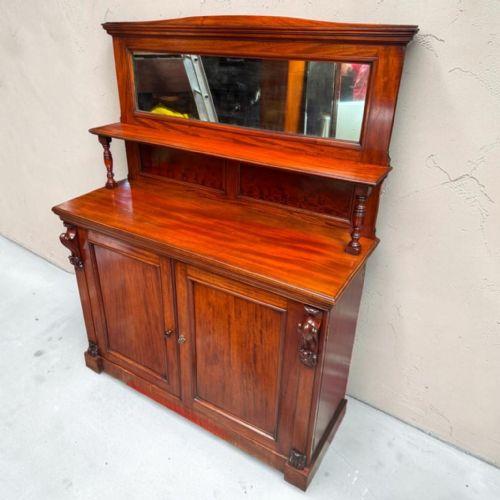
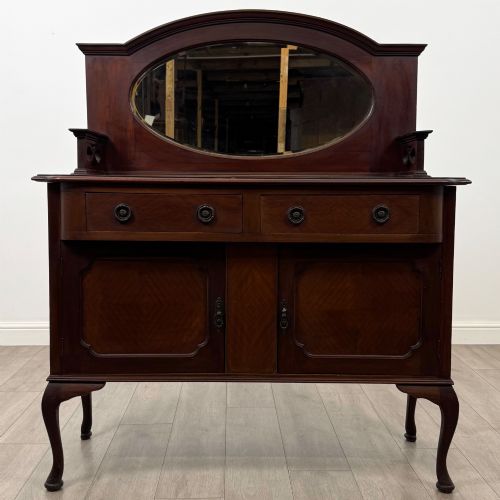
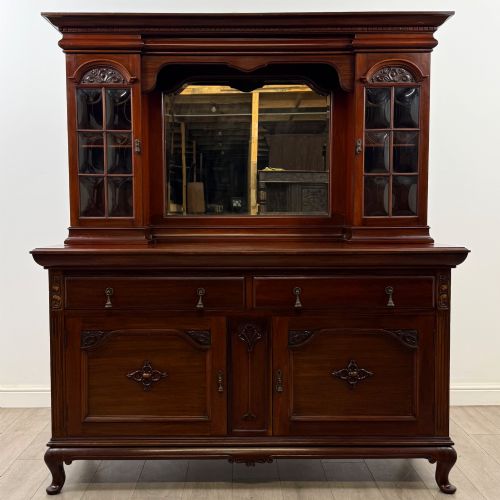
A vintage mirror back sideboard brings depth and reflective light to a room, combining practical storage with a decorative upper display.
Vintage Mirror Back Sideboard
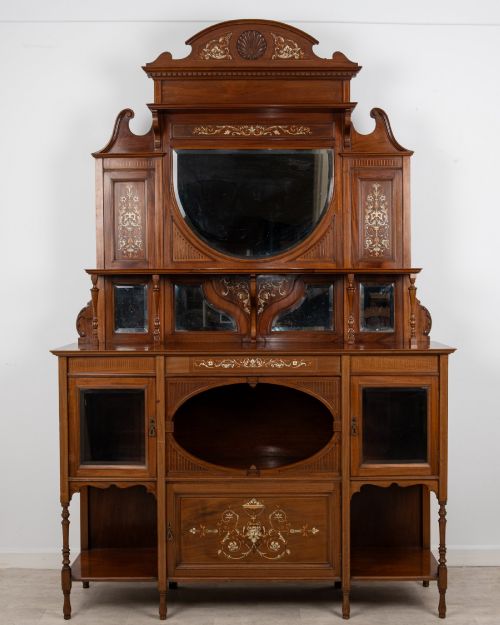
A vintage mirror back sideboard unites a substantial timber base cabinet with an integrated upright mirror plate, serving both utility and display. These pieces emerge chiefly from the Victorian and Edwardian eras, spanning from the late nineteenth century into the opening decades of the twentieth.
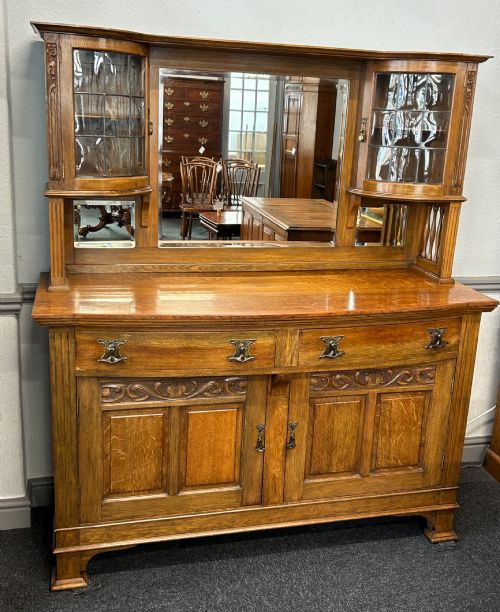
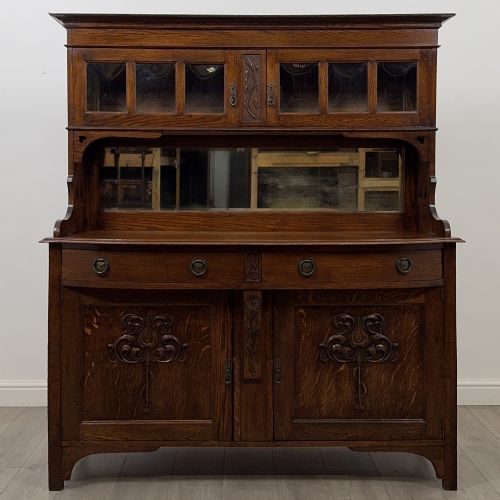
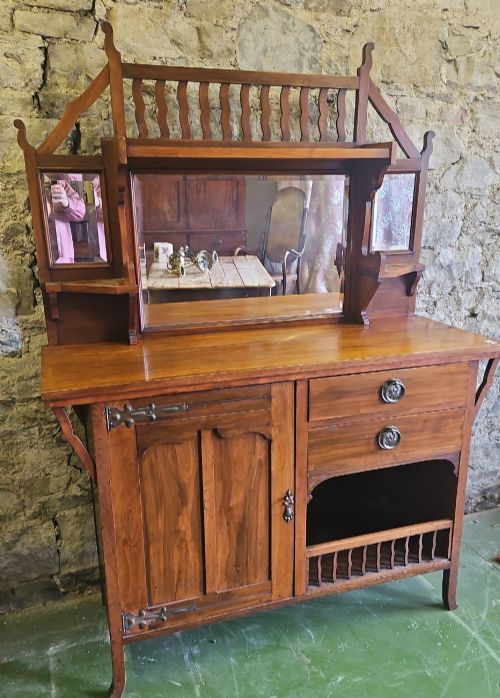
The version most commonly encountered on this page combines a mahogany or oak structure with a bevelled glass mirror set into a carved or panelled superstructure. Sideboards of this form often incorporate drawers, cupboards, and sometimes open display shelves beneath the main surface.
Makers of these large dining and reception room furnishings drew upon diverse aesthetic movements, producing examples that range from heavy revivalist designs to lighter Arts and Crafts and Art Nouveau interpretations.
How they were made
Cabinet makers utilised dense hardwoods such as mahogany, oak, walnut, and burr walnut for the primary structure, frequently applying contrasting stringing or boxwood inlay. Timber selection dictated the weight and visual gravity of the piece, with oak lending itself to linear Arts and Crafts forms while burr walnut provided rich, figured surfaces.
Silvered glass plates, sometimes bevelled along the edges, were secured into wooden frames above the sideboard top to reflect light around the interior space. Brass handles, hinges, and occasional decorative mounts completed the construction, alongside ceramic or majolica tile panels in specific stylistic variants.
Green Man carvings peer out from several nineteenth-century oak sideboards, bringing ancient foliate spirits straight into the dining room.
What varies in quality
The standard of timber selection and complexity of carving establish the distinction between standard production and exhibition pieces. Higher grade sideboards display finely figured burr veneers, intricate hand-carved ornamentation, and substantial brass hardware rather than simple stamped metal.
Construction methods also separate the grades, visible in the precision of the drawer dovetails, the depth and clarity of the mirror glass, and the integration of the superstructure to the lower cabinet.
The Vintage Mirror Back Sideboard Glossary
- Mirror back
- A sideboard or cabinet featuring an upright mirror attached to the rear of the upper surface. This component was designed to bounce daylight across the dining room.
- Credenza
- A sideboard or low cabinet, often associated with Victorian revival styles and frequently incorporating extensive marquetry and mirror plates. Such pieces served formal reception rooms.
- Chiffonier
- A compact sideboard or low cabinet equipped with enclosed storage beneath and a raised shelf or mirror structure above. They typically date from the nineteenth century.
- Burr walnut
- Timber taken from the warted excrescences of walnut trees, yielding highly swirling, decorative grain patterns. Cabinet makers utilised these veneers on premium furniture surfaces.
- Arts and Crafts
- A design movement prioritising visible construction, honest materials, and handcrafted detail over machine-made ornamentation. Pieces in this style often utilise plain oak with exposed joinery.
Vintage Mirror Back Sideboard: Frequently Asked Questions
Where did people use mirror back sideboards?
These large pieces traditionally stood in Victorian and Edwardian dining rooms or formal reception spaces. They provided surface space for serving food and storing tableware.
The integrated mirror served to brighten darker rooms by reflecting candlelight or window light while displaying decorative ceramics or silver on the shelf below.
How do I date a mirror back sideboard?
Dating relies on observing the primary timber, the style of carving, and the overall proportions of the cabinet. Heavy carved walnut and elaborate mahogany often point to the Victorian era.
Lighter oak construction, simpler geometric lines, and stylized brass hardware usually indicate Edwardian production or the influence of the Arts and Crafts movement.
Are the mirrors original to the furniture?
Most surviving sideboards retain their original glass plates, which can sometimes show slight foxing or age spots. These natural imperfections confirm the historical authenticity of the piece.
Replacement mirrors generally present a completely uniform reflection without the faint distortion or silvering variations seen in nineteenth-century glass.
How do I care for the wood and mirror?
Routine maintenance involves dusting the timber surfaces with a soft, dry cloth and avoiding silicone-based polishes that build up over time. Natural wax feeds the grain of mahogany and oak.
When cleaning the mirror glass, apply glass cleaner directly to the cloth rather than the mirror to prevent liquid seeping behind the silvered backing.