






Vintage Middle Eastern Table
A vintage middle eastern table brings geometric warmth and intricate inlay into a room through centuries of skilled craftsmanship.
Vintage Middle Eastern Table
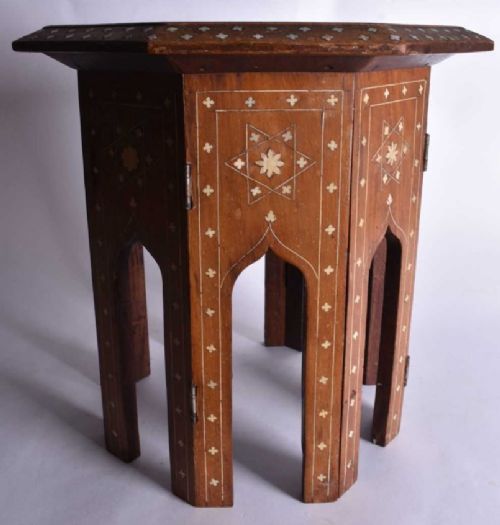
A vintage middle eastern table encompasses folding coffee tables, octagonal side tables, and occasional stands originating from diverse regional traditions. Buyers searching for a vintage middle eastern table frequently encounter intricate octagonal surfaces and collapsible wooden bases designed for versatility.
The material vocabulary spans from hardwood and walnut to striking brass tops and woven kilim tapestry seats. Pieces often display influences ranging from Ottoman and Persian styles to Moorish Revival and Mamluk Revival aesthetics.
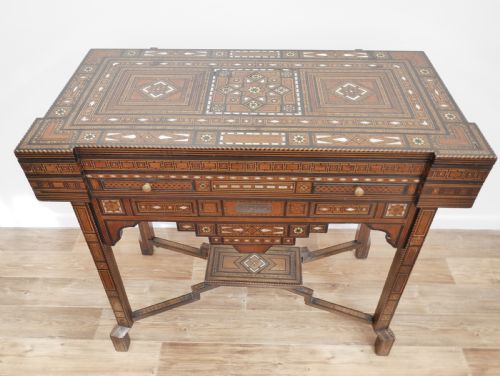
Forms extend beyond standard tables to incorporate games tables, low stools, table-top cabinets, and cairoware lamps. Most examples date from the nineteenth century through the early decades of the twentieth century.
Materials and Construction
Artisans constructed these pieces using dense hardwoods and walnut as foundational structures, often building frames intended to fold flat. Joinery relied on precise geometric alignment, particularly for multi-sided octagonal tables and collapsible bases.
Surfaces received elaborate ornamentation through hand-beaten brass or copper sheets affixed to timber cores. Inlaid details utilised mother-of-pearl and bone fragments, meticulously cut and set into geometric patterns across the wood.
Vintage Middle Eastern Table Retail Price Guide 2026
Typical asking prices for vintage middle eastern table among the pieces listed under this phrase on Sellingantiques today, from the lower quarter to the upper quarter. They describe what is for sale here now, not the wider market.
Listings feature items spanning the nineteenth century through to the 1930s, utilising brass, hardwood, mother-of-pearl, and kilim tapestry.
Assessing Craftsmanship
Quality rests in the precision of the geometric inlay and the depth of hand-engraving upon the metal surfaces. Finer examples display tightly fitted mother-of-pearl and bone elements that remain flush with the surrounding hardwood.
The integrity of the folding mechanism and the weight of the brass top distinguish higher tier production. Tables featuring complete brass tea services or complex revival styles demonstrate superior artisanal ambition.
The Vintage Middle Eastern Table Glossary
- Octagonal
- An eight-sided geometric form frequently utilised for table tops and stool seats in Middle Eastern furniture design. This shape accommodates complex interlacing inlay patterns.
- Cairoware
- Metalwork objects, typically brass or copper, decorated with intricate chased or inlaid silver and gold calligraphy and floral motifs originating from Cairo workshops. These items reflect traditional Islamic metalworking techniques.
- Mamluk Revival
- A nineteenth-century design movement inspired by the art and architecture of the Mamluk Sultanate, characterised by heavy brass work and geometric strapwork. Pieces in this style emulate medieval luxury goods.
- Kilim
- A flatwoven textile produced using a warp-and-weft technique, often incorporated as upholstery on stools and seating within this category. These rugs provide vibrant geometric colour.
- Inlay
- A decorative technique where small pieces of contrasting materials such as mother-of-pearl, bone, or precious woods are embedded into recesses in a timber base. This creates a smooth, patterned surface.
Vintage Middle Eastern Table: Frequently Asked Questions
How do I clean a brass top table?
Maintenance requires gentle dusting with a soft cloth to preserve the aged patina on engraved brass surfaces. Avoid harsh chemical polishes that strip away the historical darkening within the engraved lines.
For inlaid wooden sections, a light application of appropriate furniture wax keeps the timber nourished without disturbing the mother-of-pearl or bone elements.
Are these folding tables sturdy?
Most folding tables utilise an intricate interlocking wooden lattice frame that supports the removable top securely when open. The clever geometric design allows the base to collapse flat for transport while remaining stable during daily use.
Care should be taken when moving the assembled table to avoid stressing the wooden hinges and joints.
How can I date my table?
Dating relies on examining the materials, construction methods, and stylistic revival markers present in the piece. Examples from the nineteenth century often show heavier brass gauge and hand-cut bone inlay, whilst 1930s pieces may introduce different aesthetic combinations.
Comparing the specific motifs to documented revival periods helps narrow down the decade of production.