




Vintage Metal Strap Trunk
These vintage metal strap trunk pieces combine structural timber with robust ironwork, offering enduring storage with genuine character.
Vintage Metal Strap Trunk
When you search for a vintage metal strap trunk, you encounter a robust storage chest designed for travel, domestic use, or secure storage. These pieces bridge utilitarian function and decorative history, serving as practical furniture with significant visual presence.
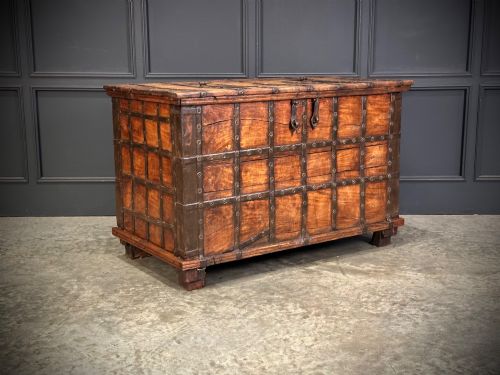
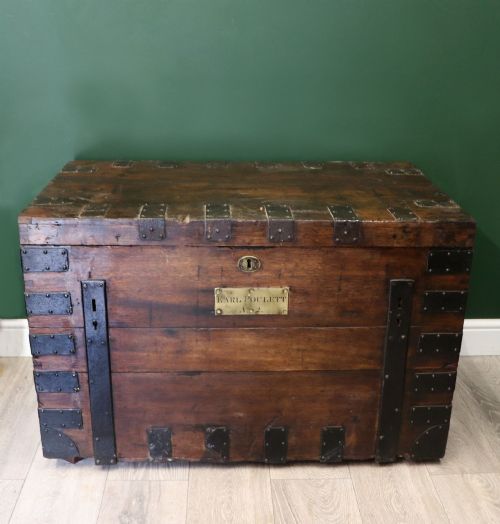
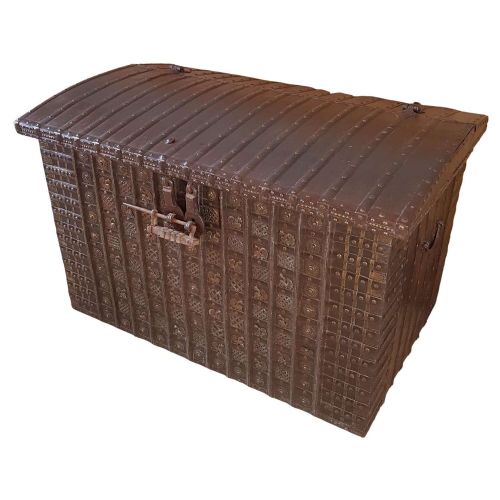
The selections available here range from English silver chests in oak to painted Scandinavian dome top boxes and regional Indian dowry chests. Oak and pine dominate the forms, frequently reinforced with heavy iron straps to withstand long journeys or heavy household deployment.
Victorian examples appear frequently alongside nineteenth-century pieces, showing how ironwork protected vulnerable wooden corners and lids. Buyers searching this category frequently find English, Scandinavian, and Rajasthani origin pieces that reflect diverse historical carpentry traditions.
How they were made
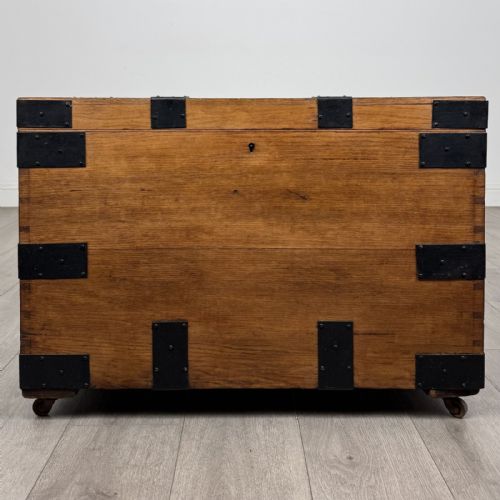
Makers constructed these trunks using durable timbers such as oak, pine, and teak, joined through traditional box and dovetail methods to ensure rigid bodies. Heavier examples incorporated substantial wooden carcases designed to protect valuable contents during transport.
Iron and brass straps were fastened across the lids and corners using rivets or bolts, providing essential structural reinforcement. Surface treatments varied from waxed pine and polished oak to painted finishes and specialised regional metalwork.
Vintage Metal Strap Trunk Retail Price Guide 2026
Typical asking prices for vintage metal strap trunk among the pieces listed under this phrase on Sellingantiques today, from the lower quarter to the upper quarter. They describe what is for sale here now, not the wider market.
Listings in this category span the eighteenth, nineteenth, and early twentieth centuries, incorporating oak, pine, teak, iron, and brass materials.
What varies in quality
Quality in these trunks rests upon the integrity of the timber framing and the density of the applied metal strapping. Superior examples retain original ironwork and locks that operate smoothly alongside well-preserved internal fittings.
The distinction between ordinary utility boxes and finer specimens lies in the refinement of the joinery and the survival of original surface finishes. Pieces featuring marked labels or sophisticated internal compartments demonstrate higher workshop standards.
The Vintage Metal Strap Trunk Glossary
- Silver chest
- A heavy timber trunk lined to protect domestic silver and plate. These often feature robust iron bindings and secure locks for high-value transport.
- Dome top
- A rounded lid construction designed to shed water during travel. This profile frequently appears on eighteenth-century Scandinavian and nineteenth-century American storage pieces.
- Damchiya
- A traditional regional storage chest associated with dowry customs. These pieces often incorporate decorative iron banding and intricate internal compartments.
- Blanket box
- A large rectangular chest utilised for storing textiles and linens. They are typically constructed from pine or oak with hinged lids.
Vintage Metal Strap Trunk: Frequently Asked Questions
What were metal strap trunks used for?
These trunks served primarily as secure containers for transporting personal possessions, silver, and household linens during travel. Their robust construction protected valuable items against rough handling on ships, coaches, and trains.
Over time, many transitioned into static household furniture, functioning as blanket boxes or coffee tables while retaining their original storage utility.
How do I date an antique trunk?
Dating relies on observing construction methods, timber types, and the style of the iron hardware. Eighteenth-century pieces often display hand-sawn boards and pegged joints, whereas Victorian examples utilise machine-cut elements and standardised iron strap fixings.
Maker labels, brass plates, and regional stylistic traits also provide definitive clues to a trunk's origin and period of manufacture.
Are these trunks suitable for daily living?
These pieces integrate well into modern interiors as functional coffee tables, end-of-bed blanket storage, or hallway statement pieces. Their durable construction allows them to withstand everyday domestic use while hiding clutter.
Placing them in a room adds tactile warmth through aged wood and patinated iron hardware that complements various interior styles.
How do I care for wooden and iron trunks?
Maintain the timber by applying traditional wax sparingly to nourish the dry wood without sealing it unnaturally. Avoid placing trunks in direct sunlight or near heat sources to prevent the wood from splitting.
Keep the metal straps clean with a dry cloth to preserve the historic patina on the ironwork and prevent active corrosion.