



Vintage Metal Shelves
These vintage metal shelves combine honest utility with enduring design, offering sturdy industrial storage built from wrought iron, cast iron and steel.
Vintage Metal Shelves
When searching for vintage metal shelves, buyers encounter robust storage solutions originating from the nineteenth and early twentieth centuries. These pieces encompass utilitarian workshop furniture, baker's racks, and shop display stands designed for heavy daily use.
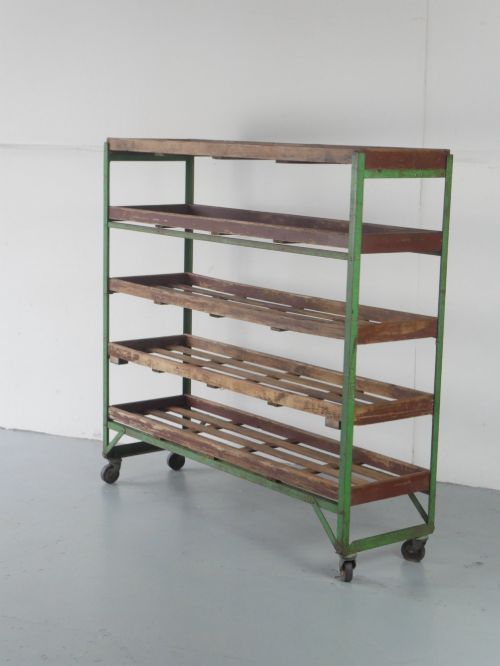
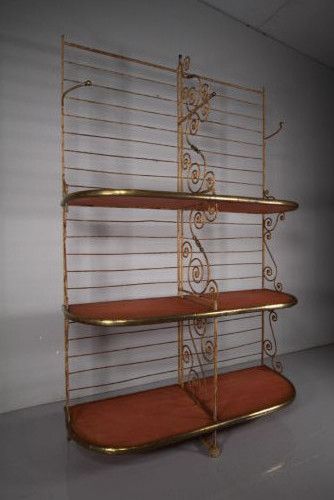
The selection ranges from early French boulangerie bread racks and industrial shelving units to slatted iron plant stands and wall-mounted brackets. Construction materials span wrought iron, cast iron, steel, and slate, reflecting an era when storage was built to endure.
Pieces frequently display industrial, Art Deco, or Victorian styles, often retaining traces of original paint or distressed metal surfaces. Such shelving provides practical utility while adding architectural character to contemporary interiors.
How they were made
Maker workshops utilised durable metals including wrought iron, cast iron, and steel, often joined with riveted construction for maximum structural integrity. Frames were forged, cast, or rolled, providing the heavy skeletal strength characteristic of industrial and commercial furniture.
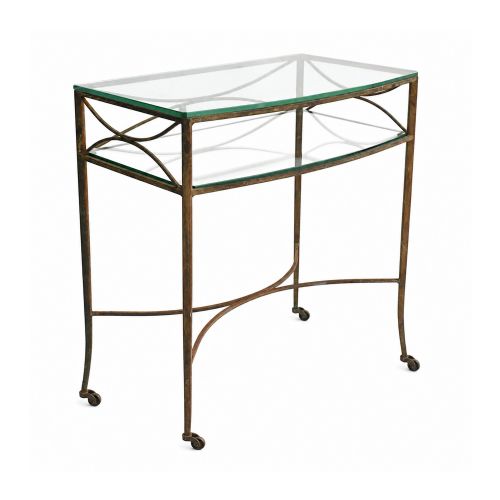
Surface treatments included protective lead or oil-based paints, alongside applied patinas and occasional chrome plating on later twentieth-century pieces. Structural components were frequently paired with slate or glass shelving inserts to balance industrial strength with functional surface areas.
Vintage Metal Shelves Retail Price Guide 2026
Typical asking prices for vintage metal shelves among the pieces listed under this phrase on Sellingantiques today, from the lower quarter to the upper quarter. They describe what is for sale here now, not the wider market.
Early twentieth-century French bakeries employed rolling iron racks so robust they outlived the bakeries, the bread, and occasionally the bakers themselves.
What varies in quality
Quality in these utility pieces rests upon the integrity of the original construction, such as tightly secured rivets, solid cast-iron brackets, and uncompromised metal frames. Pieces retain higher desirability when structural repairs remain absent and original mounting points stay intact.
The character of the surface finish significantly influences distinction, with authentic aged paintwork or natural oxidisation proving superior to unsympathetic modern refinishing. Maker stamps, foundry marks, or documented French boulangerie origins further elevate the standing of individual racks.
P.H MOUREY·Wm. Gilbert U.S.A.
The Vintage Metal Shelves Glossary
- Boulangerie rack
- A tall metal shelving unit originating from French bakeries, traditionally utilised for cooling bread. These units typically feature multiple wire or slatted metal shelves within a sturdy iron frame.
- Wrought iron
- A tough, malleable form of iron containing embedded slag fibres, beaten into shape by hand or machine. It resists fatigue and corrosion better than modern steel, lending itself to scroll-work and structural brackets.
- Cast iron
- Molten iron poured into a sand mould to create complex shapes and heavy-duty brackets. It offers immense compressive strength though remains brittle under sharp impacts.
- Riveted construction
- A method of joining metal plates or bars by passing a heated metal pin through aligned holes and hammering the end flat. This technique provides permanent, rigid joints common in early industrial framing.
Vintage Metal Shelves: Frequently Asked Questions
How do I clean vintage metal shelves?
Remove surface dust using a dry microfibre cloth or a soft-bristled brush to protect any remaining original paint finishes.
Avoid harsh chemical cleaners or abrasive scouring pads, which can strip away historic patinas and expose bare metal to corrosion.
Are these shelves strong enough for books?
Many industrial shelving units and cast-iron brackets were originally engineered for heavy commercial use in bakeries or workshops.
Verify that wall fixings or floor supports are securely anchored before loading heavier items like books onto antique metal tiers.
How do I identify French industrial pieces?
French pieces often display distinct workshop markers, such as baker's rack configurations designed for European loaf sizes or specific foundry stamps.
Stylistic cues include scroll-work iron frames, riveted corner joints, and distressed painted finishes typical of early twentieth-century Parisian interiors.
Can I use these shelves outdoors?
While iron and steel endure outdoor environments, unprotected vintage metal will form active rust when exposed to persistent moisture.
Keep pieces in sheltered garden areas or apply a microcrystalline wax to guard against humidity if placed outside.