




Vintage Metal Pulls
These vintage metal pulls bring solid brass and cast bronze hardware into daily use, offering the weight and finish missing in modern fittings.
Vintage Metal Pulls
Vintage metal pulls encompass heavy door hardware, bell pulls, and entryway accessories designed for domestic and public buildings. When searching for vintage metal pulls, buyers encounter hardware spanning the Georgian, Victorian, and Edwardian periods.
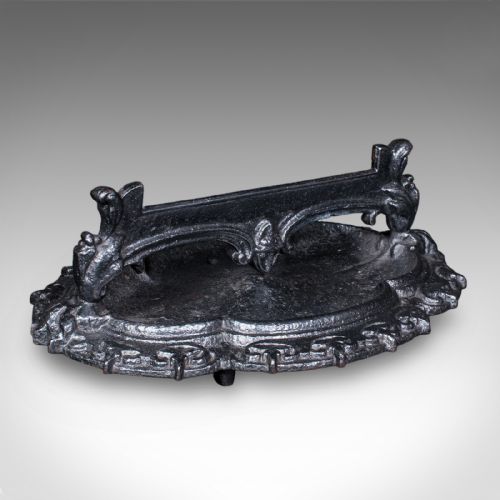
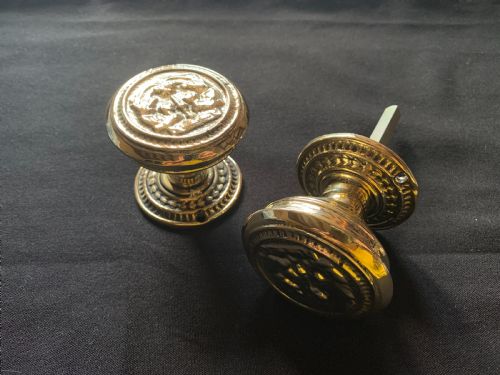
The selection on this page relies heavily on Victorian and Georgian brass centre door knobs and door bell pulls. Pieces also include cast bronze handles, push plates, and robust cast iron or bronze entryway boot scrapers.
Forms range from simple octagonal and beehive door knobs to decorative Art Nouveau handle plates and specialised doorway shoe pulls. Most items originate from English domestic architecture and traditional townhouses.
Materials and construction methods
Makers utilised solid brass, cast bronze, steel, and cast iron to form these robust fittings. Foundry work dominated production, using sand casting to achieve crisp architectural details.
Finishes vary from polished surfaces to bronzed metal treatments and dark patinas developed through age. Components often combine cast elements with threaded metal rods and matching mounting plates.
Vintage Metal Pulls Retail Price Guide 2026
Typical asking prices for vintage metal pulls among the pieces listed under this phrase on Sellingantiques today, from the lower quarter to the upper quarter. They describe what is for sale here now, not the wider market.
Townhouse visitors relied on heavy iron foot scrapers to clear London mud before touching the polished brass bell pull.
Factors influencing quality
Quality rests upon the depth of the casting and the crispness of the architectural detail. Finer examples retain sharp turnings on beehive knobs and clear definition on moulded backplates, whereas inferior specimens show softened edges from worn moulds.
The choice of material and original finishing dictates the longevity and tactile feel of each pull. Substantial gauge brass and heavy cast bronze deliver a satisfying heft that lighter alloys simply cannot match.
The Vintage Metal Pulls Glossary
- Centre door knob
- A large door knob mounted centrally on an exterior door rather than at the edge, used for pulling the door closed.
- Bell pull
- A mechanical lever or handle mounted beside a doorway connected to a remote interior bell via wires or cranks.
- Boot scraper
- A heavy metal blade or scraper fixed near an entrance to clean mud from footwear before entering the house.
- Push plate
- A flat metal plate attached to a door to protect the surface from finger marks around the handle.
- Beehive
- A turned decorative pattern on door knobs featuring concentric stepped rings resembling a traditional skep.
Vintage Metal Pulls: Frequently Asked Questions
How do I date a brass door knob?
Dating relies on stylistic markers, fixing methods, and the weight of the metal. Georgian and Regency pieces often feature simpler geometry, while Victorian designs frequently introduce elaborate turned patterns like the beehive.
Manufacturing traces also help establish age. Hand-finished casting marks and older threaded screws differ noticeably from twentieth-century mass-produced hardware.
Can I install vintage bell pulls today?
Most surviving door bell pulls can be adapted for modern decorative use or connected to surface-mounted mechanical systems. Many buyers mount them as fixed entrance pulls alongside contemporary doorbells.
Care should be taken to check the internal spindle or wire attachment point before mounting to ensure the mechanism remains secure.
What is the difference between a pull and a knob?
A knob is typically round or multi-sided and designed to be turned or grasped to operate a latch. A pull is fixed rigidly to the door surface and used solely for drawing the door open or closed.
Centre door knobs often serve both visual and pulling functions on heavy entrance doors.
How do I care for antique brass hardware?
Regular dusting with a soft cloth preserves the natural patina accumulated over decades of use. Avoid harsh abrasive cleaners that strip away the historical surface finish.
Applying a microcrystalline wax can protect exposed metal surfaces from further tarnishing in damp exterior environments.