

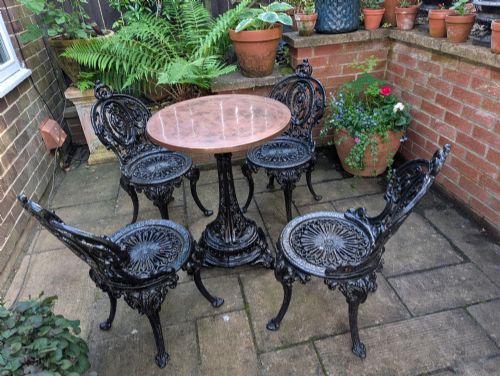
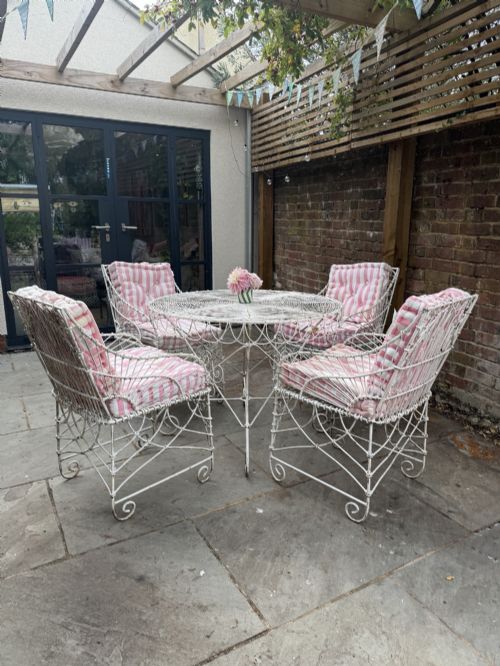
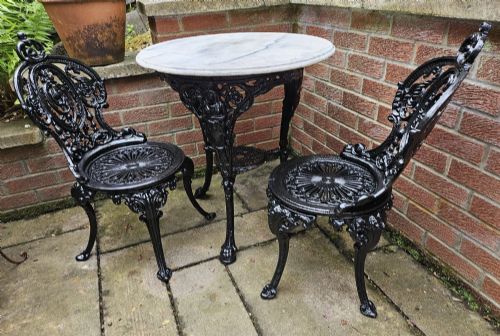
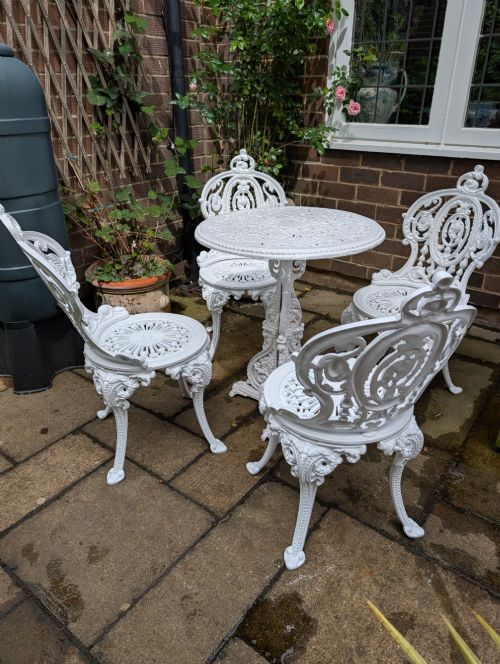


Vintage Metal Outdoor Bistro Set
These vintage metal outdoor bistro sets bring enduring utility and French or Victorian character to your garden.
Vintage Metal Outdoor Bistro Set
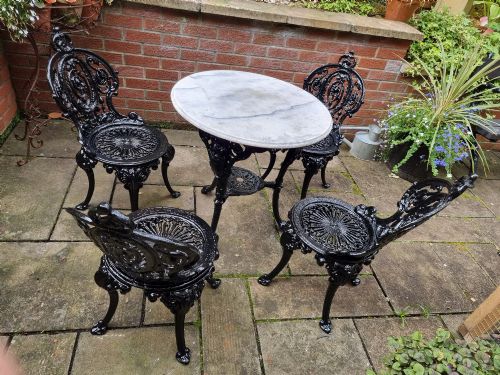
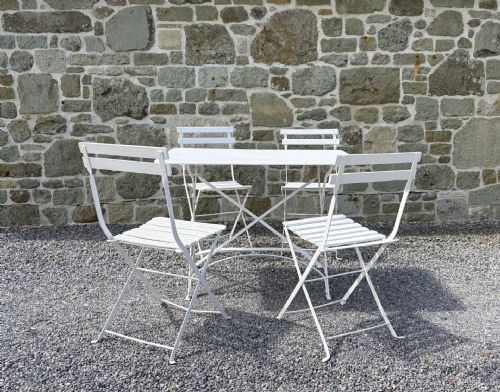
A vintage metal outdoor bistro set comprises garden tables and matching chairs designed for exterior dining or seating, emerging from periods such as the nineteenth century, Victorian era, nineteen-twenties, and nineteen-thirties. You will most frequently encounter sets combining tables with four chairs, though configurations range from folding chair collections to four-chair and six-chair arrangements.
The styles span French country, French chateau, French industrial, Art Deco, and Victorian wirework, reflecting diverse continental and domestic tastes. Pieces often arrive with paired garden dining tables, round surfaces, or specialised designs featuring marble, zinc, wood, or granite tops alongside the primary metal structure.
How they were made
Manufacturers utilised cast iron and wrought iron as the foundational metals, shaping robust frames and intricate decorative patterns for both tables and chairs. These metal elements were frequently paired with wooden slats, marble slabs, zinc sheets, or granite to form durable tabletops.
Surface treatments typically involved layers of paint applied to protect the iron from weathering in outdoor environments. Wirework techniques also appear in specific Victorian garden chairs and tables, twisting metal into supportive lattice structures.
Vintage Metal Outdoor Bistro Set Retail Price Guide 2026
Typical asking prices for vintage metal outdoor bistro set among the pieces listed under this phrase on Sellingantiques today, from the lower quarter to the upper quarter. They describe what is for sale here now, not the wider market.
Some sets fold away quietly, ready for sudden nineteenth-century tea parties in unexpected garden corners.
What varies in quality
The refinement of the metal casting and the complexity of the decorative ironwork define the upper tier of these garden sets. Heavier cast-iron constructions and named design iterations demonstrate greater ambition in manufacture than standard utilitarian sets.
The integration of alternative materials such as marble or zinc tops alongside specific period origins, like nineteenth-century French or Victorian workshops, elevates the distinction of an individual set. The cohesion between the table and its accompanying chairs further determines the integrity of the ensemble.
Christopher Dresser
The Vintage Metal Outdoor Bistro Set Glossary
- Cast iron
- An iron-carbon alloy poured into moulds to create rigid, decorative garden furniture components. It provides significant weight and durability for outdoor settings.
- Wrought iron
- Iron beaten or worked into shape by hand or machine, offering fibrous strength and flexibility for structural frames. This material is frequently found in historical garden pieces.
- Wirework
- Metal wires bent and secured into open lattices or mesh patterns. This technique defines specific Victorian garden chairs and tables.
- Bistro set
- A small table accompanied by matching chairs intended for compact dining spaces. These sets were originally used in pavement cafés and domestic gardens.
Vintage Metal Outdoor Bistro Set: Frequently Asked Questions
What is a vintage metal outdoor bistro set?
A vintage metal outdoor bistro set is a collection of garden furniture comprising a table and matching chairs, constructed primarily from cast iron or wrought iron during the nineteenth and twentieth centuries.
These sets combine sturdy metal frames with surfaces of iron, wood, marble, or zinc to provide functional seating for gardens and patios.
How were these sets used?
They were utilised for outdoor dining, social gatherings, and relaxation in gardens, courtyards, and pavement cafés.
The inclusion of folding chairs in certain sets allowed for easy storage and flexible arrangement according to the weather or season.
How do I live with iron garden furniture?
Living with cast iron and wrought iron outdoors involves accepting natural weathering and patination over time.
Many owners maintain painted finishes regularly to protect the metal from the elements while keeping the historical character intact.
How can I tell the periods apart?
Periods are identified through stylistic cues such as Victorian decorative wirework, Art Deco geometric lines, or nineteenth-century casting techniques.
Materials also offer clues, as specific combinations like heavy cast iron with marble tops point towards distinct manufacturing decades.