
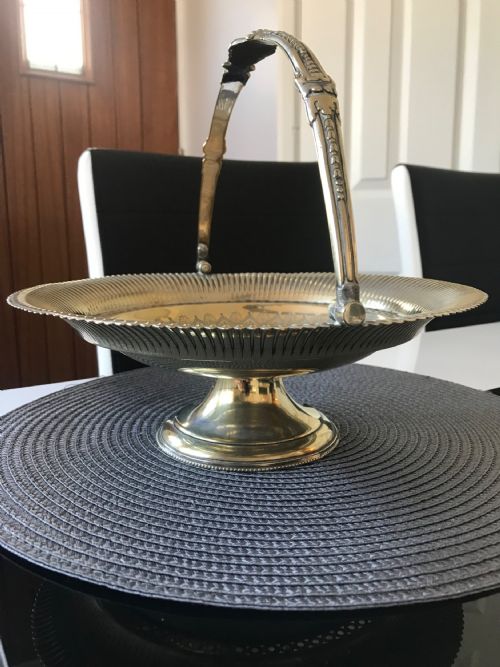


Vintage Metal Fruit Dish
A vintage metal fruit dish brings both utility and distinct period design to a dining table.
Vintage Metal Fruit Dish
A vintage metal fruit dish encompasses decorative bowls, centrepieces, pedestals, and baskets designed to hold fruit or serve as standalone table ornaments. When searching for a vintage metal fruit dish, buyers encounter forms ranging from simple Victorian cake baskets to elaborate Art Deco comports and handled stands.
The materials span silver plate, pewter, brass, copper, and chrome, often combined with enamel or glass inserts. These vessels reflect design movements from the Victorian era and Arts and Crafts period through to Art Nouveau and French Art Deco.
How they were made
Metalworking techniques for these vessels combine traditional smithing with industrial plating methods of the nineteenth and twentieth centuries. Workshops utilised heavy hammering for copper and pewter pieces, creating textured surfaces that catch the light.
Silver plating and electroplated nickel silver provided a durable, bright finish over base metals like brass and pewter. Artisans also incorporated applied elements, such as enamel cabochons, mixed metal inlays, and cast figural supports.
Listings feature items spanning from the mid-nineteenth century through the 1930s, encompassing Victorian, Arts and Crafts, and Art Deco styles.
What varies in quality
Quality in these metal vessels rests primarily on the integrity of the original surface finish and the crispness of the applied decoration. Pieces with intact silver plating and minimal wear to the underlying base metal sit at the upper end of the scale.
Construction methods also dictate quality, distinguishing between heavy gauge hand-hammered pewter or thick brass and lighter, mass-produced stamped alternatives. Maker signatures and clear hallmarks often indicate superior workshop standards.
Liberty & Co.·WMF·Brille
The Vintage Metal Fruit Dish Glossary
- Comport
- A decorative stemmed dish or bowl used for serving fruit or sweets at the table. These raised vessels often feature footed bases or pedestals.
- Cairoware
- Metalware inlaid with silver, copper, or gold, produced in Egypt and the Middle East and heavily collected during the Victorian period. This technique creates intricate geometric and calligraphic patterns across brass and mixed metal surfaces.
- Cabochon
- A polished, convex gem or enamel stone cut without facets and set securely into the metalwork. Arts and Crafts metalworkers frequently utilised coloured cabochons to punctuate plain copper and pewter.
- Taza
- A shallow cup or basin mounted on a stem and foot, functioning as a pedestal dish or fruit stand. The form derives from Renaissance silver and appeared frequently in twentieth-century continental metalwork.
Vintage Metal Fruit Dish: Frequently Asked Questions
What metals are these dishes made from?
These vessels appear in silver plate, solid brass, copper, chrome, and pewter. Many pieces utilise base metals finished with an electroplated silver coating.
Makers also combined materials by setting enamel cabochons or glass into the metal framework.
How do I identify an Art Deco fruit dish?
Art Deco pieces typically feature geometric lines, stylised motifs, and modernist proportions. Look for hammered pewter surfaces, chrome finishes, and stepped pedestal bases.
Continental designs from this era often adopt the form of low comports or handled baskets.
Were these dishes only used for fruit?
While originally intended for displaying fruit or serving bread and cakes, these vessels suit a variety of household purposes. Many function as decorative centrepieces or open bowls for daily use.
Their varied depths accommodate everything from floral arrangements to plain tabletop storage.
How do I care for antique metal tableware?
Maintenance depends entirely on the specific metal composition and surface finish of the dish. Silver-plated items require gentle cleaning with appropriate polishes to preserve the plating.
Unlacquered copper, brass, and pewter develop a natural patina over time that many collectors prefer to leave undisturbed.