




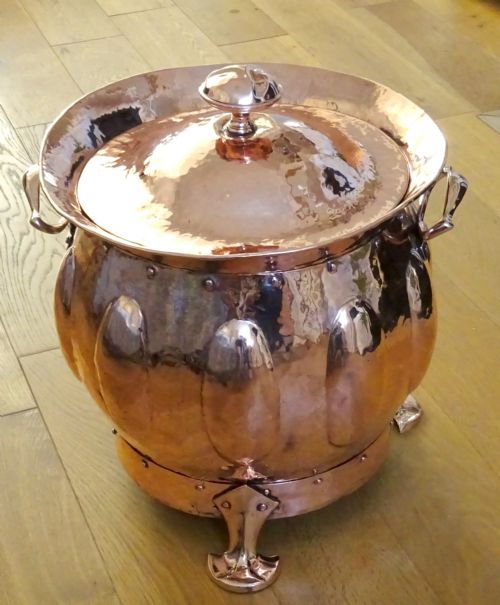


Vintage Metal Fire Bucket
These vintage metal fire bucket pieces offer heavy copper, brass, and iron construction, bringing robust utility and rich patination to modern firesides.
Vintage Metal Fire Bucket
A vintage metal fire bucket serves as a sturdy utilitarian container, repurposed today primarily as a fireside log bin or garden planter. Buyers search for these items to introduce industrial texture and warm metallic tones into traditional or rustic interiors.
The pieces on this page span the nineteenth century up to the early twentieth century, showing influences from Victorian, Arts and Crafts, and Art Nouveau styles. The most frequent encounters involve riveted copper bodies, often paired with brass handles or iron mounts.
Formations range from straight-sided buckets and deep bowls to shaped cauldrons and coopered wooden vessels reinforced with metal bands. Many examples have transitioned from functional emergency equipment or coal storage into decorative receptacles for hearthside logs.
Materials and construction
Makers utilised heavy-gauge sheet copper and brass, joining the seams with visible hand-beaten rivets to ensure durability and water-tight integrity. Wrought iron and cast iron provide structural support for handles, swing bails, and rim bands.
Certain vessels employ coopered oak construction, wrapping traditional wooden staves in tight metal bands to create robust cylindrical bins. Surface finishes display varying degrees of natural verdigris, polished warmth, and aged patination acquired through decades of handling.
Vintage Metal Fire Bucket Retail Price Guide 2026
Typical asking prices for vintage metal fire bucket among the pieces listed under this phrase on Sellingantiques today, from the lower quarter to the upper quarter. They describe what is for sale here now, not the wider market.
Some copper log bins still carry the faint aroma of nineteenth-century woodsmoke locked deep within their hand-hammered seams.
Distinctions in quality
Quality rests upon the weight of the metal gauge, the regularity of hand-hammered riveting, and the integrity of structural joints. Substantial copper walls and original, unreplaced brass swing handles elevate a piece above thinner, lighter alternatives.
The character of the surface patination and the presence of decorative stylistic details, such as Arts and Crafts repoussé work or Art Nouveau shaping, distinguish standard utility items from finer workshop pieces.
The Vintage Metal Fire Bucket Glossary
- Riveted
- A method of joining sheet metal plates by inserting pins through overlapping edges and hammering the ends flat. This technique provides both structural strength and a distinctive decorative border along the seams.
- Verdigris
- The green patina that forms naturally on copper, brass, or bronze surfaces when exposed to moisture and air over long periods. Collectors often prize this stable atmospheric coloration for its authentic aged appearance.
- Coopered
- A method of construction where tapered wooden staves are fitted side by side and bound with tensioned metal hoops. This traditional technique was originally used for liquid storage vessels and later adapted for coal and log bins.
- Repoussé
- A metalworking technique where the artisan hammers the metal from the reverse side to form a raised design in relief. It appears frequently on decorative Arts and Crafts metalwork.
- Cauldron
- A large round vessel with a convex body, designed historically for heating liquids over an open fire. In domestic interiors, heavy metal versions serve as deep containers for logs and kindling.
Vintage Metal Fire Bucket: Frequently Asked Questions
How were fire buckets used originally?
These vessels were kept filled with water or sand near hearths and industrial machinery to suppress sudden outbreaks of fire. Their heavy construction ensured they could be grabbed quickly in an emergency.
Over time, as municipal fire services developed, these metal containers found a second life storing household coal, peat, and logs beside the domestic fireplace.
Can I use these buckets outdoors?
Many of these metal vessels adapt readily to garden use as planters for large shrubs or floral displays. Copper and brass withstand outdoor weathering well, developing deeper patination over the seasons.
Ensure that any iron components are monitored for rust if left exposed to continuous damp conditions, and check for existing drainage holes or add protective liners.
How do I clean a copper bucket?
Routine dusting and gentle wiping with a soft, dry cloth preserve the existing aged surface and historical patination. Avoid harsh abrasive cleaners that strip away the characteristic darkening accumulated over the decades.
If a brighter metallic finish is preferred, use a specialised copper cleaner sparingly, taking care not to disturb the patinated areas around rivets and handles.
How do I date an antique metal bucket?
Dating relies on observing manufacturing techniques, material choices, and stylistic indicators such as Victorian proportions or Arts and Crafts hand-detailing. Rivet styles and handle mounts shifted from utilitarian hand-forged iron in the early nineteenth century to more decorative brass fittings by the early twentieth century.
Comparing the specific weight, rim construction, and surface wear against documented examples from the same period helps narrow down the manufacturing decade.