



Vintage Metal Bound Box
A vintage metal bound box offers robust storage, bringing historic hardware and sturdy timber trunks into contemporary rooms.
Vintage Metal Bound Box
A vintage metal bound box encompasses durable trunks, strongboxes, and coffers built for travel or secure household storage across multiple centuries. Buyers hunting for a vintage metal bound box encounter forms ranging from rustic pine blanket chests to fitted oak silver chests.
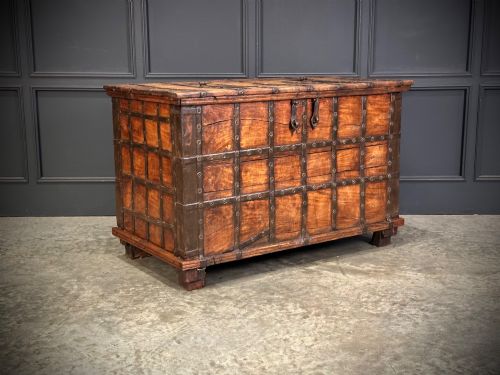
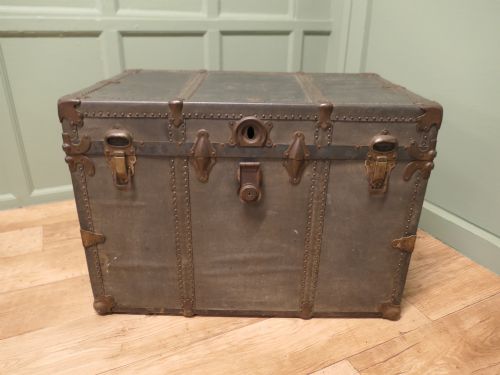
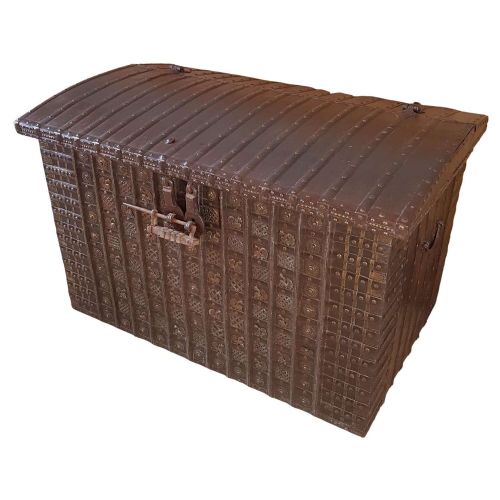
The selection spans periods from the sixteenth century through the early twentieth century, drawing on diverse origins including English country houses, Scandinavia, India, and East Africa. Formats vary from domed travelling trunks to flat-topped campaign packing cases and dowry chests.
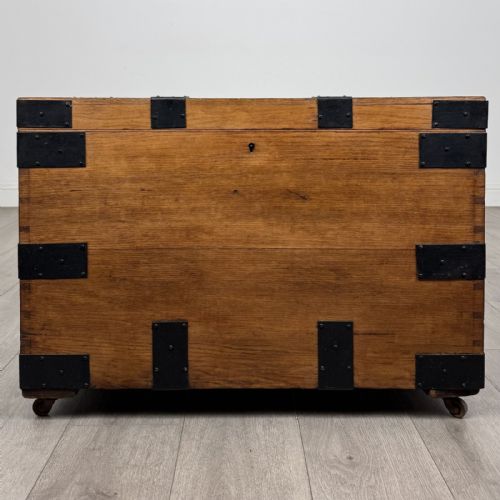
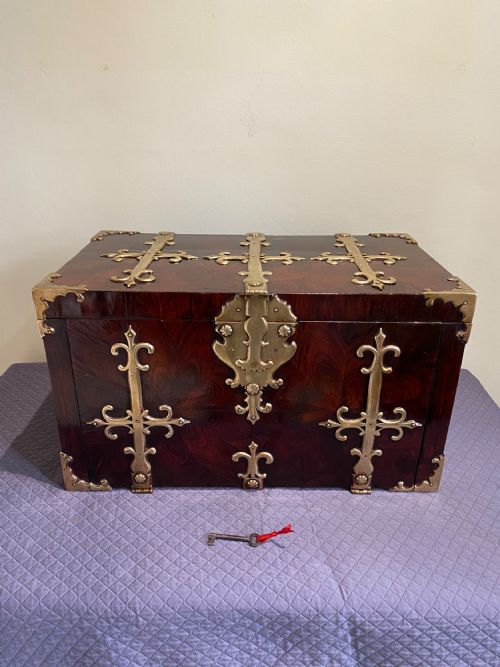
Most examples combine timber carcases with iron, steel, or brass strapwork designed to reinforce the structure against heavy transit. These pieces function equally well as coffee tables, blanket repositories, or statement storage solutions in modern interiors.
How they were made
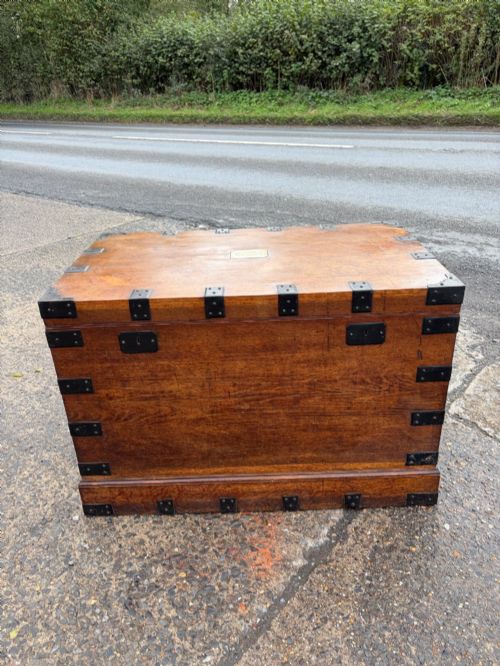
Construction relies on solid timbers such as oak, pine, teak, and kingwood, assembled to withstand demanding journeys. Workshops reinforced these wooden carcases with iron, steel, or wrought iron bands, brackets, and corner plates.
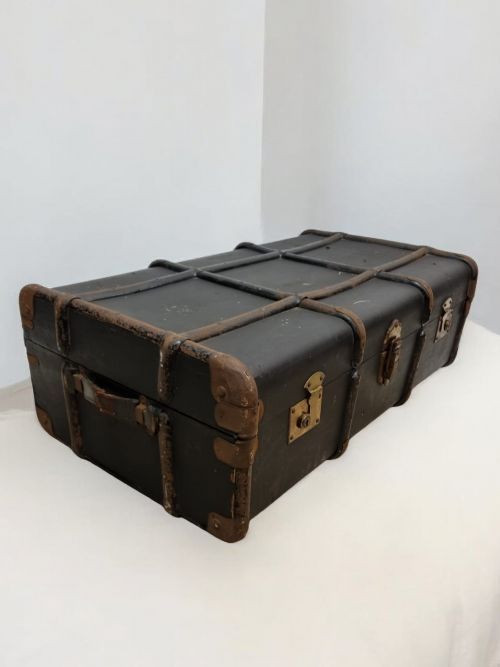
Securing the contents involved complex locking mechanisms, often paired with side carrying handles and original hardware. Surface finishes range from natural waxed grains to painted schemes, such as red interiors or black travel trunk exteriors.
Vintage Metal Bound Box Retail Price Guide 2026
Typical asking prices for vintage metal bound box among the pieces listed under this phrase on Sellingantiques today, from the lower quarter to the upper quarter. They describe what is for sale here now, not the wider market.
One travel trunk hides a vibrant red interior behind its austere black exterior, offering a theatrical splash of colour.
What varies in quality
Quality rests upon the integrity of the original hardware, the grade of timber utilised, and the survival of internal fittings such as lift-out trays or zinc linings. Higher tier pieces retain authentic maker labels, historic provenance, and untouched locking mechanisms.
The precision of the metal strapwork and the heft of the iron or brass binding distinguish standard utility containers from bespoke silver chests and aristocratic travelling cases. Condition of the timber carcase, from dense teak to figured oak, dictates the overall presence of the piece.
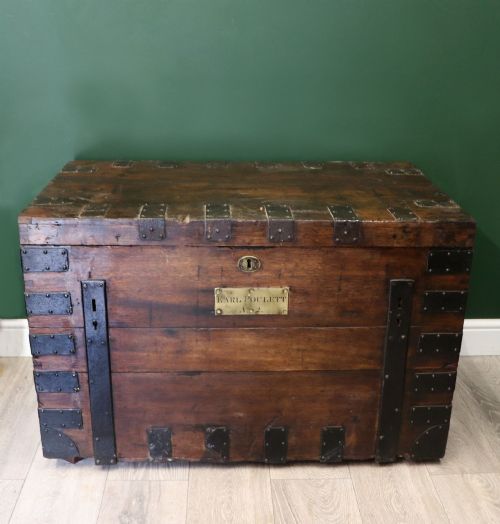
Triumph·Earl Poulett of Somerset·Allen of London
The Vintage Metal Bound Box Glossary
- Coffer
- A heavy wooden box, often iron bound, traditionally used for storing valuables or documents before the widespread adoption of fitted chests. These medieval and sixteenth-century precursors established the heavy strapwork tradition.
- Silver chest
- A heavy oak storage box reinforced with iron or steel bands, originally designed to protect precious household silver during transport or estate moves. They frequently feature fitted interior compartments and substantial carrying handles.
- Campaign case
- A portable packing trunk or military chest built for officers on active service, often featuring recessed brass hardware, sectional internal trays, and reinforced corners to endure rugged transit.
- Damchiya
- An ornate Indian dowry chest constructed from timber and banded with iron, serving as traditional household furniture and a secure repository for valuables.
- Tansu
- A traditional Japanese mobile storage chest featuring metal mounts and drawer configurations designed for domestic organisation and travel.
Vintage Metal Bound Box: Frequently Asked Questions
What were metal bound boxes used for?
These robust containers served vital roles in transporting and safeguarding valuable possessions during an era of frequent travel and estate movement. Silver chests protected heavy tableware, while campaign cases accompanied officers on military expeditions.
Domestic versions functioned as blanket boxes, dowry chests, or secure repositories for family documents and currency. Their heavy metal straps and reinforced corners ensured contents survived rough carriage by ship, coach, or rail.
How do I style a vintage trunk at home?
A large metal bound chest makes an ideal living room coffee table, providing generous internal storage for blankets and books while anchoring the seating area. Flat-topped variants sit easily at the foot of a bed as linen repositories or beneath windows as auxiliary seating.
Smaller caskets and boxes suit tabletops, sideboards, or open shelving where their historic hardware and timber patination add texture to contemporary interiors. Position them away from direct heat sources to preserve the historic wood and metal surfaces.
How can I tell the age of a trunk?
Dating relies upon examining construction methods, timber types, and the style of the metal binding and locks. Sixteenth and seventeenth-century pieces typically feature hand-forged iron strapwork on heavy coffer frames, whereas nineteenth-century examples often incorporate precision-cut steel bands and maker labels.
Material choices also offer clues, as early pieces frequently utilise local oak or pine, while later Victorian and Edwardian examples might feature exotic timbers like East African teak or kingwood alongside industrial zinc linings.
Are these trunks suitable for travel today?
While historic travel trunks were engineered to endure rough handling by railway porters and steamship crews, modern transit conditions differ significantly. Their weight and historic hardware make them less practical as daily luggage for modern flights.
Instead, they excel as static furniture pieces that preserve the romance of historical travel while offering sturdy, concealed storage within the modern home.