

Vintage Marquise
Vintage marquise pieces bring together pointed, boat-shaped silhouettes and sparkling gemstone clusters from across the Victorian, Edwardian, and Art Deco periods.
Vintage Marquise
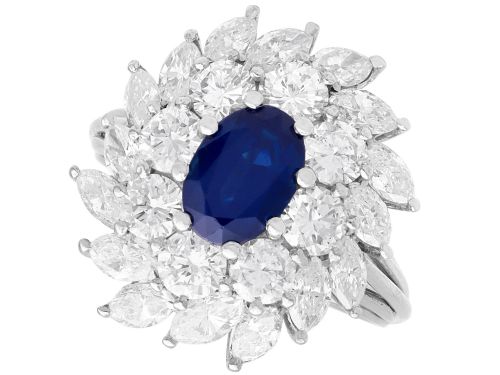
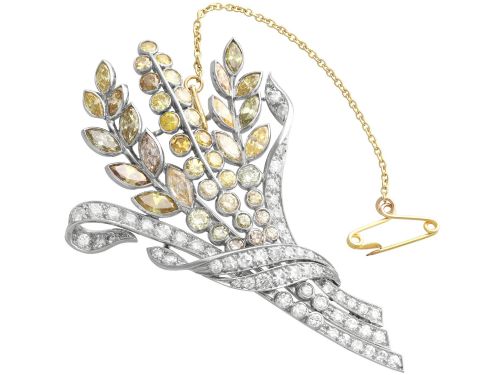
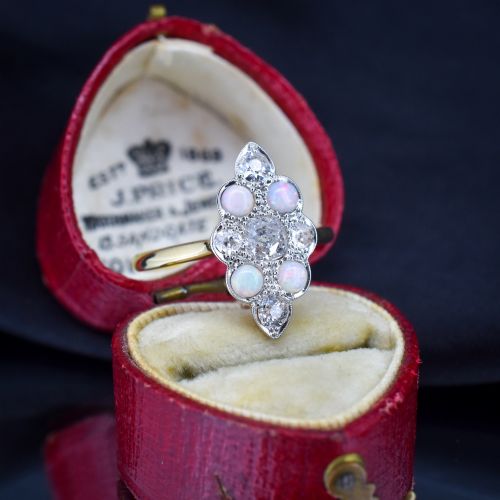
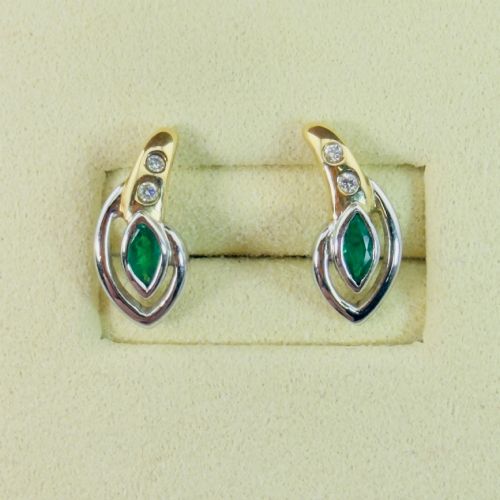
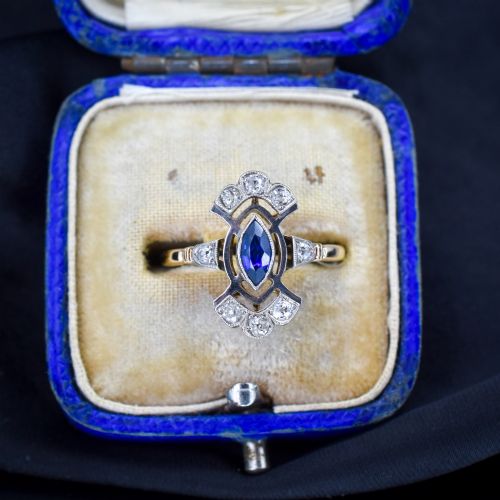
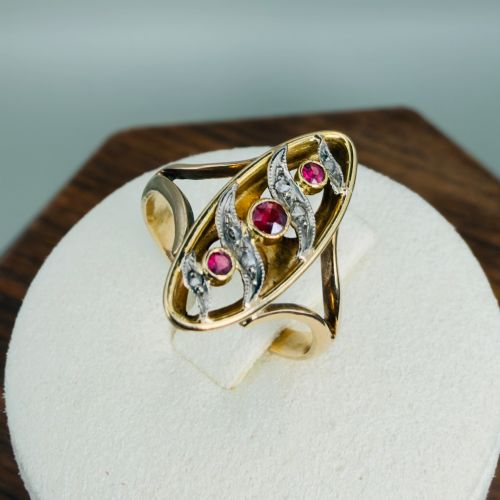
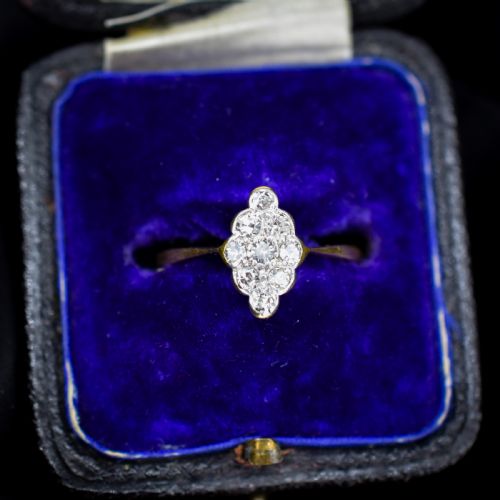
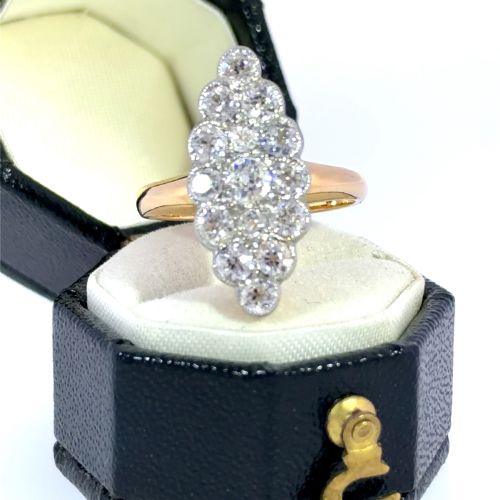
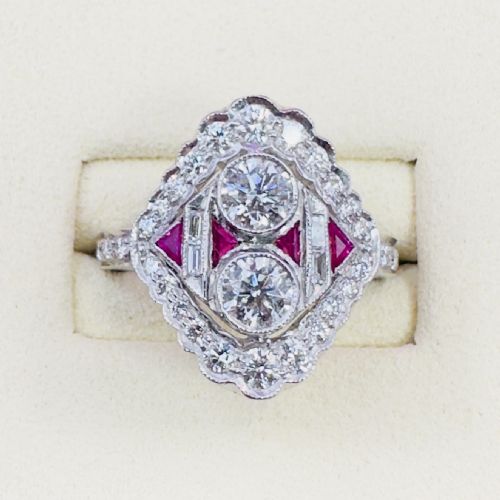
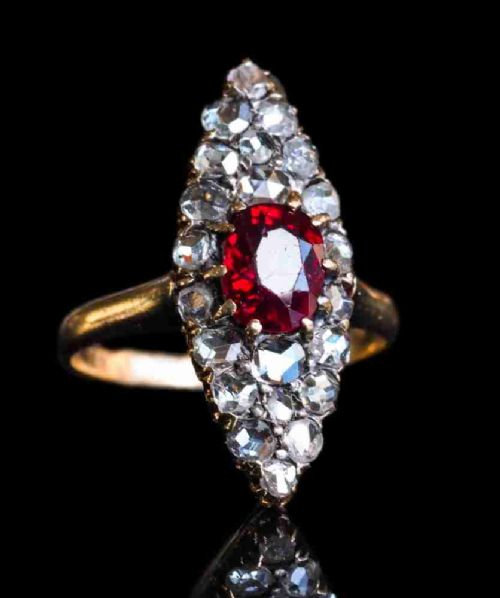
When searching for vintage marquise jewellery, collectors look at distinct navette, boat, and cluster silhouettes that draw the eye along a pointed, elongated axis. These pieces span rings, brooches, bracelets, and pendants, with rings taking the most prominent position in the selection.
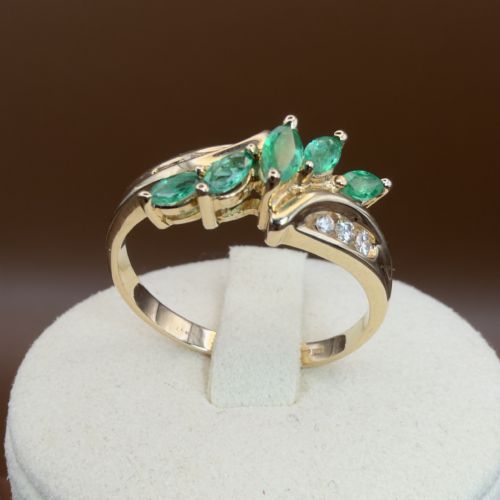
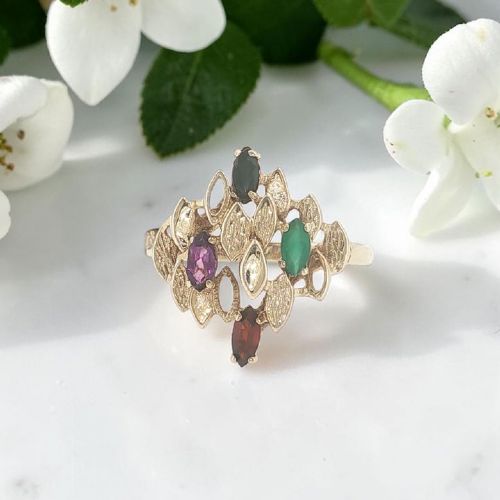
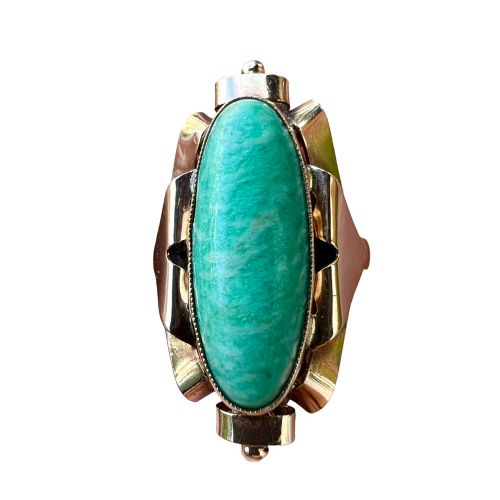
The materials paired with these pointed profiles range from platinum and white gold to traditional yellow gold, set with diamonds, sapphires, emeralds, rubies, and garnets. Many date from the Art Deco and Edwardian eras, though Victorian and mid-century examples also appear regularly.
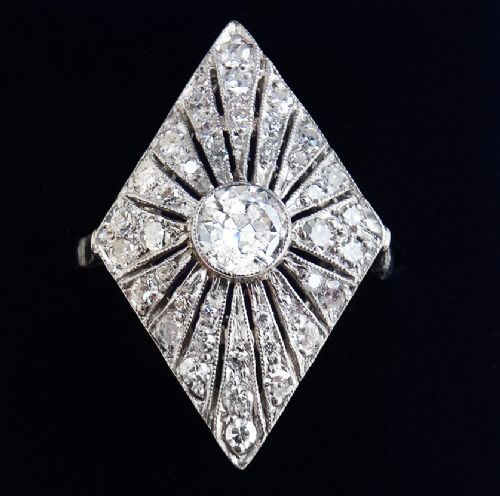
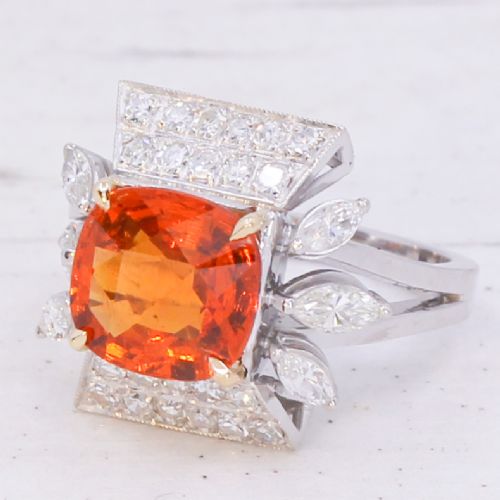
Art Deco and Edwardian interpretations rely heavily on platinum and diamond arrangements, while later mid-century versions introduce vibrant coloured gemstones like padparadscha sapphires and orange garnets. Each era lends its own distinct weight and geometric rhythm to the marquise form.
How They Were Made
Maker techniques relied on combining platinum or gold with precision-cut stones, mounting old-cut diamonds and marquise-cut gems into intricate cluster settings. Metalwork ranges from delicate millegrain edges on Edwardian pieces to bold geometric platinum mountings from the 1920s.
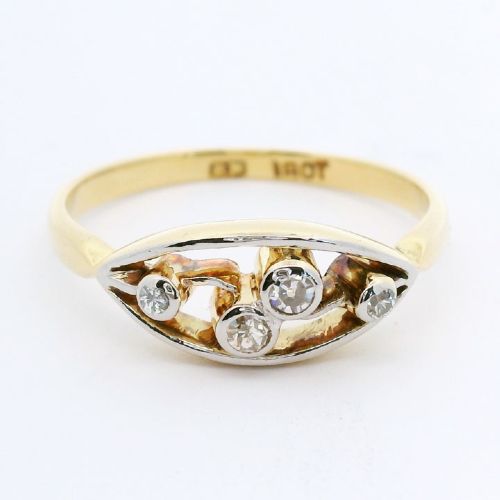
Goldsmiths utilised combinations of 18ct yellow gold, 18ct white gold, and platinum, often blending metals within a single ring to support both the structural mount and the stone settings. Hallmarks stamped into the shanks and mounts of pieces from Birmingham, Chester, and France record these material standards.
Vintage Marquise Retail Price Guide 2026
Typical asking prices for vintage marquise among the pieces listed under this phrase on Sellingantiques today, from the lower quarter to the upper quarter. They describe what is for sale here now, not the wider market.
Object forms include cocktail rings, brooches, bracelets, stud earrings, and pendant necklaces set with emeralds, rubies, sapphires, and garnets.
What Varies in Quality
Quality rests in the precision of the stone geometry and the harmony between the central marquise cluster and the supporting metalwork. Pieces showing sharp, balanced proportions and secure claw or bezel settings represent the stronger side of the range.
The origin and treatment of the gemstones also shift the character of a piece, with natural unheated rubies, Ceylon sapphires, and certified diamonds holding distinct distinction over treated stones. The integrity of the original metal mount, whether platinum or gold, completes the assessment.
Kutchinsky
The Vintage Marquise Glossary
- Marquise
- A pointed, boat-shaped gemstone cut or cluster silhouette with curved sides and tapered ends. This shape maximises the apparent size of the stones.
- Navette
- French for little ship, describing an elongated, boat-shaped jewellery silhouette similar to the marquise form. It frequently appears in Edwardian and Art Deco cluster rings.
- Millegrain
- A decorative technique involving a row of tiny raised metal beads along the edge of a setting. This finish is characteristic of Edwardian and platinum Art Deco work.
- Old-cut
- A diamond cutting style predating modern brilliant cuts, featuring a smaller table, higher crown, and open culet. These stones catch candlelight with a softer glow.
- Cluster ring
- A ring design featuring a central stone surrounded by a border of smaller gemstones. This arrangement concentrates visual impact at the centre of the finger.
Vintage Marquise: Frequently Asked Questions
How do I date a marquise piece?
Dating relies on stylistic clues like platinum geometry for Art Deco items or delicate millegrain work for Edwardian examples. Hallmarks stamped into the gold provide official verification of origin and assay office.
Examining the stone cuts, such as old-cut diamonds versus modern cuts, helps narrow the historical period further.
How should I care for vintage jewellery?
Keep vintage pieces away from harsh chemicals, ultrasonic cleaners, and abrasive surfaces to protect softer gemstones like emeralds and opals. Store them individually in soft pouches to prevent metal scratching.
Regular checks by a professional jeweller ensure claws and settings remain secure around the stones.
What is a navette cluster?
A navette cluster is an arrangement of stones set into a pointed, boat-like frame that mirrors the shape of a small hull. The term is often used interchangeably with marquise in period jewellery descriptions.
These clusters frequently combine diamonds with sapphires, rubies, or emeralds across Edwardian and Art Deco mountings.