

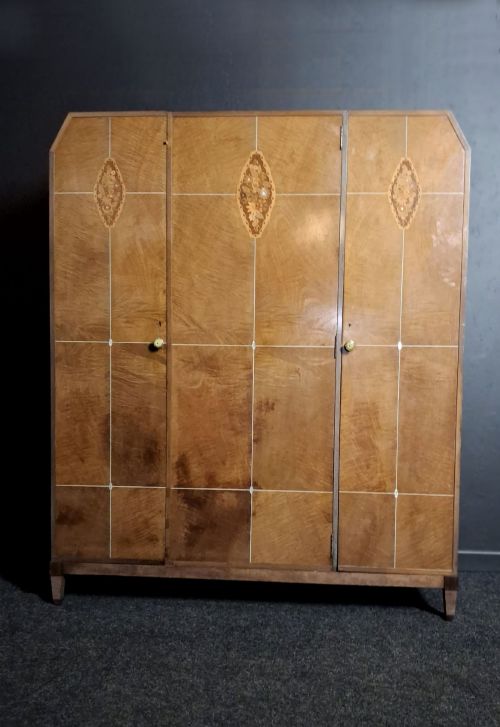
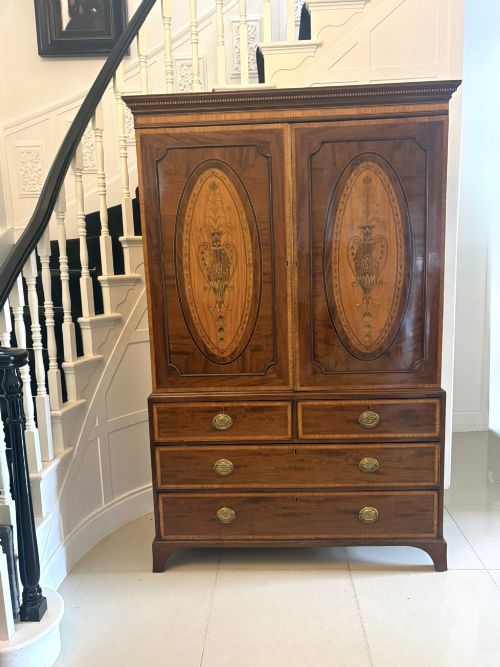
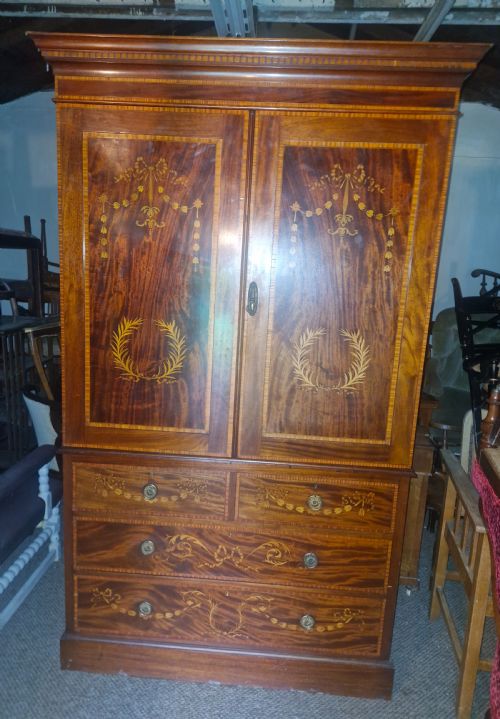


Vintage Marquetry Wardrobe
A vintage marquetry wardrobe brings warmth and intricate timber detail to a bedroom, offering substantial storage with genuine period character.
Vintage Marquetry Wardrobe
A vintage marquetry wardrobe combines functional bedroom storage with decorative wood inlay, ranging across Edwardian, Art Deco, and Georgian styles. These pieces often appear as large multi-section wardrobes, compactums, or linen presses.
Construction and materials
Cabinet makers utilised solid woods like mahogany, oak, and walnut as the foundational structure, applying fine veneers and marquetry inlay to create pictorial or geometric surface patterns. Burr walnut and satinwood veneers provided rich figures and contrasting tones.
Detailing often included brass hardware, carved wooden elements, and glass panels, while larger forms such as compactums and linen presses integrated internal shelving and hanging space behind multiple doors.
Vintage Marquetry Wardrobe Retail Price Guide 2026
Typical asking prices for vintage marquetry wardrobe among the pieces listed under this phrase on Sellingantiques today, from the lower quarter to the upper quarter. They describe what is for sale here now, not the wider market.
The selection spans multiple design movements, including Georgian, Dutch Baroque, Edwardian, and Art Deco styles.
Assessing craftsmanship and finish
Quality rests in the precision of the marquetry cutting and the selection of the underlying veneer figures, where tight grain patterns and harmonious timber contrasts elevate a piece. The crispness of carved wooden details and the stability of the main carcase also dictate the tier of craftsmanship.
Maker attribution plays a role, with established firms demonstrating superior interior fitting, robust construction methods, and refined proportions compared to simpler workshops.
Maple & Co·Druce & Co·B Cohen & Sons
The Vintage Marquetry Wardrobe Glossary
- Marquetry
- Decorative wood inlay using various tinted veneers to form pictorial or geometric patterns on the surface of furniture. It transforms a plain wooden panel into a detailed picture.
- Compactum
- A large, fitted wardrobe offering specialised internal storage compartments such as drawers, shelves, and hanging space combined into one unit. This multi-functional design became particularly popular in the Edwardian era.
- Linen Press
- A tall piece of furniture featuring sliding trays or shelves in the upper section for storing textiles, above a base fitted with drawers. Georgian and Edwardian examples often incorporated sophisticated inlaid decoration.
- Satinwood
- A lustrous, fine-grained hardwood with a golden-yellow sheen, frequently used as a veneer or inlay material in Georgian and Edwardian cabinet making. It provides a bright contrast against darker woods like mahogany.
Vintage Marquetry Wardrobe: Frequently Asked Questions
What fits inside a vintage wardrobe?
These large storage pieces typically contain hanging rails, internal shelving, and sometimes banks of internal drawers or linen slides depending on whether the form is a compactum or a traditional wardrobe.
Buyers should measure their garments and the internal depth, as older wardrobes can sometimes feature shallower hanging depths than modern alternatives.
How do I care for inlaid wood?
Maintain inlaid and veneered surfaces by keeping them away from direct sunlight and sudden temperature changes, which can cause the timber to dry out or veneers to lift.
Apply a quality furniture wax periodically to nourish the wood and protect the delicate marquetry details from daily wear.
Are these wardrobes easy to move?
Many larger examples, particularly Edwardian and compactum styles, were designed to dismantle into sections for transport and installation in upper-floor bedrooms.
Enlisting professional antique movers ensures that heavy carcases and mirrored or glazed doors are handled safely without straining historical joints.
How do I date a marquetry wardrobe?
Dating relies on observing the combination of primary timbers, hardware styles, and construction techniques, such as the transition from Georgian mahogany to Edwardian satinwood and Art Deco oak.
Maker stamps, stamps on brass locks, and distinct stylistic motifs help narrow down the period of manufacture.