


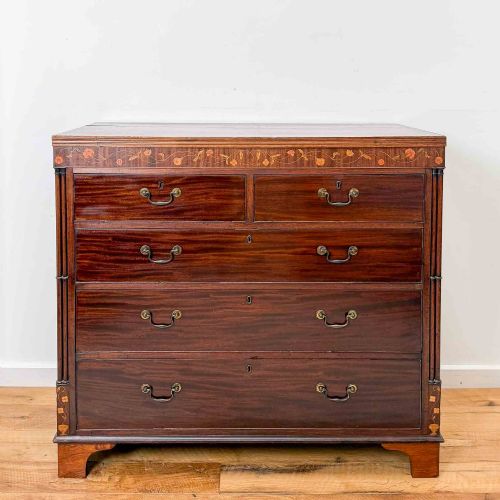


Vintage Marquetry Commode
A vintage marquetry commode brings intricate timber patterns and heavy stone tops into a room, offering both display surface and deep storage.
Vintage Marquetry Commode
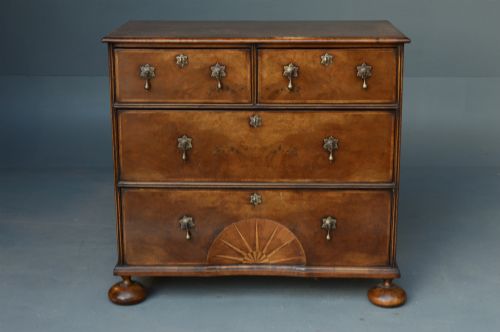
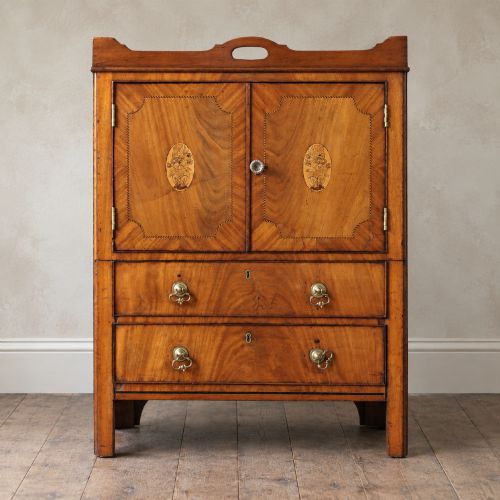
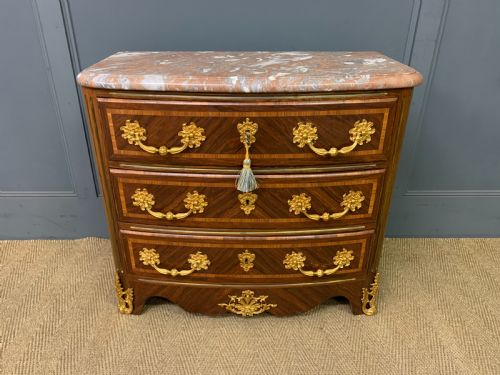
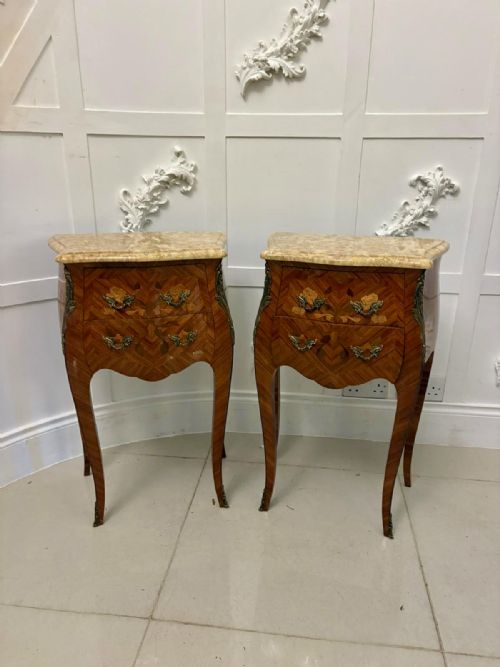
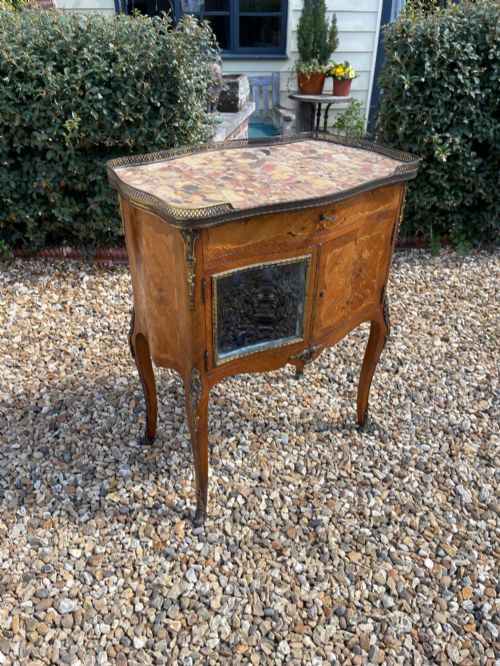
A vintage marquetry commode combines functional storage with elaborate wood-inlay ornamentation, taking the form of bedside tables, chests of drawers, and side cabinets. These pieces span centuries of cabinet-making traditions, drawing heavily on French Louis styles and Georgian proportions.
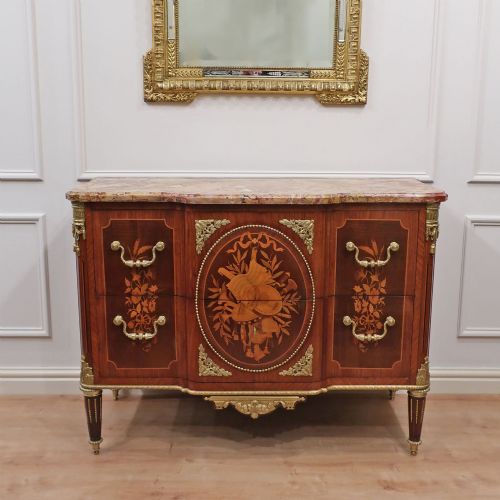
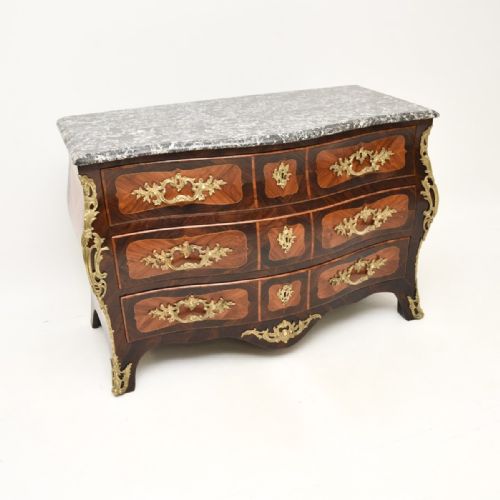
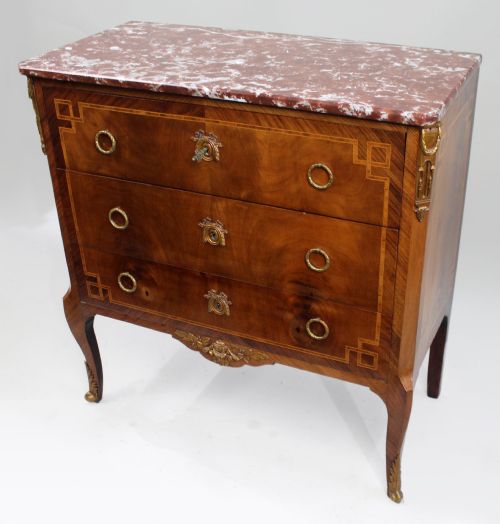
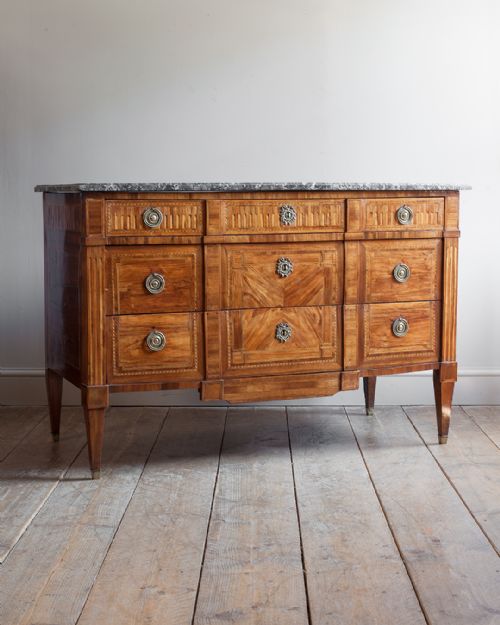
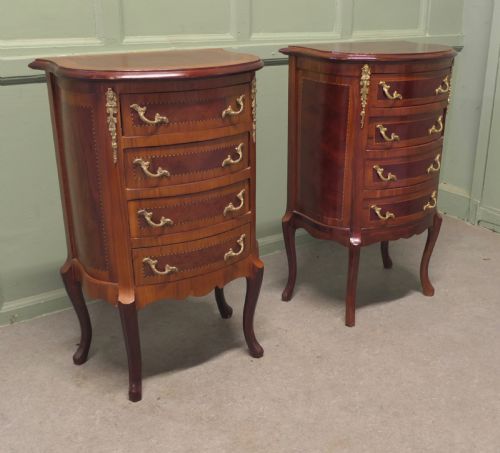
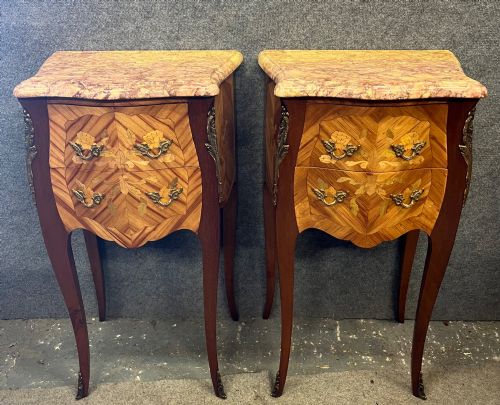
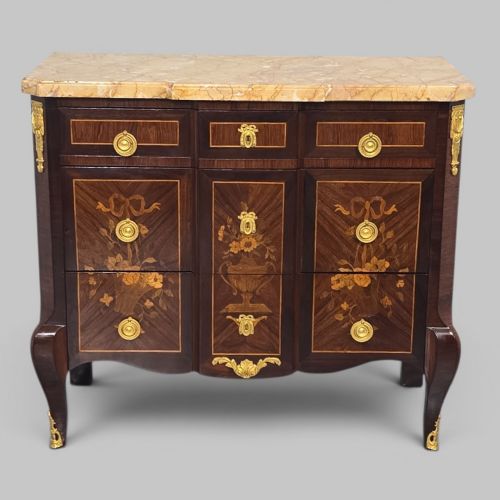
The version most commonly encountered on this page is the French Louis XV or Louis XVI style commode featuring a marble top and floral or geometric veneer patterns. Such pieces range from compact bedside cabinets to substantial serpentine-fronted chests.
Origins stretch across European workshops, with particular emphasis on French provincial and Parisian craftsmanship alongside English Georgian interpretations. Makers incorporate walnut, kingwood, mahogany, and satinwood to construct these decorative storage items.
Materials and construction
Craftsmen construct these pieces using carcases of oak or pine veneered with finer timbers such as kingwood, rosewood, walnut, and satinwood. Artisans cut contrasting woods into delicate floral or geometric pictorial designs, pressing them carefully into the surface.
Mounts and fittings of cast or gilt ormolu and brass accent the corners, handles, and apron profiles. Heavy marble slabs, including rouge and scagliola varieties, sit atop the timber frames to provide a durable and decorative surface.
Vintage Marquetry Commode Retail Price Guide 2026
Typical asking prices for vintage marquetry commode among the pieces listed under this phrase on Sellingantiques today, from the lower quarter to the upper quarter. They describe what is for sale here now, not the wider market.
Some commodes hide secret top drawers designed for storing midnight letters.
Distinctions in standard
The fidelity and complexity of the wood inlay separate standard production from superior examples. Skilled makers utilise a wider palette of natural timber tones and grain directions to create depth within floral and pictorial motifs.
The weight and crispness of the cast ormolu mounts indicate the standard of the piece. Finely chiselled bronze detailing and substantial marble tops fitted closely to the timber carcase distinguish the top tier of work.
Jacques Bircklé·Edwards and Roberts·Epstein
The Vintage Marquetry Commode Glossary
- Marquetry
- Decorative veneer work assembled in pictorial or geometric patterns using various coloured woods. This technique requires precise cutting and fitting of thin timber sections.
- Commode
- A low chest of drawers or cabinet developed in France during the seventeenth century. The term covers various storage forms including bedside tables and larger chests.
- Ormolu
- Gilt bronze mounts applied to furniture for decorative accent and edge protection. Makers cast and chase these metal components by hand.
- Scagliola
- A composite material made from selenite, glue, and pigments, mimicking marble and other hard stones. Craftsmen inlay this substance into furniture surfaces.
- Serpentine
- A gently undulating front profile shaped with convex curves flanking a central concave section. This contour adds movement to timber case pieces.
Vintage Marquetry Commode: Frequently Asked Questions
What is a vintage marquetry commode?
A vintage marquetry commode is a decorative storage chest or cabinet adorned with intricate wood veneer patterns. These pieces function as drawer units or bedside cabinets.
Craftsmen build them using diverse hardwood veneers and mount heavy stone tops above the structured compartments.
How do I identify Louis styles?
Louis XV style pieces typically display curved serpentine lines, cabriole legs, and asymmetrical floral marquetry. Rococo influences dominate the shaping of the corners and aprons.
Louis XVI style furniture shifts toward strict symmetry, straight tapered legs, and neoclassical geometric veneer motifs.
How were marble tops fitted?
Marble slabs rest directly upon the upper wooden frame of the commode, cut precisely to follow the contour of the carcase. The sheer weight of the stone secures it in position without mechanical fasteners.
Edges are often bevelled or moulded to soften the transition from stone to timber.
Where should I place a commode?
These cabinets suit living rooms, hallways, and bedrooms where surface display space and enclosed storage are both required. Their decorative front panels allow them to stand freely against prominent walls.
Bedside variants fit neatly beside sleeping quarters to hold lamps and small personal items.