




Vintage Marine Oil
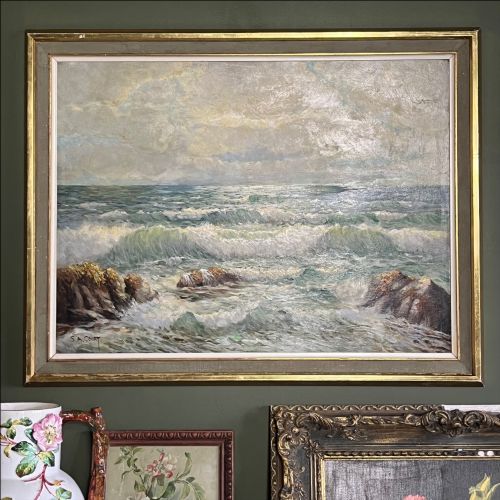
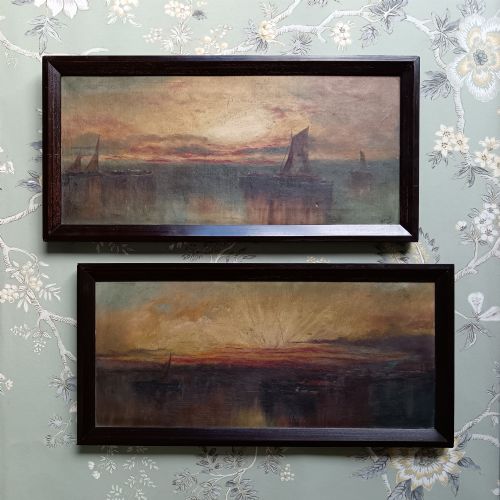
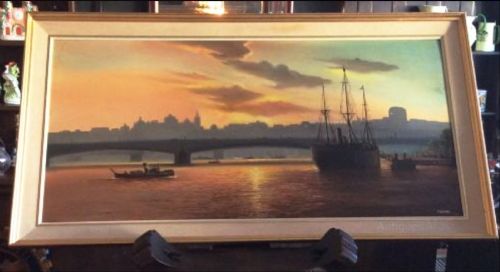
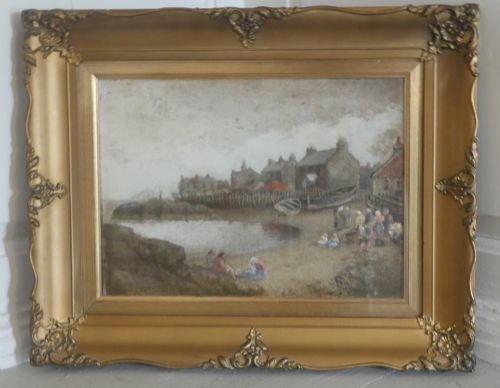
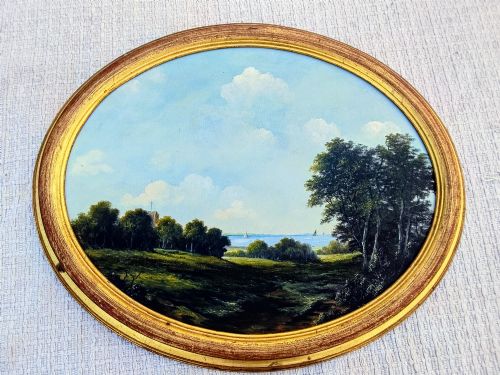
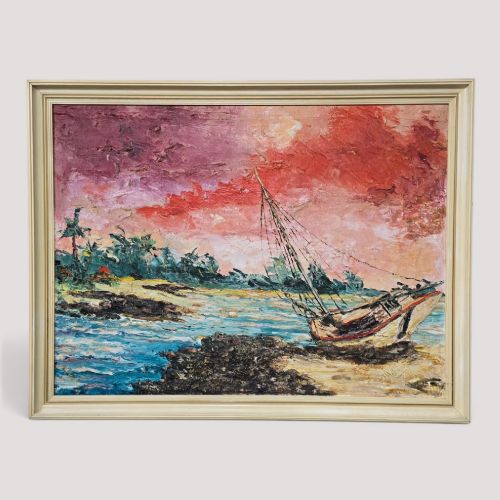
Vintage marine oil paintings capture coastal views, harbours and historical shipping scenes on canvas or board.
Vintage Marine Oil
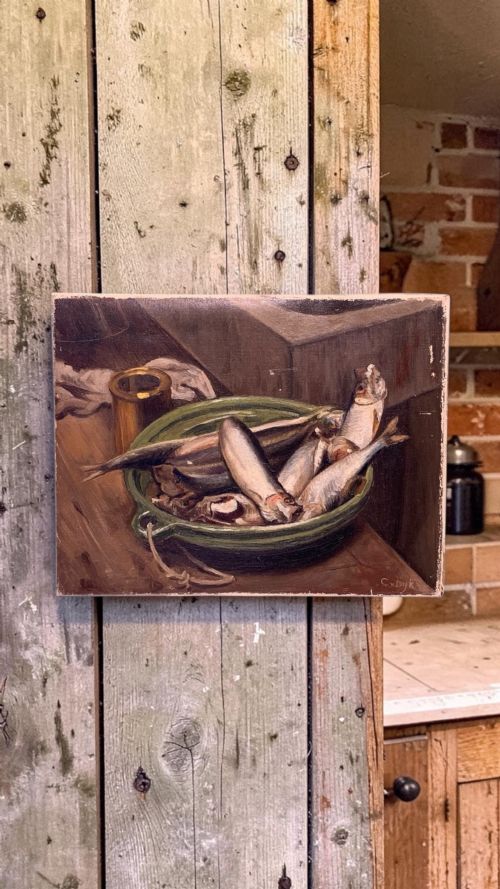
When searching for vintage marine oil pieces, collectors look at original paintings depicting seascapes, coastal landscapes and historical shipping scenes. The versions most commonly met on this page include oil paintings on canvas or board, created across the nineteenth and twentieth centuries in various British and European styles.
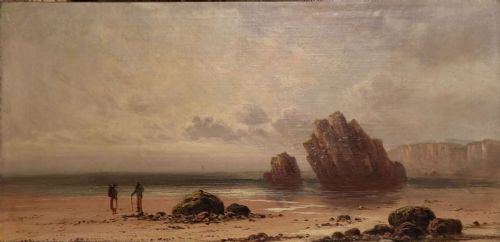
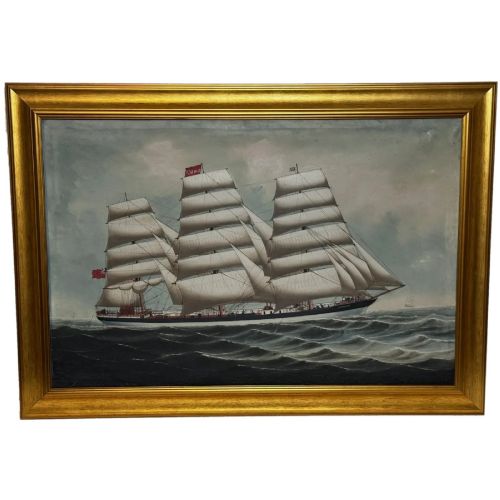
These works range from small en plein air coastal studies of Cornwall and Folkestone harbour to large panoramic views of ships in heavy seas and wartime vessels. They span periods from early Victorian maritime scenes through Edwardian depictions and mid-century modern interpretations.
Materials and construction
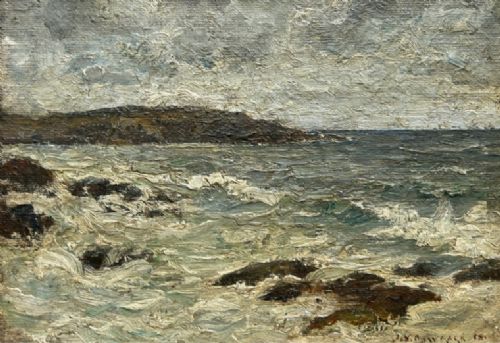
The pieces recorded in the listings utilise oil paint applied to canvas or rigid board supports, often framed in period gilt wood. Artists employed techniques ranging from smooth academic application to thick impasto to render the texture of water, sky and coastal terrain.
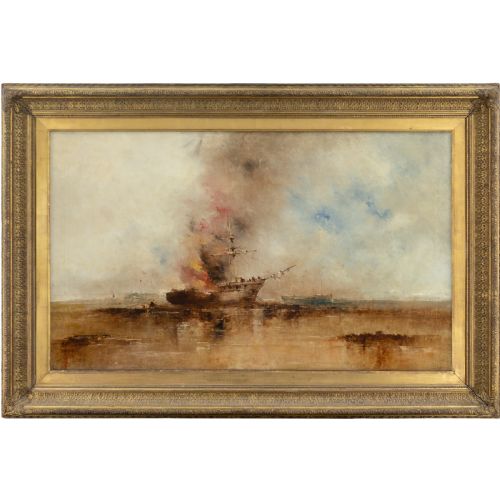
Support materials vary between traditional stretched canvas and wooden board, while some works incorporate mixed media such as gouache alongside oil. Frames predominantly consist of moulded wood finished with gilt leaf, matching the Victorian, Edwardian or mid-century periods of the paintings.
Listings feature works spanning the 19th Century, Edwardian era, and mid-20th century up to the 1960s.
What determines quality
Quality in these maritime works rests upon the artist's ability to capture light, atmosphere and the accurate rendering of water and rigging. Stronger examples display confident brushwork and precise compositional balance, particularly in complex harbour or stormy sea scenes.
Condition of the pigment and the stability of the canvas or board also influence the standing of a piece. Works retaining their original gilt frames and clear artist signatures or attributions command greater interest from collectors.
Kenneth Cozens·Clifford Hanney·Eugène-Louis Gillot·William McAlpine·Reginald Arthur Borstel·Sidney A Court·B Nash·Edward Mills·Bernard Gribble·F Corpuz·Clive Browne·Peter Brannan·Paul Bret·Bernard Benedict Hemy·Willem Bos·Lai Fong·Nicholas Condy·William Henry Williamson·John Holland·Abraham Hulk I·Elisabeth Bardon
The Vintage Marine Oil Glossary
- Oil paint
- A slow-drying paint made by combining pigment particles with a drying oil, typically linseed oil. This medium allows for rich colour depth and blended tones.
- Impasto
- Paint applied thickly to a canvas or board so that the strokes stand out visibly from the surface. It adds tactile dimension to turbulent seas and clouds.
- En plein air
- The act of painting outdoors to capture direct natural light and atmospheric conditions. This approach is frequently seen in coastal landscape works.
- Board
- A rigid flat panel used as a painting support instead of stretched canvas. Artists often utilised wooden or composition boards for smaller outdoor studies.
Vintage Marine Oil: Frequently Asked Questions
How do I date a marine oil painting?
Dating relies on stylistic clues, framing, artist signatures and the construction of the canvas or board support. Victorian and Edwardian works often feature specific rigging details, clothing styles or shipping types that anchor them to a precise era.
Written inscriptions on the reverse of the board or canvas, stretcher types and maker stamps on framing components also provide reliable chronological evidence.
What is the difference between canvas and board?
Canvas is a flexible woven fabric stretched over a wooden frame, allowing for larger compositions and a subtle surface give. Board is a rigid flat panel, common in smaller en plein air studies.
Board supports prevent the cracking sometimes associated with aged stretched canvas, though both require stable environmental conditions to preserve the oil paint layer.
How should I display vintage oil paintings?
Display these works away from direct sunlight and fluctuating heat sources to protect both the oil pigment and the wooden or gilt frame. Wall placement should avoid damp areas such as unventilated rooms.
Ensure secure hanging hardware is utilised, as heavier framed canvas works require proper wall anchors to support their weight safely over time.
Are gilt frames original to the paintings?
Many pieces retain their period gilt wooden frames, which match the aesthetic of the nineteenth or early twentieth-century era in which they were created. Examining the joinery, wear patterns and backing helps confirm period authenticity.
Replacement frames do occur when earlier housings became damaged beyond repair, though sympathetic matching remains standard practice for traditional marine art.