




Vintage Marble Inkwell
These vintage marble inkwell pieces bring solid weight and classical desk presence, offering a functional slice of writing history for the modern study.
Vintage Marble Inkwell
A vintage marble inkwell serves as a sturdy desktop receptacle for liquid ink and writing implements, uniting mineral substance with practical utility. Buyers searching for a vintage marble inkwell encounter desk accessories and inkstands ranging from compact single wells to substantial multi-piece desk sets.
The selections span the nineteenth century, Edwardian era, and the nineteen-thirties, reflecting diverse design movements from Victorian classicism to Art Deco geometries. Origin points include domestic British workshops and continental European foundries, yielding everything from simple block bases to ornate sculptural desk tidies.
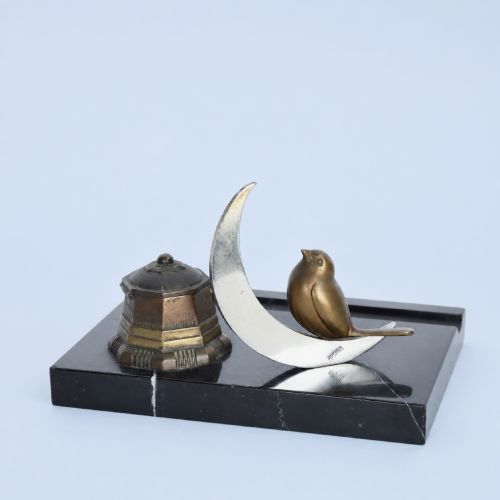
Most examples combine stone bodies with metal fittings, often incorporating hinged lids, pen rests, and mounted ornaments such as birds or historical busts. These functional desk furnishings reveal how nineteenth and early twentieth century writers kept their tools organised and protected.
Materials and construction methods
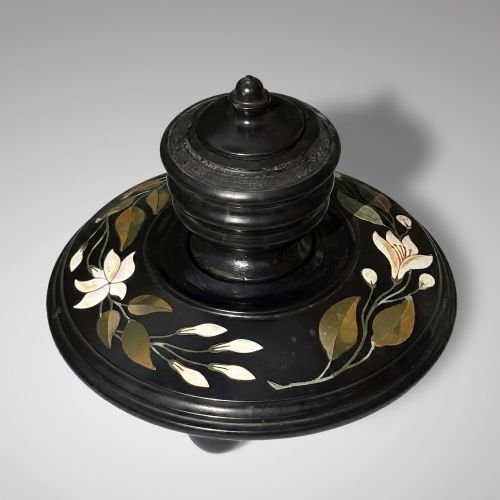
Maker workshops shaped dense natural stones, utilising varieties such as black marble, green onyx, Ashford marble, lapis lazuli, and vert marble for the heavy structural bases. These stone reservoirs and stands required precise cutting and polishing to create smooth planes and secure recesses for ink inserts.
Metal components cast in bronze, gilt bronze, brass, or ormolu were fitted directly to the stone bodies, alongside silver mounts hallmarked in centres like Birmingham. Artisans anchored these metal frames, pen trays, and hinged lids with pins or screws, combining cold mineral surfaces with warm metallic highlights.
Vintage Marble Inkwell Retail Price Guide 2026
Typical asking prices for vintage marble inkwell among the pieces listed under this phrase on Sellingantiques today, from the lower quarter to the upper quarter. They describe what is for sale here now, not the wider market.
Napoleon keeps watch over the ink, glaring sternly at anyone attempting to borrow a pen without asking first.
Distinctions in quality and execution
Quality rests upon the selection and integration of the materials, separating simple stone blocks from pieces featuring intricate lapis lazuli inlay, fire-gilt bronze mounts, or sculptural elements. Finer examples display harmonious proportions between the heavy marble base and the metalwork embellishments.
The execution of decorative details, from cast bronze birds to figural busts, dictates the distinction between standard commercial deskware and master foundry output. Maker attribution, through signatures on the bronze or silver hallmarks on the mounts, elevates the standing of an individual piece.
Albert Marionnet·Zimmermann
The Vintage Marble Inkwell Glossary
- Ashford marble
- A specialised form of Derbyshire black marble inlaid with colourful mineral fragments to create floral or geometric pietra dura patterns. This technique flourished in nineteenth-century England.
- Ormolu
- Finely chopped and dismally pounded high-karat gold applied to a bronze base using a mercury amalgam. The method creates a rich golden surface finish on nineteenth-century French desk mounts.
- Desk tidy
- A combined desk accessory featuring compartments for pens, stamps, and small stationery alongside the ink reservoir. These items kept writing desks organised during the Victorian and Edwardian periods.
- Vert marble
- A deep green ornamental stone frequently quarried in Europe and utilised for classical revival desk sets. Its mottled appearance provides a striking contrast against polished brass or bronze fittings.
Vintage Marble Inkwell: Frequently Asked Questions
What is a vintage marble inkwell?
A heavy stone desk accessory designed to hold liquid writing ink and pens securely in place during use.
These pieces typically combine a carved marble or onyx base with metal wells, lids, and pen trays.
How do I date a marble inkstand?
Dating relies on stylistic clues, metal mounts, and silver hallmarks that point to periods like the Victorian era or Art Deco.
Design movements such as French Empire, Art Nouveau, and 1930s minimalism help narrow the decade of manufacture.
Were these used in offices?
These desk stands served in private studies, libraries, and professional offices where handwritten correspondence remained standard practice.
They provided a stable, weighted platform that prevented accidental spills on wooden writing surfaces.
How do I care for marble and onyx?
Maintain the stone surfaces with a soft, dry cloth and avoid harsh chemical cleaners that can dull the polish.
Keep metal mounts free of moisture to protect gilt bronze, brass, and silver elements from tarnishing.