

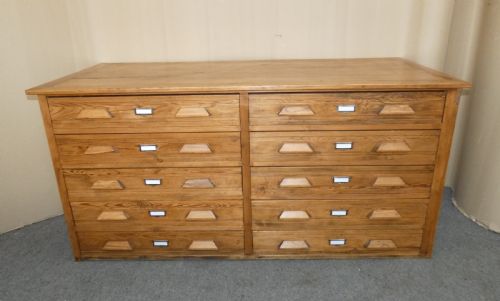


Vintage Map Drawers
These vintage map drawers are sturdy multi-drawer pieces that collectors and interior designers seek out for functional storage and timeless industrial utility.
Vintage Map Drawers
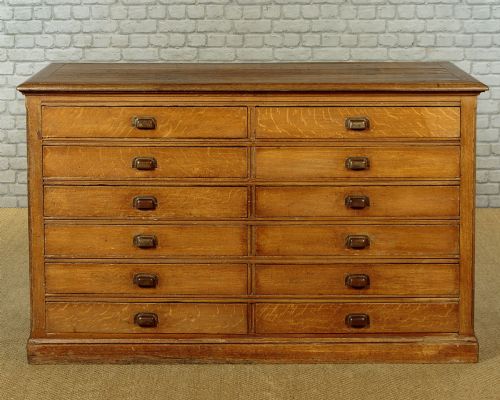
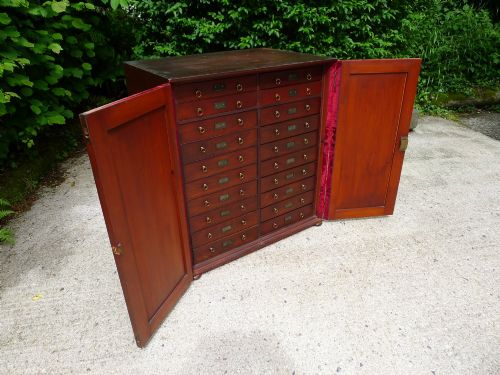
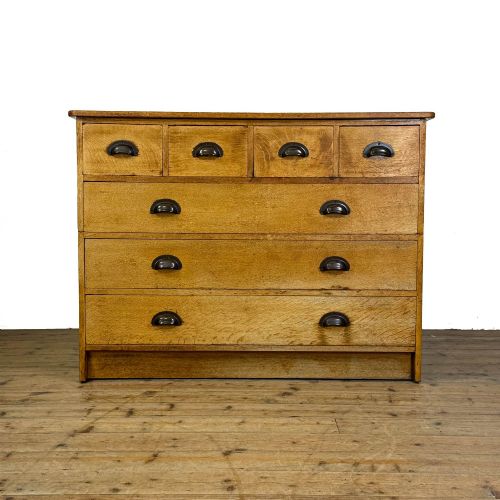
Vintage map drawers encompass a variety of multi-drawer forms such as plan chests, banks of drawers, and collectors cabinets designed for organising large sheets or small specimens. When searching for vintage map drawers, buyers frequently encounter utilitarian storage furniture originating from the nineteenth and twentieth centuries.
The pieces appearing on this page span several decades, including Victorian, Edwardian, and mid-century utility eras. Forms range from large architectural plan chests to tall banks of drawers and specialised cabinets intended for artists or collectors.
Origins vary across workshop productions and utilitarian office or studio furnishings. Each piece reflects the specific filing and storage demands of its original working environment.
How they were made
Construction relies heavily on robust timbers such as oak, pine, deal, and mahogany, chosen for structural stability and durability in working spaces. Many examples incorporate secondary woods or feature stained and polished finishes alongside simpler painted surfaces.
Hardware details typically involve brass pulls, handles, or label holders fixed to each drawer front. Joinery and carcass construction are executed to withstand heavy daily use across numerous shallow compartments.
Materials appearing across these storage units include oak, pine, mahogany, deal, brass, and glass.
What varies in quality
Quality differences emerge in the choice of primary timber, ranging from dense mahogany and pale oak down to standard deal and pine. The scale of the bank and the complexity of the drawer configuration also influence the character of the piece.
Maker attribution elevates certain examples, particularly documented workshop output featuring specialised multi-drawer layouts. The integrity of the original surface finish and retention of authentic brass hardware further distinguish standard utility pieces from finer collectors cabinets.
Brady of Edmonton
The Vintage Map Drawers Glossary
- Plan chest
- A large, shallow chest of drawers specifically built for storing architectural plans, maps, and large format prints. These pieces generally feature wide, low proportions.
- Collectors cabinet
- A specialised cabinet containing numerous small drawers designed for organising natural history specimens, coins, or small objects. They often feature panelled or glazed doors enclosing the banks of internal drawers.
- Bank of drawers
- A tall or modular configuration of multiple storage drawers arranged in vertical and horizontal arrays. They were common in commercial, workshop, and institutional settings.
- Deal
- A fir or pine timber commonly used for the carcass and internal framing of nineteenth-century utilitarian furniture. It provides a stable and economical construction material.
- Haberdashers drawers
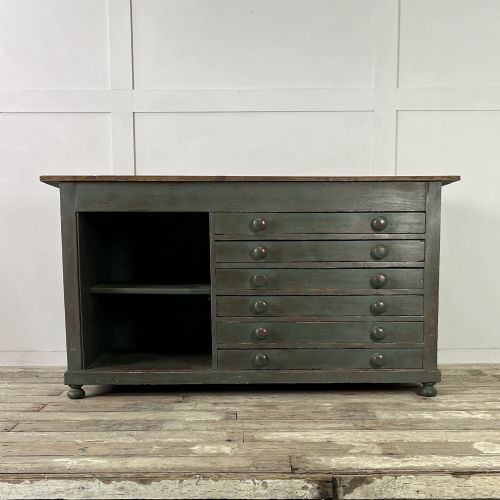
- Multi-drawer units originally utilised in retail drapery shops for storing ribbons, threads, and small garments. They often combine shallow drawers with glass fronts or open compartments.
Vintage Map Drawers: Frequently Asked Questions
What were vintage map drawers originally used for?
These drawer units served primarily in architects offices, studios, and government departments to keep large paper maps and engineering drawings flat and uncreased. Their shallow proportions prevented large documents from rolling or sustaining edge damage during storage.
Over time, similar multi-drawer formats were adopted by collectors, artists, and retailers for organising specimens, prints, and small commercial goods. This utilitarian design heritage makes them exceptionally versatile for modern organizational needs.
How do I date a set of drawers?
Dating relies on observing construction methods, timber choices, and hardware styles across the piece. Victorian and nineteenth-century examples often utilise solid deal, pine, or mahogany with hand-cut dovetails and turned wooden or cast brass pulls.
Later pieces from the Edwardian and mid-century utility periods show shifts toward standardised hardware, oak, and industrial metal elements. Makers marks or labels stamped on the carcass or drawer linings also provide definitive chronological evidence.
Are these drawers suitable for modern homes?
Their low, wide profile makes plan chests and map drawers highly effective as sideboards, media consoles, or desk bases in contemporary living spaces. The numerous shallow compartments offer practical storage for stationery, flat accessories, and household items.
Placing them in a room requires accounting for their substantial depth and weight, particularly when fully loading the extended drawers. Ensuring adequate floor clearance allows the wide drawers to pull out completely without obstruction.
What is the difference between a plan chest and a collectors cabinet?
Plan chests are characterised by wide, shallow drawers engineered specifically to hold large sheets of paper horizontally without folding. They prioritize expansive surface area over vertical height.
Collectors cabinets feature numerous smaller, compartmentalized drawers intended for sorting tiny objects, geological samples, or biological specimens. These cabinets frequently include enclosing doors rather than exposing the drawer fronts directly.