
Vintage Mahogany Commode Drawers
Vintage mahogany commode drawers are sturdy wooden storage chests spanning Georgian, Regency, Victorian and Edwardian periods, prized for rich timber and classic proportions.
Vintage Mahogany Commode Drawers
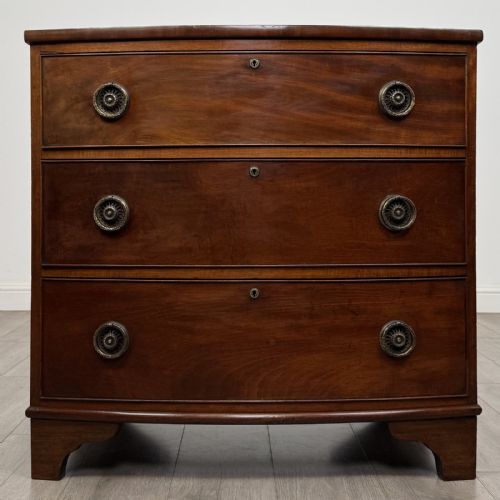
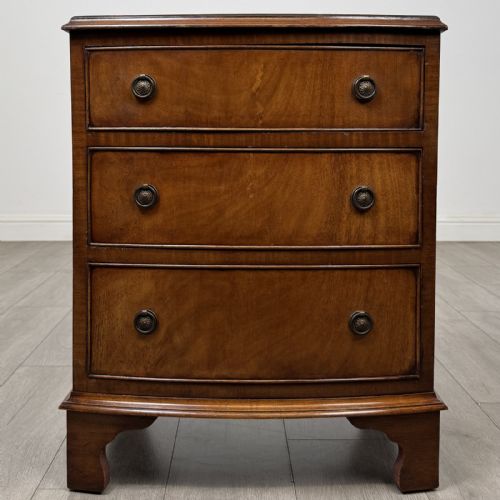
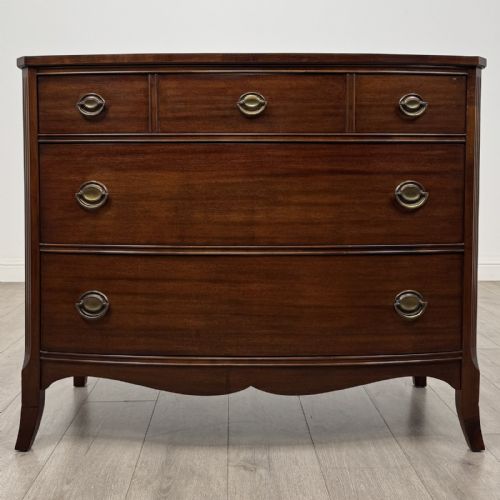
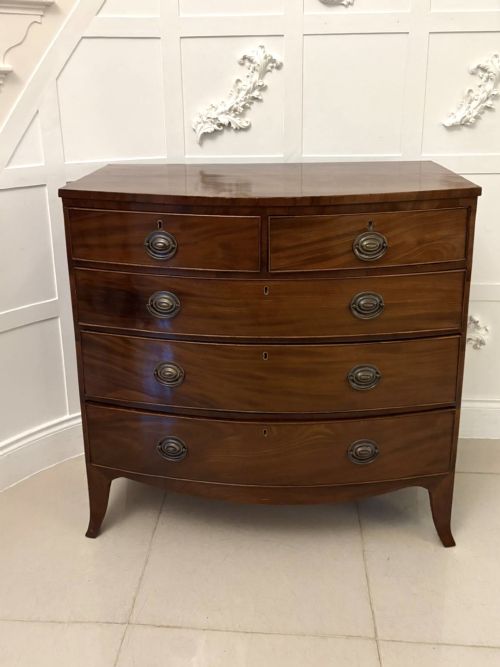
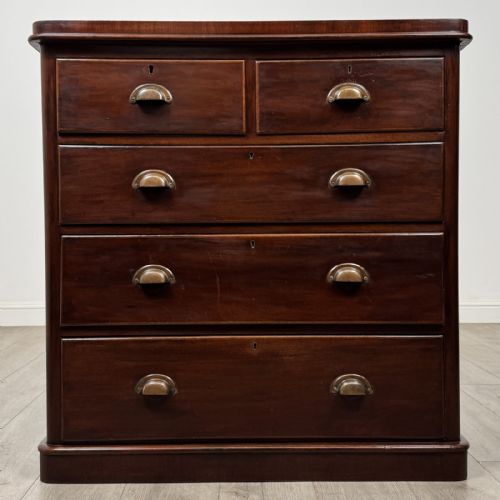
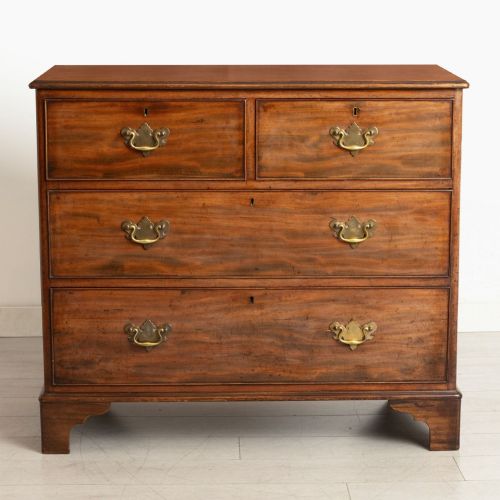
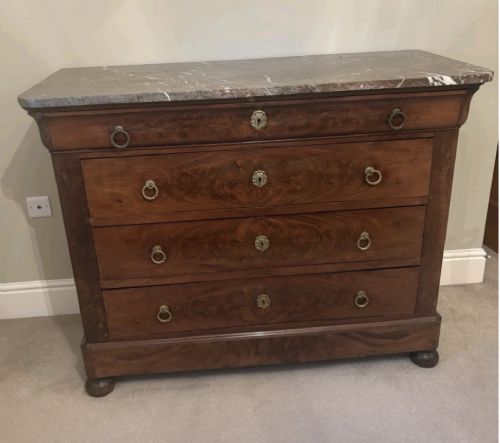
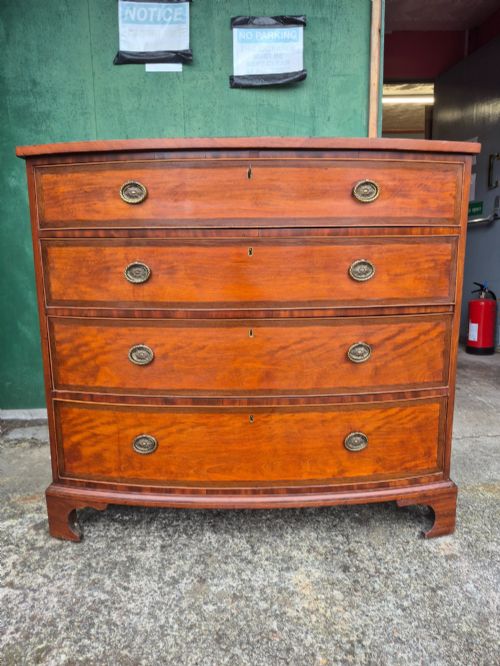
Vintage mahogany commode drawers comprise sturdy timber chests built for domestic storage across multiple historical periods. Buyers seeking vintage mahogany commode drawers encounter various configurations including straight chests, bow front designs, and serpentine silhouettes.
The pieces on this page span several eras from the eighteenth century through the nineteenth century and into the Edwardian period. Production includes George III, Regency, George IV, and Victorian iterations alongside later Edwardian revivals.
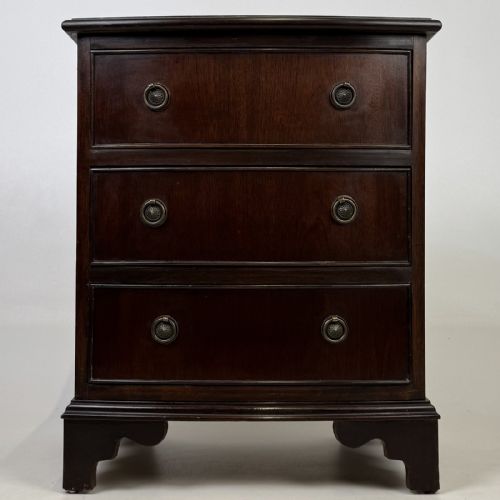
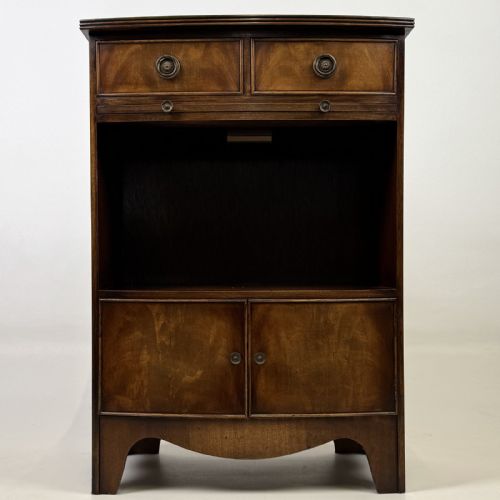
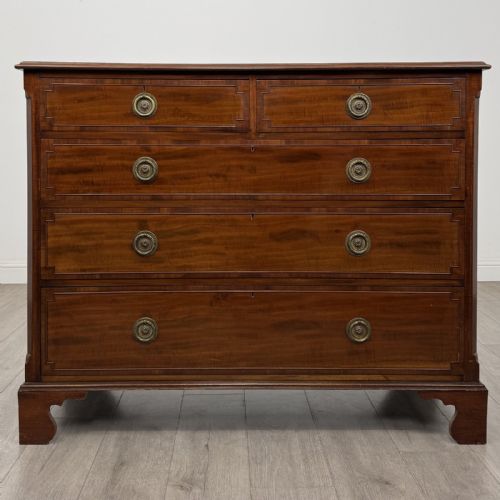
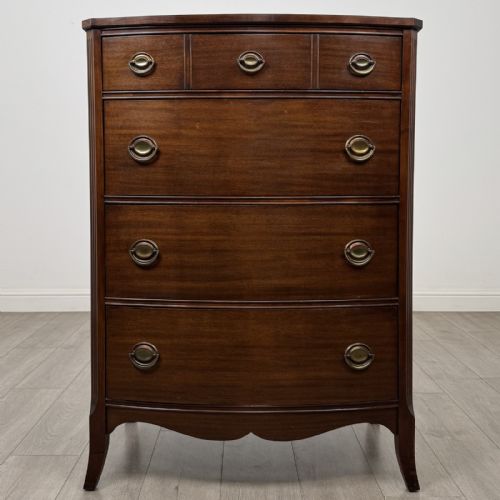
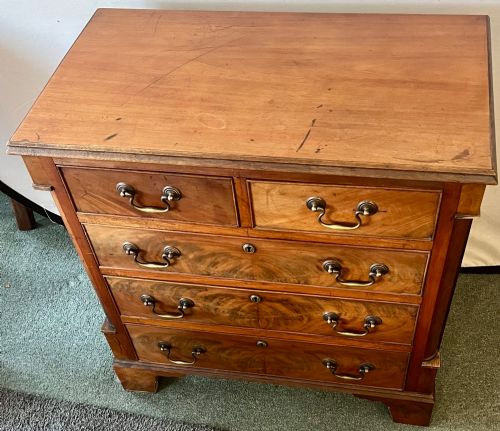
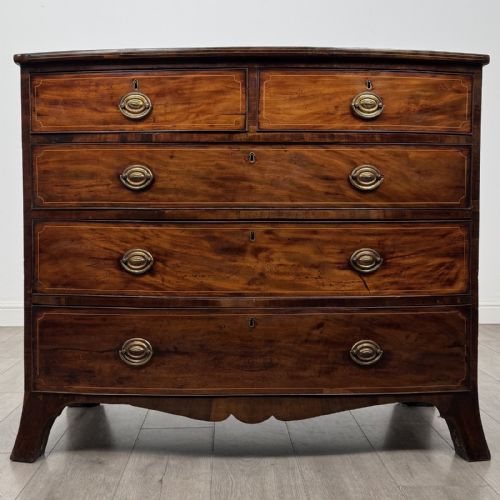
Forms range from compact bedside cabinets and small chests to tall four and five height drawer arrangements. Many examples incorporate specific details such as brushing slides or contrasting satinwood banding.
Materials and construction methods
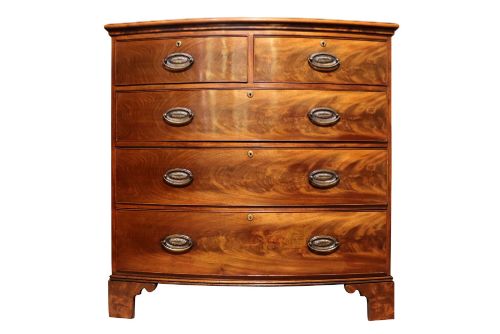
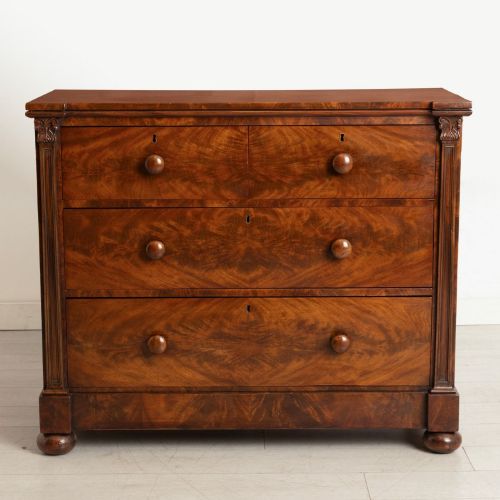
Makers utilised solid mahogany and flame mahogany veneer applied over secondary woods like oak and pine. The rich grain patterns of figured mahogany define the principal visual surfaces of these chests.
Secondary timbers such as oak and pine form internal drawer linings and structural framing. Brass hardware, including drop handles and escutcheons, secures drawer fronts and provides functional closure.
Veneers require precise application over stable base woods to prevent warping across seasonal temperature shifts. Joinery techniques connect drawer sides to fronts using traditional dovetail joints for durability.
Listings feature mahogany, flame mahogany veneer, oak, pine, and brass across Georgian, Regency, and Victorian eras.
Distinctions in quality and execution
The selection of timber grain sets superior examples apart from standard utility pieces. Highly figured flame mahogany veneers and balanced timber matching across drawer fronts indicate thoughtful workshop planning.
Refinement of the silhouette dictates overall elegance. Sharp geometric lines on straight chests contrast with fluid, difficult-to-execute curves found on serpentine and bow front forms.
Internal construction integrity influences longevity and daily utility. Smooth drawer action relies upon precise fitting within the carcass and sound secondary wood drawer linings.
The Vintage Mahogany Commode Drawers Glossary
- Bow front
- A convex curved cabinet front that projects outward in a smooth arc. This shape gained popularity during the Regency and Georgian periods.
- Serpentine
- A horizontally undulating front shape featuring a central convex curve flanked by concave sweeps. Crafting this contour demands advanced woodworking skill.
- Brushing slide
- A pull-out shelf integrated above the top drawers, traditionally utilised for folding clothes or grooming. It slides flush into the cabinet frame when not in use.
- Flame mahogany
- A decorative veneer cut from wood where the branch meets the trunk, producing a flickering flame pattern. Cabinet makers highlighted this figure on primary display surfaces.
- Satinwood banding
- A narrow strip of pale exotic wood inlaid around the edges of drawer fronts or tabletops. This technique creates visual contrast against darker mahogany.
Vintage Mahogany Commode Drawers: Frequently Asked Questions
What periods do these chests come from?
These pieces originate from multiple eras including Georgian, Regency, Victorian, and Edwardian periods. Craftsmanship shifts slightly from the strict architectural lines of the eighteenth century to the more embellished styles of the nineteenth century.
Later Edwardian items often revive earlier Georgian proportions while utilising twentieth-century production methods. Each era brings distinct decorative flourishes and handle styles to the basic chest form.
How do straight fronts differ from bow fronts?
Straight front chests present a flat rectangular facade from top to bottom. They offer a clean, classical appearance suited to orderly room layouts.
Bow front chests feature a curved projection that catches light and softens room corners. This curved design requires greater carpentry skill during construction.
What is a brushing slide used for?
A brushing slide functions as a pull-out shelf positioned just beneath the top surface of the chest. Historically, owners utilised this pull-out board for brushing garments or folding linens.
In modern rooms, the slide serves as a convenient temporary surface for resting small items. It pushes flush into the cabinet frame when not in active use.
How should I care for mahogany veneer?
Mahogany veneer requires stable indoor humidity away from direct heat sources to prevent timber splitting. Dust the surface regularly with a dry cloth and avoid harsh chemical polishes.
Occasional applications of appropriate wax help maintain the natural lustre of the timber. Protect the top surface from moisture and direct sunlight.