



Vintage Mahogany Centre Table
A vintage mahogany centre table brings architectural presence to a room, offering freestanding utility and rich timber grain from every angle.
Vintage Mahogany Centre Table
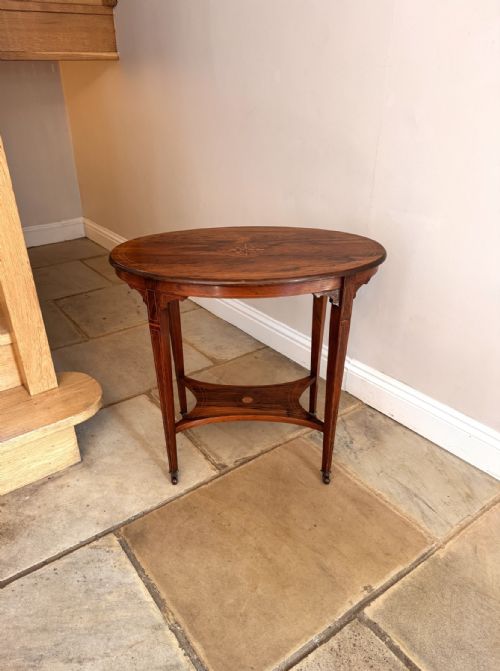
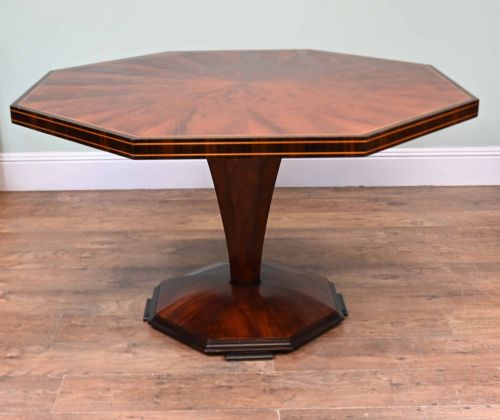
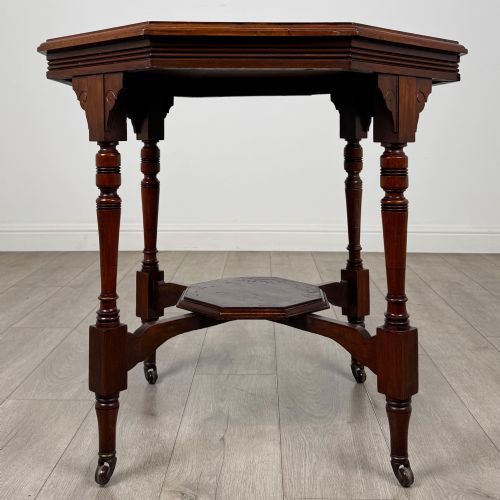
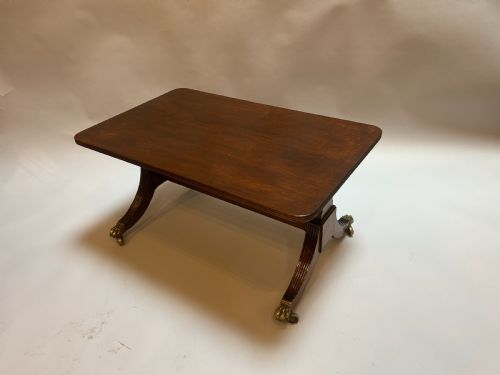
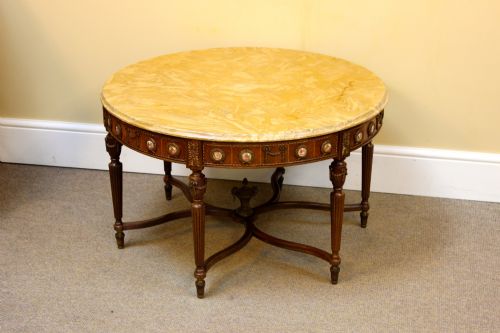
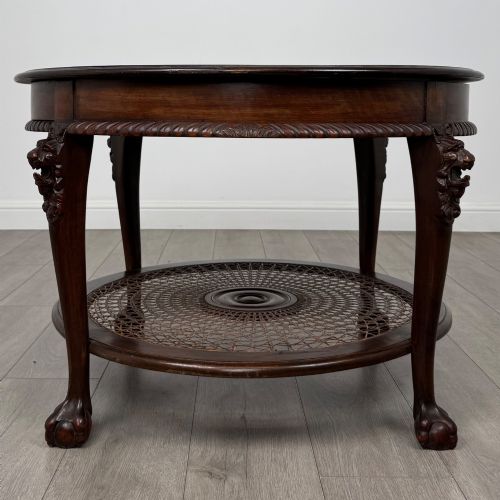
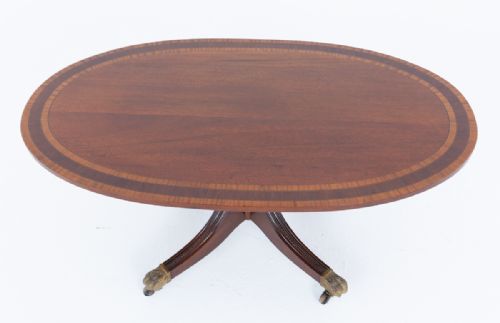
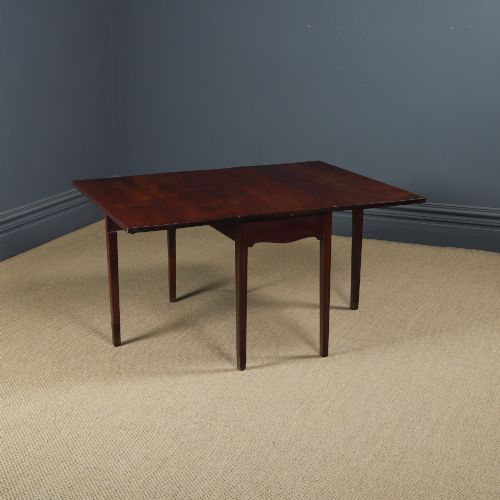
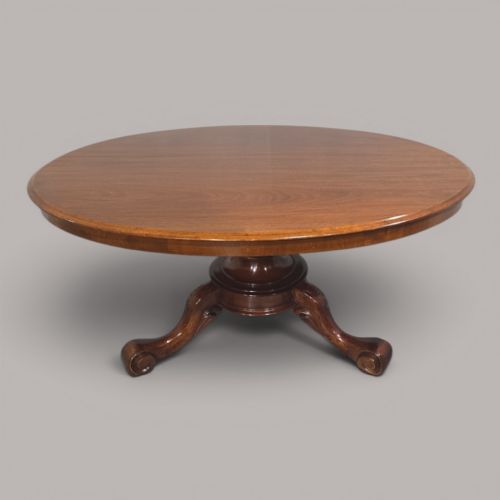
A vintage mahogany centre table serves as a substantial freestanding piece designed to be viewed from all sides rather than pushed against a wall. When searching for a vintage mahogany centre table, buyers encounter a diverse range of forms spanning the nineteenth and early twentieth centuries, including circular breakfast tables, drum tables, and oval coffee tables.
The pieces appearing on this page reflect distinct historic eras such as the Georgian, Regency, Victorian, and Edwardian periods. Makers of these eras applied revival styles including Chippendale and Sheraton alongside French gueridon forms to suit formal drawing rooms and libraries.
Functionality varies across the inventory, shifting from large pedestal dining tables and library tables to smaller occasional and coffee tables adapted from earlier forms. The enduring appeal lies in the deep reddish-brown tones of the mahogany and the versatility of placing a finished table in the middle of a room.
Materials and Construction
Cabinet makers relied primarily on solid mahogany and figured mahogany veneers applied to secondary foundational woods. Workshops enhanced the visual depth of the timber through French polishing, which brings out the natural flame and grain patterns of the wood.
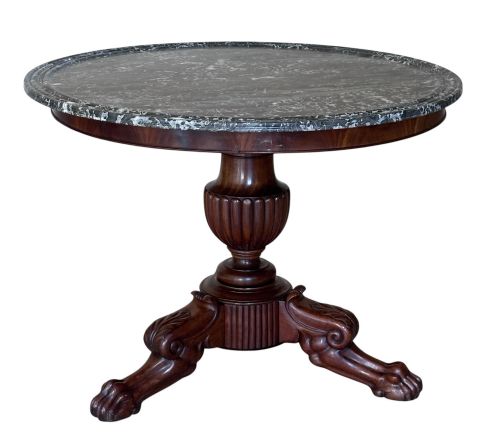
Decorative detailing frequently incorporates contrasting timbers such as satinwood and boxwood stringing for inlay work. Hardware components utilise cast brass, whilst specific tables include inset leather surfaces or polished marble tops supported on pedestals, drop-leaf hinges, or hand-carved legs.
Listings feature nineteen-century and early twentieth-century periods, incorporating materials such as marble, brass, and rosewood alongside mahogany.
Evaluating Quality and Craftsmanship
Quality in these tables rests upon the selection of the timber and the skill of the joinery. Superior examples display highly figured flame mahogany veneers that have been carefully matched across the top, alongside crisp hand-carving on the pillar, base, or border.
Structural integrity separates standard utilitarian pieces from exhibition-grade work. Heavier pedestal bases, solid brass mounts, and precise inlay without gaps denote a higher standard of workshop production.
The Vintage Mahogany Centre Table Glossary
- Mahogany
- A durable tropical hardwood prized for its reddish-brown colour and stability in furniture construction. It accepts polish exceptionally well and forms the structural basis of these tables.
- Gueridon
- A small French freestanding table designed for a specific function such as holding a lamp or vase. These round tables often feature marble tops or delicate pillar supports.
- Drum Table
- A circular library or centre table with a deep frieze containing drawers, resembling the shape of a military drum. They typically rest upon a central pillar and splayed legs.
- Tilt-Top
- A table mechanism allowing the wooden top to pivot into a vertical position when not in use. This clever design saved floor space in historic interiors.
- Inlay
- A decorative technique where contrasting materials like boxwood or satinwood are embedded into the mahogany surface. It creates geometric or floral patterns along the borders and tabletops.
Vintage Mahogany Centre Table: Frequently Asked Questions
How do I use a centre table?
A centre table stands independently in the middle of a room rather than against a perimeter wall. It functions as a display surface for lamps and books, or as a focal point in a large hallway or drawing room.
Because these tables are finished on all sides, they allow foot traffic to circulate freely around them while anchoring the room's furniture arrangement.
What is the difference between a breakfast table and a dining table?
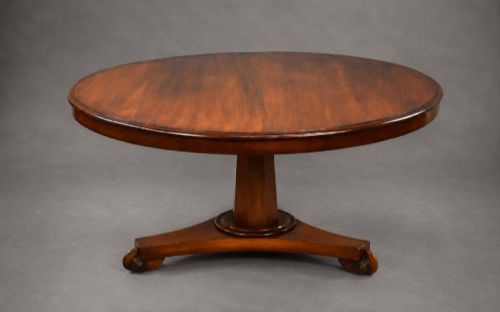
Breakfast tables are typically smaller, round, and supported by a single central pillar and tripod or octagonal base. They often feature a tilt-top mechanism for convenient storage.
Dining tables are longer, frequently rectangular or oval, and rely on multiple legs or pedestals to support larger gatherings for meals.
How do I identify a Victorian mahogany table?
Victorian tables often exhibit darker, heavily figured mahogany veneers combined with robust pedestals or heavy serpentine edges. They frequently incorporate platform bases with carved scroll feet.
Stylistic cues lean towards revivalism, reflecting earlier Georgian or French designs executed with the heavier proportions favoured in the nineteenth century.
Can I use an antique centre table as a coffee table?
Many tables from the Edwardian and later periods naturally adapt to coffee table heights and proportions. Some nineteenth-century pieces have also been professionally lowered to serve modern seating layouts.
Checking the height dimensions ensures the table matches standard sofa seating before placement in a living space.