



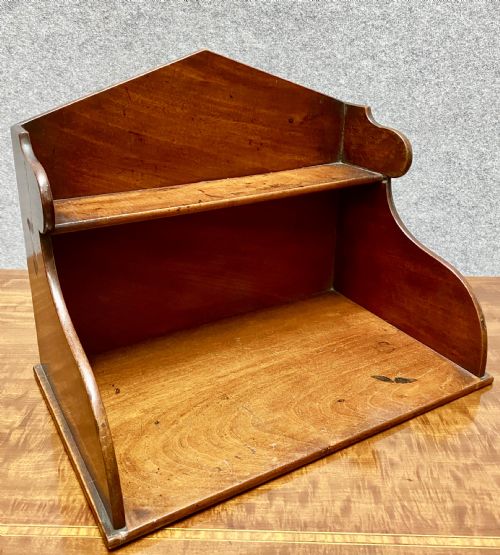


Vintage Mahogany Book Trough
These vintage mahogany book troughs are compact desktop and tabletop organisers designed to keep volumes upright, offering practical elegance for any study or library.
Vintage Mahogany Book Trough
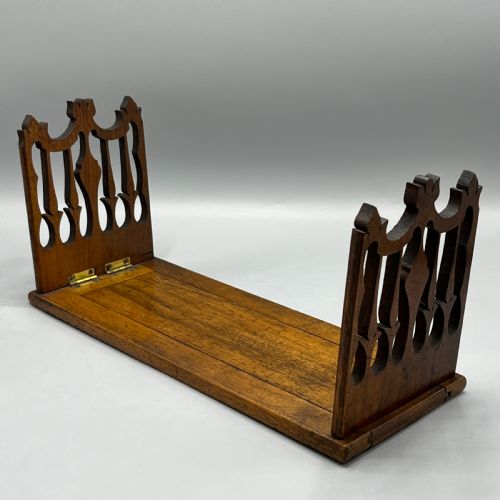
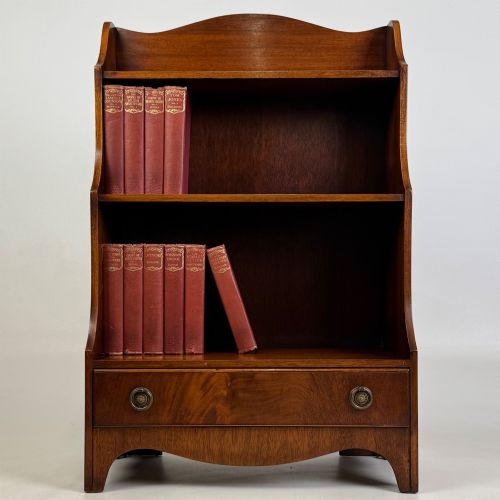
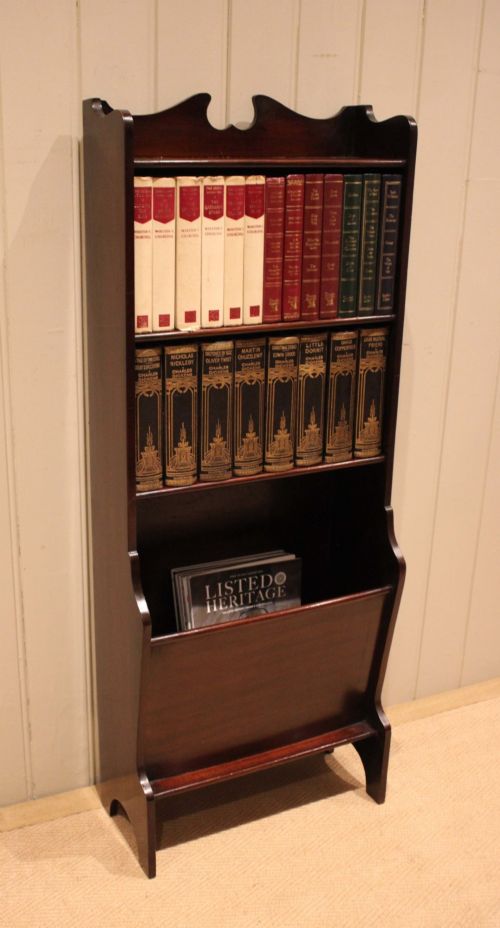
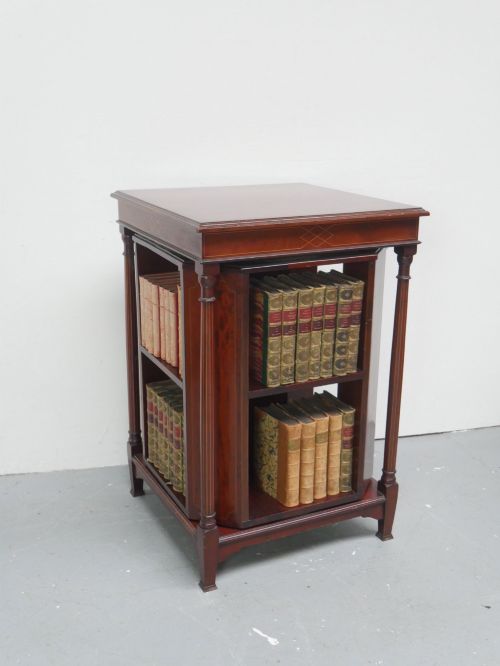
When you search for a vintage mahogany book trough, you encounter portable tabletop organisers designed to hold a selection of volumes within easy reach. These pieces range from simple open troughs to extending slides, revolving stands, and sectional units fitted with magazine racks.
The versions most frequently met on this page date from the Edwardian period and the early twentieth century, alongside nineteenth-century examples and occasional Art Deco or Art Nouveau interpretations. Forms vary from small desk tidies and book carriers to larger library book troughs and portable bookshelves.
Makers constructed these items primarily to sit upon desks, tables, or library counters where everyday reading material required tidy containment. Their compact footprints and varied organisational layouts made them staple accessories for studies and offices throughout the nineteenth and early twentieth centuries.
Materials and construction
Makers utilised solid mahogany and flame mahogany veneers over secondary timbers to build the bodies of these troughs, frequently incorporating brass for hinges, fittings, and carrying handles. The selection of timber often featured rich grain patterns that defined the primary visual appeal of the desk accessory.
Detailed examples display decorative craftsmanship such as satinwood inlay, creating contrasting borders and geometric motifs across the shaped sides and panels. Construction methods combined sturdy joinery for weight-bearing sections with delicate inlay work to elevate the decorative finish.
Vintage Mahogany Book Trough Retail Price Guide 2026
Typical asking prices for vintage mahogany book trough among the pieces listed under this phrase on Sellingantiques today, from the lower quarter to the upper quarter. They describe what is for sale here now, not the wider market.
Listings feature mahogany, brass, satinwood, and copper across Edwardian, Victorian, and Art Deco periods.
Assessing quality in a vintage mahogany book trough
The distinction between standard production and superior craftsmanship rests in the selection of the timber and the refinement of the decorative details. Pieces featuring high-grade flame mahogany and precise satinwood inlay demonstrate greater ambition in their design.
Structural complexity also separates basic troughs from finer library accessories, particularly in mechanisms such as extending book slides or revolving bases. Smooth operation and thoughtful proportioning indicate a higher standard of original manufacture.
The Vintage Mahogany Book Trough Glossary
- Flame mahogany
- A highly figured wood veneer displaying characteristic flame-like patterns derived from the branch junctions of the tree. This decorative grain was chosen for prominent exterior surfaces on finer pieces.
- Satinwood inlay
- A contrasting light-coloured timber inserted into the mahogany surface in thin decorative strips or patterns. It provides geometric or floral embellishment.
- Book slide
- An adjustable desktop accessory designed to hold books upright between two ends that expand or contract to accommodate varying numbers of volumes. These often feature hinged or sliding mechanisms.
- Desk tidy
- A small compartmentalised desktop organiser intended to hold stationery, letters, and books in a single orderly unit. They frequently combine book troughs with pen trays or inkwell recesses.
Vintage Mahogany Book Trough: Frequently Asked Questions
How were these book troughs used historically?
Users placed these troughs on desks, library tables, and reading surfaces to keep frequently referenced volumes close at hand. They allowed readers to organise dictionaries, novels, and journals without needing a full-sized bookcase.
In professional and domestic studies, desk tidies and book carriers helped maintain order amongst loose paperwork and small libraries. Their portable nature meant books could be moved easily between rooms.
How do I care for mahogany book furniture?
Maintain mahogany surfaces by dusting them regularly with a soft, dry cloth to prevent the accumulation of grit. Avoid placing the wood in direct sunlight or near heat sources to protect the finish and prevent timber movement.
Apply a traditional beeswax polish occasionally to nourish the grain and enhance the natural sheen of the mahogany. Ensure any brass fittings are cleaned gently without abrasive agents that might scratch the surrounding wood.
How do I distinguish Edwardian pieces from earlier styles?
Edwardian book troughs, typically dating from around nineteen hundred to nineteen ten, often display lighter satinwood inlay and refined proportions influenced by earlier classical revivals. They tend to exhibit a brighter finish compared to heavier nineteenth-century examples. Ninetenth-century pieces frequently rely on solid mahogany construction with simpler lines or heavier proportions, reflecting the practical demands of the Victorian library. Stylistic cues like Art Nouveau whiplash lines or Art Deco geometry help date pieces from the turn of the century onwards.